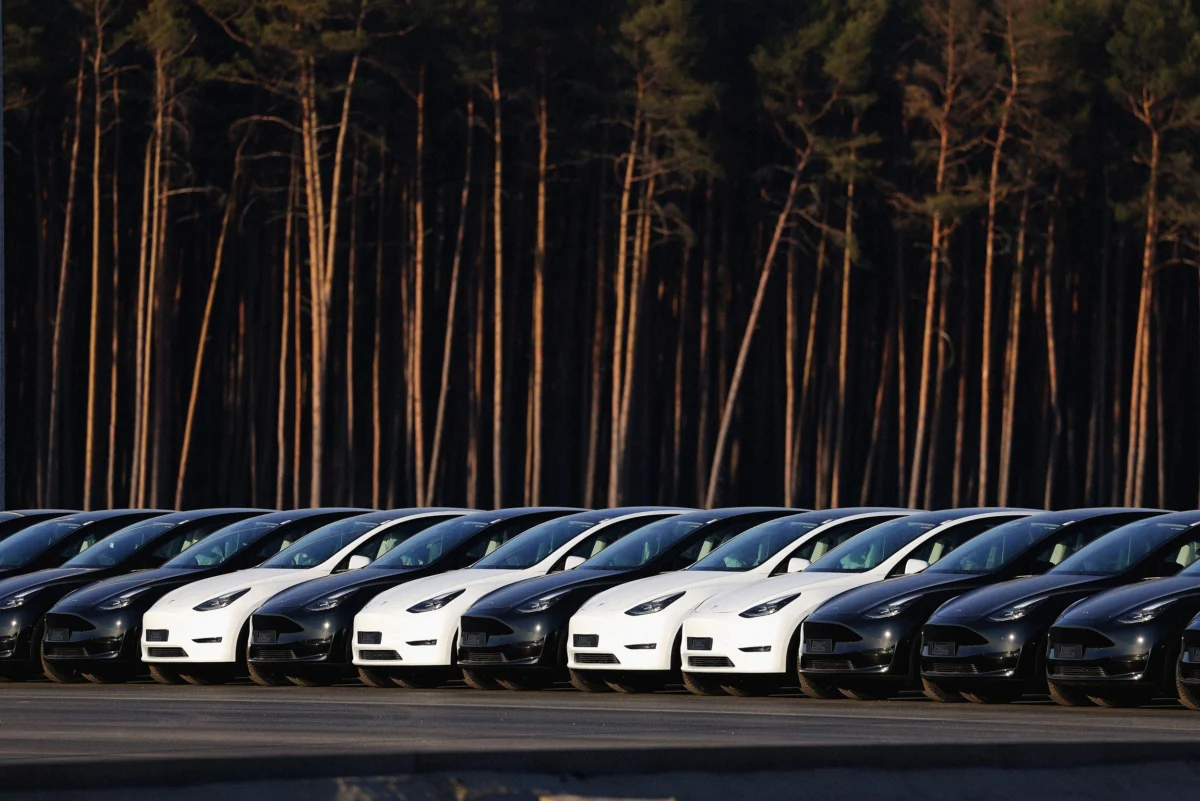
Tesla Inc., a company that once enjoyed nearly unparalleled customer devotion, is facing a growing wave of internal dissent as long-term supporters grapple with shifting pricing strategies, unfulfilled technical promises, and the increasingly polarizing public persona of its CEO, Elon Musk. What began as a community of early adopters united by a vision of a sustainable future has, in recent months, fractured into factions of "die-hard" loyalists and a rising number of disillusioned critics. This tension reached a boiling point in early 2024, centered on a controversial promotion involving the company’s Full Self-Driving (FSD) software and the rollout of the Cybertruck, Tesla’s first foray into the pickup truck market.
The FSD Transfer Controversy: A "Bait and Switch" Allegation
The catalyst for the most recent surge in customer outrage was a promotion involving the transferability of Full Self-Driving (FSD) software. Historically, FSD was sold as a "lifetime" feature tied to a specific vehicle, with prices climbing as high as $15,000. In an effort to spur quarterly sales, Tesla offered a limited-time deal allowing existing owners to transfer their FSD suite to a new vehicle purchase, provided the transaction was completed by March 31.
However, the deal quickly became a source of frustration. Tesla initially advertised a new base-model Cybertruck priced at $59,990, a figure Musk later clarified would only be available for a 10-day window. Prospective buyers, enticed by the lower entry price and the opportunity to save $15,000 by transferring their existing FSD software, rushed to place orders. The situation soured when Tesla amended the terms of the FSD transfer, stipulating that customers must take physical delivery of the vehicle by the March 31 deadline. Given Tesla’s well-documented production backlogs and delivery delays, many customers found themselves legally committed to new vehicle purchases that would arrive too late to qualify for the FSD transfer.
This logistical hurdle led to accusations of a "bait and switch." While Tesla eventually offered to refund the $250 order fee for those wishing to cancel, the incident left a lasting mark on the community. On X, the social media platform owned by Musk, prominent Tesla-focused accounts described the situation as a "pathetic disaster," leading to a series of high-profile "blockings" and digital exiles within the Tesla influencer ecosystem.
A Chronology of Unfulfilled Autonomy
The current skepticism regarding Tesla’s software is rooted in a long history of ambitious timelines that have failed to materialize. In 2016, Elon Musk famously predicted that a Tesla vehicle would be capable of driving itself across the United States—from Los Angeles to New York City—without a single human intervention by the end of 2017. That milestone has yet to be achieved.
As the years passed, the gap between Tesla’s marketing and the software’s real-world performance became a focal point for critics. In late 2020, Tesla released the "Beta" version of FSD to a select group of customers. While early adopters were initially thrilled to be part of the testing process, the novelty eventually gave way to safety concerns. Reports of vehicles "phantom braking," misidentifying traffic signals, or attempting dangerous maneuvers—such as driving onto sidewalks or toward infrastructure—began to circulate with increasing frequency.
The financial implications of these delays are significant. Many customers who paid $10,000 to $15,000 for FSD years ago have since sold their vehicles without ever experiencing the fully autonomous "robotaxi" future they were promised. The transition of FSD to a subscription-based model further complicated the value proposition for "lifetime" purchasers, making the recent transfer disputes even more contentious.
The Fracture of the Digital Town Square
For years, the Tesla community thrived on X (formerly Twitter), creating an echo chamber that significantly bolstered the company’s brand and stock price. Tesla’s market capitalization, which once exceeded $1 trillion, was driven in no small part by this army of retail investors and enthusiasts who countered negative press and hyped every software update.
However, the acquisition of the platform by Elon Musk in 2022 altered the dynamics of this community. As Musk’s public commentary became more politically charged and controversial, the "Teslarati" began to split. Disagreements that were once handled internally are now public spectacles. Influencers who express even mild criticism of the company face accusations of "betrayal" or "sabotage" from more radical supporters.
This environment has created a difficult choice for many owners: maintain absolute loyalty to the brand or speak out and face harassment. For many, the breaking point was not a single event, but a cumulative "erosion of trust" involving both the product’s safety and the CEO’s rhetoric.
Case Studies in Disillusionment: From Superfans to Critics
The shift in sentiment is best illustrated by the experiences of individual owners who were once among the company’s most vocal advocates. Earl Banning, a psychologist based in Anchorage, Alaska, was a quintessential Tesla enthusiast. He gained a following of tens of thousands after Musk retweeted a video of his car using the "Summon" feature. Banning was the creator of "Frunk Puppy Friday," a viral social media trend that showcased the lighter side of Tesla ownership.
Banning’s disillusionment was gradual. It began with Musk’s public statements during the COVID-19 pandemic, which Banning, a healthcare professional, found scientifically inaccurate. His concerns deepened as he tested FSD Beta, experiencing several near-miss accidents. The final straw was personal; Banning, the father of a transgender child, felt alienated by Musk’s increasingly hostile comments toward the LGBTQ+ community. When Banning attempted to raise these concerns directly with Musk during a live audio chat, his worries were dismissed. Today, Banning remains a Tesla owner but has transitioned from an advocate to a cautious critic, frequently highlighting the "cult-like" behavior of the community he once led.
Similarly, an owner in Los Angeles known online as @MissJilianne has used her platform to provide a counter-narrative to Tesla’s marketing. Despite owning a $119,000 Model S Plaid and professing a love for the vehicle’s hardware, she has broadcast over 170 hours of live FSD demonstrations to show the software’s glitches. Her goal is to provide transparency in an environment she believes is dominated by "fanboys" who ignore safety flaws to protect their financial investments.
Institutional Opposition and the Dawn Project
While individual owners voice their frustrations, institutional critics like Dan O’Dowd have launched more organized campaigns. O’Dowd, a tech billionaire and CEO of Green Hills Software, was an early Tesla admirer who owned multiple models. His admiration turned to alarm as he analyzed the FSD software from a professional engineering perspective.
In 2021, O’Dowd founded the Dawn Project, an organization dedicated to banning "unsafe" software from critical infrastructure. The group has spent millions on high-profile advertisements, including Super Bowl commercials, depicting Teslas failing to stop for school buses or hitting child-sized mannequins. O’Dowd argues that Tesla’s approach to autonomous driving is fundamentally flawed and that the company has prioritized marketing over public safety.
The reaction from the Tesla community to O’Dowd has been overwhelmingly hostile. He is frequently accused of being a "paid shill" for competitors or oil companies. Despite the personal attacks, O’Dowd continues to document Musk’s unfulfilled predictions, noting that as of 2024, Tesla has failed to meet its targets for robotaxis and the mass production of its "Optimus" humanoid robots.
Strategic Pivots and Broader Market Implications
The internal strife at Tesla comes at a precarious time for the electric vehicle (EV) industry. After years of dominance, Tesla is facing increased competition from legacy automakers and Chinese manufacturers like BYD. In response, Tesla has undergone a series of strategic shifts that have further unsettled its base.
In early 2024, reports surfaced that Tesla had scrapped plans for a long-awaited $25,000 entry-level EV, choosing instead to focus on autonomous ride-hailing and robotics. Furthermore, the company announced it would cease production of its flagship Model S and Model X vehicles to prioritize the development of the Optimus robot. For many owners, these moves signal a departure from Tesla’s original mission to accelerate the world’s transition to sustainable energy through affordable transport.
The broader implications for Tesla’s brand equity are profound. A brand that relies heavily on a "cult of personality" is uniquely vulnerable when that personality becomes a source of friction. While Tesla’s stock has historically recovered from controversies, the loss of "brand ambassadors"—the everyday owners who convinced friends and family to buy EVs—may have long-term consequences for the company’s market share.
Conclusion: The Price of Progress
Tesla remains a titan of the automotive world, but the recent upheaval suggests that the "honeymoon phase" of the EV revolution is over. The company is now being judged not by the brilliance of its vision, but by the reliability of its products and the consistency of its leadership. As disillusioned owners like Banning and Jilianne demonstrate, it is possible to love a product while remaining deeply critical of the company that produces it. Whether Tesla can reconcile these two realities—and regain the trust of its most loyal supporters—will likely determine its trajectory for the remainder of the decade. For now, the "Tesla bubble" remains more divided than ever, caught between the promise of a self-driving future and the complications of a turbulent present.