


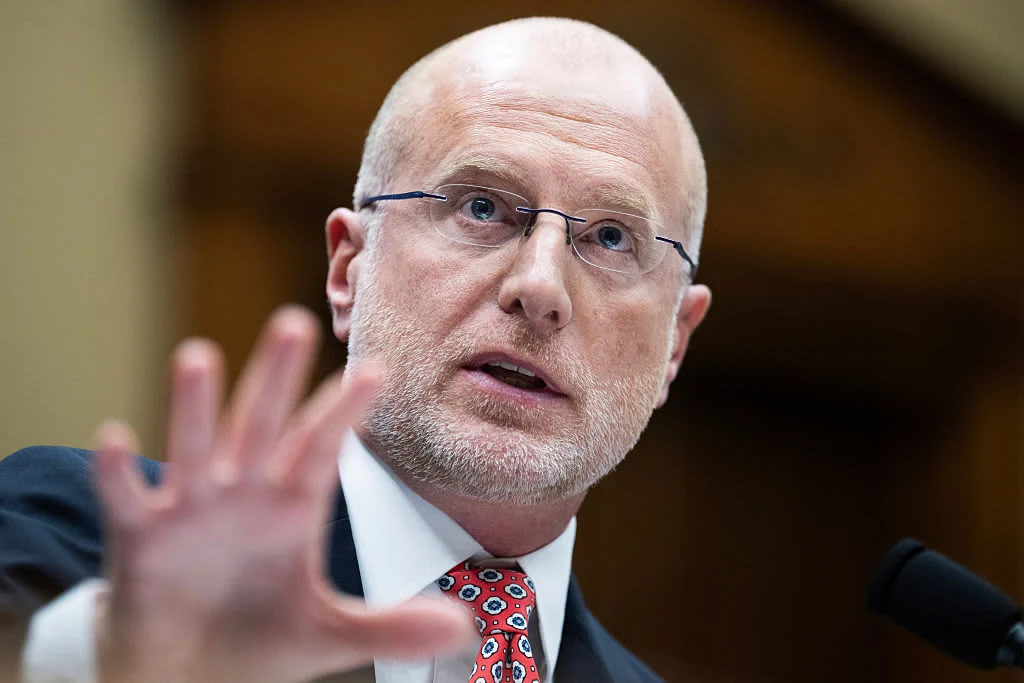
The Federal Communications Commission (FCC) has signaled a potentially smooth regulatory path for the proposed merger between Paramount Global and Warner Bros. Discovery (WBD), according to recent remarks by FCC Chairman Brendan Carr. Speaking at the Mobile World Congress in Barcelona, Spain, Carr characterized Paramount’s bid for the media giant as "cleaner" than a previous proposal from Netflix, suggesting that the deal could receive federal approval with relative speed. The endorsement from a high-ranking regulatory official marks a significant turning point in a high-stakes bidding war that has captivated Wall Street and Hollywood alike, signaling a preference for traditional media consolidation over a further expansion of streaming-first dominance.
Carr’s comments come at a critical juncture for Warner Bros. Discovery, which has spent the last year navigating a volatile market and significant debt obligations. According to Carr, the previous interest from Netflix raised substantial competition concerns that are notably absent in the Paramount-Skydance offer. "There’s a lot of concerns when Netflix was the potential buyer there," Carr noted during a wide-ranging discussion with CNBC’s Arjun Kharpal. "That particular combination raised a lot of competition concerns. [The Paramount deal] is a lot cleaner, does not raise at all the same types of concerns. I think there’s some real consumer benefits that can emerge from it."
The Battle for Warner Bros. Discovery: A Tale of Two Offers
The current momentum behind Paramount’s acquisition of WBD follows a dramatic shift in the bidding process. Last week, Paramount—backed by Skydance Media—submitted a revised offer to purchase the entirety of Warner Bros. Discovery at $31 per share. This figure represented a strategic increase from a previous $30-per-share offer and effectively neutralized an existing proposal from Netflix. The WBD board of directors subsequently deemed the Paramount-Skydance offer "superior," prompting Netflix to withdraw its interest.
Netflix’s original plan was more targeted, focusing on the acquisition of WBD’s legendary film studios and its robust streaming infrastructure for $27.75 per share. However, Netflix executives recently stated that the deal was "no longer financially attractive" given the higher valuation and broader scope of the Paramount bid. Unlike Netflix’s surgical approach to WBD’s library and technology, Paramount’s bid encompasses the whole of the company, including its extensive portfolio of pay-TV networks such as CNN, TBS, TNT, and the Discovery suite of channels.
This distinction is central to the regulatory optimism expressed by Chairman Carr. While a Netflix-WBD merger would have combined the world’s largest streaming service with HBO Max, potentially creating a monopoly in the digital distribution space, the Paramount-WBD deal is viewed as a "horizontal consolidation" of existing media entities. Carr indicated that the FCC’s role in this particular merger would likely be "minimal," as the commission typically focuses on the transfer of broadcast licenses—specifically Paramount’s ownership of CBS.
A Chronology of Consolidation and Industry Upheaval
The path to this potential merger is rooted in a series of transformative events within the media sector over the past several years. To understand the current climate, one must look at the timeline of industry shifts that led to this moment:
- May 2022: WarnerMedia completes its merger with Discovery, Inc., creating Warner Bros. Discovery. The new entity, led by CEO David Zaslav, begins an aggressive campaign to reduce $43 billion in debt through cost-cutting and content restructuring.
- Late 2024: Paramount Global, facing its own financial pressures and a changing linear television landscape, begins exploring sale options under the leadership of Shari Redstone.
- Mid-2025: Skydance Media, led by David Ellison, emerges as a primary suitor for Paramount. After months of negotiations, a merger between Paramount and Skydance is finalized, backed by a consortium of investors.
- December 2025: Rumors surface that Netflix is eyeing WBD’s studio assets to bolster its content library. President Donald Trump comments that such a deal "could be a problem" due to market share concerns, though he later clarifies that the Department of Justice (DOJ) would handle the review.
- February 2026: Paramount-Skydance enters the fray with a comprehensive offer for all of WBD, triggering the current regulatory and financial evaluation.
Strategic Commitments and the Future of Streaming
To alleviate concerns regarding the impact on the creative industry, Paramount has made several significant commitments as part of its merger proposal. On Monday, the company announced plans to release at least 30 feature films annually—15 from each major studio under the combined umbrella. This move is designed to reassure theater owners and Hollywood guilds that the merger will not lead to a "smaller film slate," a fear that had been voiced by prominent industry figures including director James Cameron.
Furthermore, Paramount executives confirmed that the company intends to merge Paramount+ with HBO Max (currently branded as Max) into a single, unified streaming platform. This consolidation aims to create a service capable of competing directly with the scale of Netflix and Disney+. By combining HBO’s premium prestige content with Paramount’s deep library of franchises—including Star Trek, Mission: Impossible, and Yellowstone—the new entity hopes to reduce churn and increase its bargaining power with advertisers and distributors.

The financial structure of the deal also includes significant protections for WBD. Paramount has offered a $7 billion breakup fee should the deal fail to clear regulatory hurdles. Additionally, Paramount has already covered the $2.8 billion breakup fee that WBD owed to Netflix for terminating their previous agreement.
Political and Regulatory Friction
Despite Chairman Carr’s optimism, the deal faces a complex political landscape. Democratic Senator Elizabeth Warren of Massachusetts has emerged as a vocal critic, describing the merger as "an antitrust disaster threatening higher prices and fewer choices for American families." Warren’s concerns echo a broader sentiment among some lawmakers that the continued consolidation of media power into a handful of mega-corporations limits diverse viewpoints and harms the labor market for creative professionals.
Analysts at Raymond James have noted that while the Paramount deal is "meaningfully easier" to pass than the Netflix deal, it is not without challenges. "There are new challenges with this deal around news, cable networks, international linear networks, etc.," the analysts wrote in a recent note. They also pointed out that Paramount’s political standing with the current administration appears stronger than Netflix’s, particularly following the backlash to the potential Netflix-WBD agreement.
Paren Knadjian, a partner at the advisory firm EisnerAmper, suggested that the regulatory process might be more nuanced than the FCC’s comments imply. He noted that the concentration of intellectual property (IP) under one roof remains a significant point of contention. "What power does that give this new entity in terms of the ability to charge more?" Knadjian asked. He predicted that significant concessions, such as the divestiture of certain cable assets or guarantees regarding sports licensing, might be required for the deal to move forward.
Foreign Investment and National Security Reviews
An additional layer of complexity involves the funding for the Paramount-Skydance bid. The offer includes approximately $24 billion in financing from Gulf state sovereign wealth funds. This involvement is expected to trigger a review by the Committee on Foreign Investment in the United States (CFIUS).
CFIUS reviews have become increasingly rigorous in recent years, particularly concerning deals that involve critical infrastructure or significant influence over American media and data. While sovereign wealth funds from the Middle East have long been active in Hollywood, the scale of this investment in a company that owns a major news network (CNN) and a primary broadcast network (CBS) may invite intense scrutiny. Regulators will be looking to ensure that foreign investors do not have editorial control or access to sensitive consumer data.
Broader Impact on the Media Ecosystem
If approved, the Paramount-WBD merger will represent one of the most significant consolidations in the history of American media. It would bring together two of the "Big Five" Hollywood studios, creating a behemoth with unprecedented control over film history, television production, and live sports broadcasting.
The implications for the sports world are particularly profound. A combined entity would hold the rights to a vast array of premium sports content, including the NFL (via CBS), the NBA (via TNT), and NCAA March Madness (shared by both). This concentration of sports rights could provide the new company with immense leverage in negotiations with cable providers and digital platforms, but it could also draw the attention of the DOJ’s antitrust division, which has recently shown a renewed interest in competition within the sports broadcasting market.
As the media industry continues to grapple with the decline of the traditional cable bundle and the high costs of the streaming wars, this merger represents a "strength in numbers" strategy. By combining resources, Paramount and WBD hope to achieve the scale necessary to survive an era of rapid technological disruption. However, as Chairman Carr and other regulators begin their formal reviews, the focus will remain on whether this "cleaner" deal truly serves the interests of the American consumer or merely creates a new type of media gatekeeper.