


Studiocanal has officially unveiled a compelling new international trailer for the upcoming World War II drama Pressure, a film poised to immerse audiences in the high-stakes, real-time decisions that preceded the historic D-Day invasion. The trailer, released on March 25, 2026, offers a deeper, more gripping look into the harrowing 72 hours leading up to June 6th, 1944, when the fate of the Allied war effort hinged precariously on an accurate weather forecast. This critical moment in history, often overshadowed by the battlefield heroics, forms the intense core of a narrative exploring the immense pressure borne by the Allied high command.
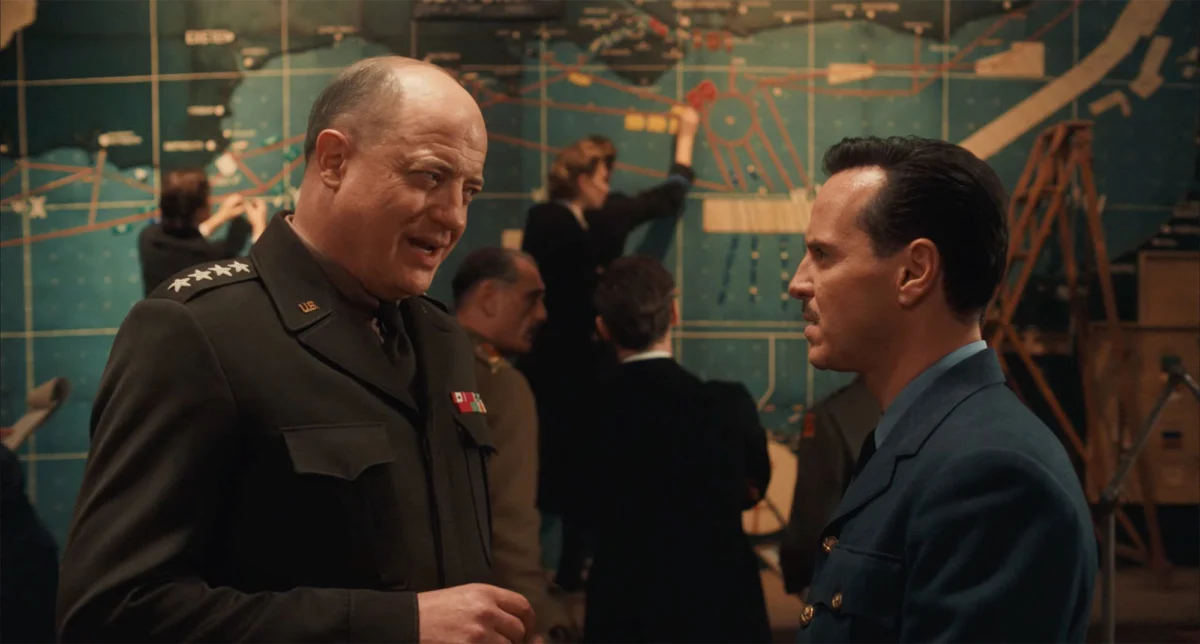
The film stars Academy Award winner Brendan Fraser in the pivotal role of General Dwight D. Eisenhower, Supreme Allied Commander, alongside acclaimed actor Andrew Scott as Royal Air Force meteorologist Captain James Stagg. Their performances are set to anchor a story that delves into the human element of strategic warfare, where scientific prognostication held as much sway as military might. The international trailer, sourced from YouTube, has garnered significant attention, with many critics and enthusiasts noting its superior tension and narrative clarity compared to its US predecessor. Pressure is slated for a theatrical release in US cinemas starting May 29th, 2026, with its UK debut scheduled for September 9th, 2026.
The Unseen Battle: Meteorology’s Role in D-Day
While countless films have depicted the bravery and bloodshed of the Normandy landings, Pressure carves a unique niche by focusing on the meteorological quandary that nearly derailed the entire operation. The central premise revolves around Captain James Stagg, whose responsibility it was to deliver a precise weather report to the Allied high command. The success of Operation Overlord, the largest seaborne invasion in history, was inextricably linked to optimal weather conditions: clear skies for air support, calm seas for amphibious landings, and low tides to expose German defenses. A miscalculation could have catastrophic consequences, leading to immense loss of life and a prolonged war.

The dramatic tension of Pressure is encapsulated in the trailer’s potent line, "If we delay, we will lose this war." This statement underscores the profound dilemma faced by Eisenhower and his strategists. Delaying the invasion meant risking the element of surprise, allowing German forces more time to fortify their positions, and potentially losing the narrow window of opportunity dictated by tides and moonlight. Conversely, proceeding in adverse weather conditions could lead to a disastrous failure, with landing craft capsizing, aircraft grounded, and paratroopers scattered. The film promises to be a gripping thriller, not of combat, but of intellectual and emotional fortitude, where the battlefield is a map room and the weapons are meteorological charts and conflicting forecasts.
Historical Context: Operation Overlord and the Weather Factor
Operation Overlord, the code name for the Battle of Normandy, commenced on June 6th, 1944, marking a decisive turning point in World War II. Its objective was to liberate German-occupied Western Europe and open a crucial second front against Nazi Germany. The planning for D-Day was an undertaking of unprecedented scale, involving meticulous coordination across land, sea, and air forces from multiple Allied nations. The chosen invasion date of June 5th, 1944, was contingent on specific astronomical and meteorological conditions: a full moon to aid navigation and airborne operations, and a low tide at dawn to expose beach obstacles.
However, as June approached, the weather outlook became increasingly grim. A severe storm system was moving across the English Channel, threatening to render the invasion impossible. Captain James Stagg, a Scottish meteorologist, found himself at the epicenter of this crisis. He had to synthesize conflicting data from various meteorological teams – including the British Met Office and the American forecasting unit led by Colonel Irving P. Krick – and present a consolidated, actionable forecast to General Eisenhower. The decision to launch or postpone rested squarely on Stagg’s assessment.
Historically, Stagg’s initial forecast for June 5th was dire, predicting high winds, heavy cloud cover, and rough seas. This led Eisenhower to make the agonizing decision to postpone the invasion by 24 hours. The pressure was immense, as a further delay would mean waiting another two weeks for the next suitable tidal conditions, by which time the element of surprise would likely be lost, and German defenses could be strengthened. Stagg’s subsequent forecast, predicting a brief, narrow window of improved weather for June 6th, became the basis for Eisenhower’s historic "go" decision, a gamble that ultimately paid off. The film aims to vividly portray these intense discussions, the scientific disagreements, and the sheer weight of responsibility on a few individuals.

The Real-Life Figures Depicted in Pressure
The film Pressure brings to life several key historical figures whose decisions and actions shaped the course of the invasion:
General Dwight D. Eisenhower (Brendan Fraser): As Supreme Allied Commander of the Allied Expeditionary Force, Eisenhower bore the ultimate responsibility for the D-Day decision. His leadership during this period was characterized by his ability to manage immense pressure, synthesize diverse opinions, and make monumental choices with far-reaching consequences. Fraser’s portrayal is expected to capture Eisenhower’s gravitas, his internal struggle, and his unwavering resolve in the face of uncertainty. This role marks a significant dramatic turn for Fraser, following his critically acclaimed performance in The Whale, and offers him another opportunity to inhabit a complex, historically significant character.
Captain James Stagg (Andrew Scott): Stagg was a central figure in the meteorological drama. His calm demeanor and meticulous scientific approach were crucial in guiding Eisenhower through the treacherous forecasts. Scott, known for his intense and nuanced performances in Sherlock, Fleabag, and All of Us Strangers, is exceptionally well-suited to portray the intelligent and burdened meteorologist. His character is the linchpin of the film’s tension, as he grapples with the immense scientific and moral weight of his predictions.
Other Notable Figures:

- Captain Kay Summersby (Kerry Condon): Eisenhower’s driver and aide-de-camp, an Irishwoman who became a trusted confidante. Condon, an Oscar nominee for The Banshees of Inisherin, brings her renowned dramatic prowess to the role, likely depicting the human support system around Eisenhower.
- Marshall Bernard Montgomery (Damian Lewis): The commander of Allied ground forces for the invasion. Lewis, acclaimed for his roles in Homeland and Band of Brothers, is perfectly cast to embody Montgomery’s strategic brilliance and often prickly personality.
- Irving P. Krick (Chris Messina): An American meteorologist whose forecasts often differed from Stagg’s, adding another layer of conflict to the decision-making process. Messina’s presence suggests a dynamic interplay of scientific methodologies and national perspectives.
- John Eisenhower (Henry Ashton): General Eisenhower’s son, offering a personal dimension to the story.
- The ensemble also includes Con O’Neill, Daniel Quinn-Toye, Toby Williams, and Max Croes, filling out the crucial supporting roles within the Allied command.
From Stage to Screen: The Genesis of Pressure
The cinematic adaptation of Pressure originates from David Haig’s highly acclaimed 2014 stage play of the same name. Haig, a veteran actor and playwright, meticulously researched the D-Day meteorological crisis, bringing this little-known but crucial aspect of history to theatrical audiences. The play was lauded for its historical accuracy, gripping dialogue, and its ability to convey profound tension within the confines of a single room.
The transition from stage to screen presents both opportunities and challenges. While a stage play often relies on dialogue and actor performances to build suspense, a film can expand the visual scope, incorporating cinematic techniques to enhance the drama. Director Anthony Maras, known for his intense and impactful thriller Hotel Mumbai, is at the helm of this adaptation. Maras’s previous work demonstrated his ability to craft high-stakes narratives and extract powerful performances, making him an ideal choice for Pressure. His vision will likely translate the claustrophobic tension of the command room into a cinematic experience that emphasizes the broader implications of each decision, perhaps through visual cues of the storm outside or the awaiting troops.
The screenplay, co-written by David Haig and Anthony Maras, suggests a faithful yet cinematic interpretation of the original material. Producers Tim Bevan and Eric Fellner, stalwarts of British cinema, are behind the project, further indicating a commitment to quality and historical integrity.
Analysis of the New International Trailer
The international trailer for Pressure offers a significantly more robust and compelling preview than its US counterpart. While the initial US trailer provided a glimpse, this new iteration elevates the stakes, deepens character insights, and clarifies the central conflict with greater precision. The pacing is deliberate, building suspense through sharp editing and an ominous score. Shots of maps and weather charts are intercut with close-ups of Fraser’s Eisenhower, his face etched with concern, and Scott’s Stagg, conveying intellectual rigor and quiet anxiety.

The trailer effectively highlights the contrasting scientific opinions, particularly the tension between Stagg and potentially Krick, underscoring that even in dire circumstances, consensus is hard-won. It emphasizes the immense human cost of war, not just on the battlefield, but in the decision-making rooms where lives are weighed against strategic imperatives. Visually, the trailer suggests a high production value, with period-appropriate sets and costumes that transport the viewer directly into the command centers of 1944. The use of natural light and shadows further accentuates the gravity and secrecy of the discussions. The overall impression is that of a taut, intelligent thriller that prioritizes historical accuracy and character-driven drama over conventional war film spectacle.
Release Strategy and Broader Implications
Pressure is set to open in US theaters via Focus Features on May 29th, 2026, positioning it as a strong contender for early summer audiences. The later UK release on September 9th, 2026, distributed by Studiocanal, could be a strategic move. A later release in the UK might allow for a staggered awards campaign, building momentum from positive US critical reception. This timing also places it outside the immediate summer blockbuster season, potentially allowing it to stand out as a more prestige offering as the autumn awards season begins to warm up.
The film’s exploration of a less-trodden aspect of D-Day – the meteorological battle – contributes meaningfully to the cinematic canon of World War II. It reminds audiences that victory in such monumental conflicts is not solely forged through combat but also through intricate planning, scientific precision, and the courage of individuals making impossible choices under unimaginable duress. The themes of leadership, the burden of responsibility, the role of science in warfare, and the unpredictable nature of fate resonate profoundly, offering a timely reflection on historical decision-making.
With its stellar cast, acclaimed director, and compelling historical narrative, Pressure is poised to be a significant release of 2026. It promises to be a gripping, fascinating thriller that sheds new light on how weather, an seemingly uncontrollable factor, was a major determinant in the fate of the war and, indeed, the free world. Audiences can anticipate a film that is both historically informative and intensely dramatic, a testament to the quiet heroes whose contributions behind the lines were as crucial as those on the beaches of Normandy.