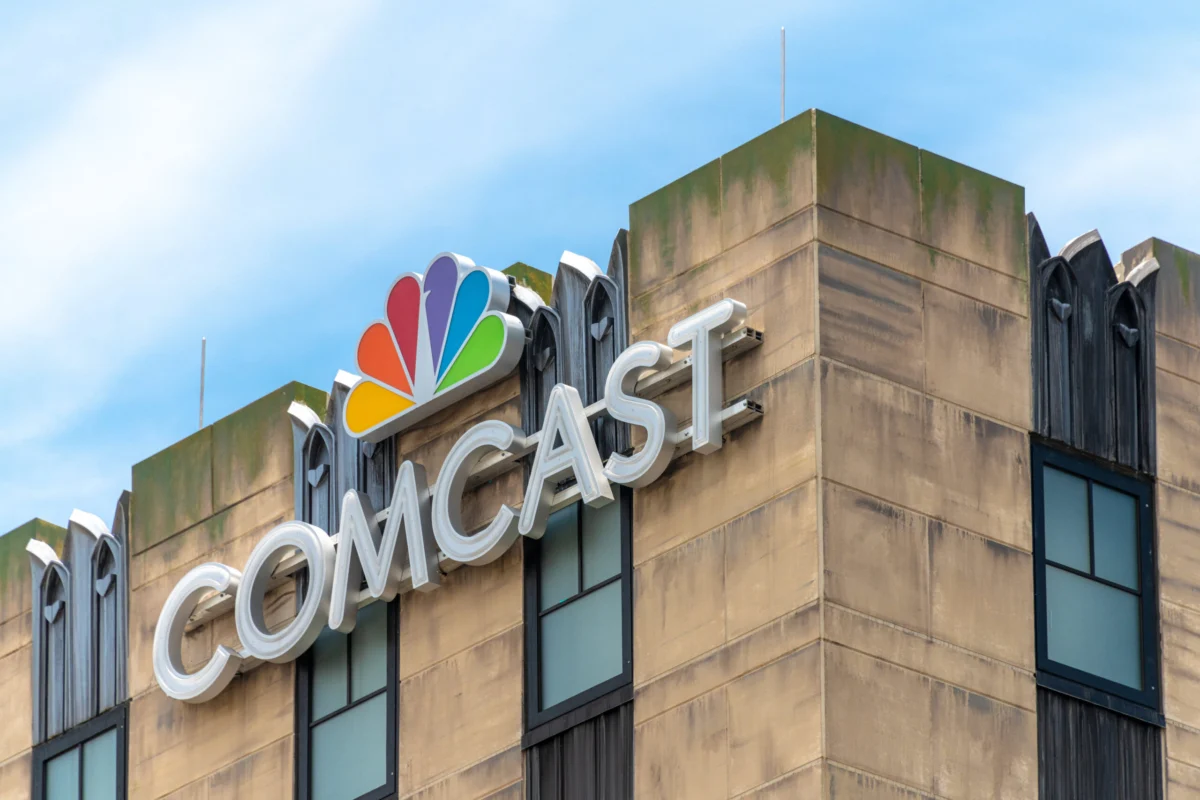
Comcast Corporation released its financial results for the fourth quarter of 2025 on Thursday, presenting a complex picture of a media and telecommunications giant in the midst of a significant structural transition. The Philadelphia-based conglomerate exceeded analyst expectations regarding earnings per share but fell short on revenue targets, reflecting the ongoing volatility in the domestic broadband market and the costs associated with a massive pivot toward mobile services and streaming content. While the company’s legacy cable business continued to face headwinds from high-speed wireless competitors, its theme park division saw a massive surge in revenue following the landmark opening of Epic Universe in Orlando.
Financial Performance and Net Income Volatility
For the quarter ending December 31, 2025, Comcast reported overall revenue of $32.31 billion, a modest increase of 1% compared to the same period in the previous year. This figure slightly trailed the consensus estimates provided by analysts via LSEG. The company’s net income attributable to Comcast saw a sharp decline of 54.6%, dropping to $2.17 billion, or 60 cents per share, from $4.78 billion, or $1.24 per share, in the fourth quarter of 2024.
Management attributed this steep drop in net income to several one-time factors and non-recurring items. These included charges related to the valuation of intangible assets, investment-related costs, and the absence of tax benefits that had bolstered the previous year’s figures. When adjusting for these items, Comcast reported an adjusted net income of $3.06 billion, or 84 cents per share, which surpassed the 81 cents per share expected by Wall Street. Adjusted earnings before interest, taxes, depreciation, and amortization (EBITDA) fell by 10% to $7.9 billion, reflecting the heavy capital expenditures required for network upgrades and content acquisition.
The Broadband Struggle and the Rise of Fixed Wireless
Comcast’s connectivity and platforms unit, the core of its business which includes the Xfinity brand, reported a 1% revenue decline to $20.24 billion. The most significant area of concern for investors remained the domestic broadband segment. During the fourth quarter, Comcast lost 181,000 domestic broadband customers. This trend highlights the intensifying pressure from Fixed Wireless Access (FWA) providers such as T-Mobile and Verizon, which have successfully captured price-sensitive consumers with aggressive promotional pricing and simplified installation processes.
Despite the loss in total subscribers, revenue for the domestic broadband unit only fell by 1% to $6.32 billion. This was largely due to Comcast’s ability to implement higher average rates for its remaining customers, many of whom are migrating to higher-speed tiers to support data-intensive applications like 4K streaming and remote work. Additionally, the domestic losses were somewhat mitigated by growth in international broadband markets, where competition from wireless providers is less saturated.
CFO Jason Armstrong addressed the competitive landscape during the investor call, noting that while the environment has been intense for several quarters, wireless competition "stepped up" significantly toward the end of the year. To counter this, Comcast has been refining its "go-to-market" strategy, focusing on bundling broadband with mobile services to increase customer "stickiness" and reduce churn.
Mobile Services as a Strategic Bright Spot
As the traditional broadband and pay TV markets saturate, Comcast has identified mobile services as its primary engine for future growth. The company’s mobile segment added 364,000 lines during the fourth quarter, bringing its total subscriber base to over 9.3 million. This performance validates the strategic shift Comcast announced early in 2025, when it decided to prioritize mobile expansion as a hedge against broadband stagnation.
By leveraging its existing MVNO (Mobile Virtual Network Operator) agreement and utilizing its own Wi-Fi hotspots to offload data, Comcast is able to offer competitive pricing that rivals the major national carriers. This strategy is designed to create a "connectivity ecosystem" where customers are less likely to leave the Xfinity platform if their mobile and home internet services are integrated into a single, discounted bill.
The NBCUniversal Evolution and the Versant Spin-Off
The fourth quarter marked a historic turning point for Comcast’s media division. Following a strategic review of its linear television assets, Comcast completed the spin-off of several of its most prominent cable networks—including CNBC and MSNBC—into a new, independent publicly traded entity called Versant Media. Consequently, this earnings report represents the final period in which NBCUniversal’s results include the full legacy portfolio of these cable assets.
Despite the restructuring, revenue for the media unit rose 5.5% to $7.62 billion. A significant driver of this growth was domestic advertising revenue, which increased by 1.5%. This uptick was primarily credited to the return of the NBA to NBC. The multi-billion-dollar media rights deal with the NBA has already begun to pay dividends in terms of advertiser interest and viewership, though it has also introduced significant new costs to the balance sheet.
Peacock and the Cost of Content Competition
NBC’s streaming platform, Peacock, showed signs of renewed momentum after a period of stagnant growth. The service added 3 million paid subscribers in the fourth quarter, ending the year with 44 million total paying users. This growth was spurred by exclusive sports content and a robust slate of original programming. Revenue for Peacock climbed to $1.6 billion, up from $1.3 billion in the prior-year quarter.
However, the pursuit of scale continues to weigh on profitability. Peacock reported a quarterly loss of $552 million, a wider deficit than the $372 million loss recorded in the same period a year ago. Management noted that these losses were exacerbated by the commencement of the NBA rights deal, which required substantial upfront investments in production and licensing. Comcast remains committed to the streaming service, viewing it as the essential digital destination for the NBC brand as traditional cable viewership continues to erode. The company lost another 245,000 pay TV customers in the quarter, leaving it with 11.27 million total subscribers—a fraction of its peak a decade ago.
Studios and Theme Parks: A Tale of Two Segments
Universal’s film studio faced a challenging comparison to the previous year. Revenue for the studio segment fell 7.4% to $3.03 billion. The decline was attributed to a drop in both theatrical and licensing revenue. While the release of "Wicked: For Good" and "Black Phone 2" performed respectably, they did not reach the blockbuster heights of the previous year’s hits, which included the first installment of "Wicked" and "The Bad Robot."
In contrast, the theme parks division emerged as a powerhouse of growth. Revenue surged 22% to approximately $2.9 billion. This record-breaking performance was driven almost entirely by the successful opening of Epic Universe at the Universal Orlando Resort. The new park, which features highly immersive "lands" based on popular intellectual properties, has significantly increased per-capita spending and attendance. The success of Epic Universe provides a critical offset to the volatility of the film business and the steady decline of the cable television segment.
Timeline of Comcast’s Strategic Transformation (2024–2025)
The fourth-quarter results are the culmination of a two-year period defined by radical corporate restructuring:
- August 2024: NBCUniversal secures long-term NBA media rights, signaling a massive investment in live sports to bolster Peacock and NBC.
- January 2025: Comcast officially shifts its primary corporate strategy to focus on mobile growth as broadband subscriber numbers begin to plateau.
- May 2025: Epic Universe opens in Orlando, Florida, representing the largest capital investment in the history of Universal Parks.
- July 2025: Second-quarter results confirm the trend of broadband losses, accelerating plans for the cable network spin-off.
- November 2025: Comcast announces the creation of Versant Media, spinning off its news and entertainment cable channels to focus on its "Big Three" pillars: Broadband, Wireless, and Streaming.
- January 2026: Q4 2025 earnings are released, showing the first full financial impact of the new strategic direction.
Industry Analysis and Future Outlook
Market analysts view Comcast’s latest results as a reflection of the "new normal" for the telecommunications industry. The era of easy broadband growth is over, as fiber-to-the-home and 5G fixed wireless provide consumers with more choices than ever before. Comcast’s response—pivoting to mobile and doubling down on "must-have" live sports content—is a high-stakes gamble that requires massive capital expenditure.
The widening losses at Peacock remain a point of contention for some investors, who are eager to see a clear path to profitability for the streaming service. However, the 3 million subscriber additions suggest that the NBA and other exclusive content are successfully drawing in audiences. Furthermore, the massive success of Epic Universe demonstrates the enduring value of Universal’s intellectual property when translated into physical experiences.
As Comcast moves into 2026, the company will be leaner following the Versant spin-off, but it will also be more dependent on the volatile streaming and theme park sectors. The "connectivity" side of the business must now prove that mobile growth can permanently offset the erosion of the legacy cable and broadband margins. With 9.3 million mobile customers and counting, Comcast is well on its way to becoming a major player in the wireless space, but the "intense" competitive environment described by CFO Jason Armstrong suggests that the road ahead will remain challenging.