


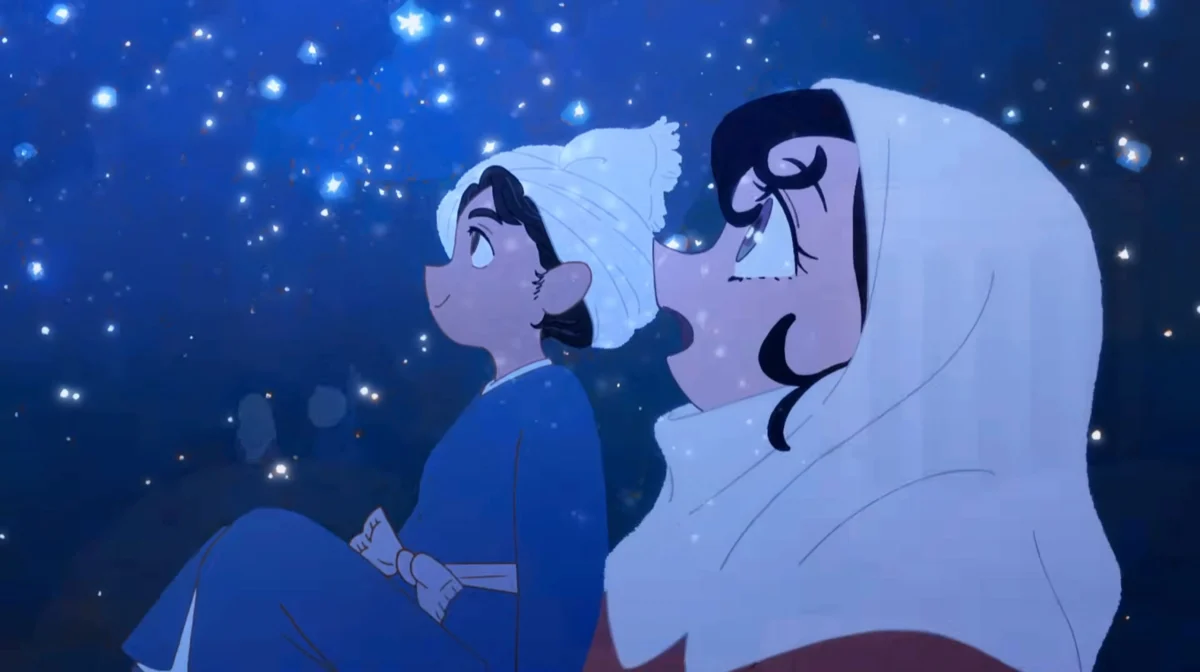
Tokyo, Japan – Science Saru, the acclaimed Japanese animation studio, has released the second teaser trailer for its highly anticipated animated feature, Jaadugar: A Witch in Mongolia. Directed by Abel Gongora, known for his work on Dan Da Dan: Evil Eye and Scott Pilgrim Takes Off, the film promises a captivating blend of historical epic and fantastical elements set against the backdrop of the 13th-century Mongol Empire. The new footage offers a more expansive look into the narrative and the striking visual style characteristic of Science Saru, further intensifying anticipation for its July 2026 television debut in Japan.
The recently released teaser, distributed via YouTube, provides additional insights into the film’s premise, which centers on Sitara, a young woman whose life is irrevocably altered by the relentless expansion of Genghis Khan’s empire. The tagline, "Your life is nothing but unknowns. But if one were to study and become wise, then one will always know the best course of action to take…", hints at a central theme of knowledge versus fate, a motif often explored in historical dramas and fantasy narratives. This second glimpse follows an initial teaser released several months prior, incrementally building a detailed picture of the ambitious project.
Science Saru’s Enduring Legacy and Innovative Approach
Science Saru has established itself as a beacon of innovation and artistic integrity within the global animation landscape since its founding in 2013 by Masaaki Yuasa and Eunyoung Choi. The studio is renowned for its distinctive, often experimental animation techniques, fluid character movements, and vibrant visual storytelling. Their portfolio boasts a string of critically acclaimed works that have garnered international recognition, including the feature films Lu Over the Wall (2017), Ride Your Wave (2019), and the Academy Award-nominated Inu-Oh (2021). The studio’s television series, such as Devilman Crybaby (2018) and Keep Your Hands Off Eizouken! (2020), have also been lauded for their creative vision and groundbreaking execution.
The production of Jaadugar: A Witch in Mongolia further exemplifies Science Saru’s commitment to diverse storytelling and pushing the boundaries of animation. The studio’s decision to embark on a historical fantasy epic with such a specific cultural and temporal setting underscores its willingness to explore narratives beyond typical anime tropes, often infusing them with universal themes and unique visual interpretations. Industry analysts frequently cite Science Saru as a studio that consistently prioritizes artistic expression and narrative depth, a reputation that Jaadugar appears poised to uphold. Their animation approach often involves a blend of traditional hand-drawn techniques with digital tools, allowing for both intricate detail and dynamic, expressive motion, a style that appears to be fully leveraged in the new teaser.
Director Abel Gongora’s Vision and Filmography

At the helm of Jaadugar: A Witch in Mongolia is Abel Gongora, an animation filmmaker who has steadily built a reputation for his distinctive style and narrative sensibilities. Gongora’s previous works demonstrate a versatility that makes him a fitting choice for a project as unique as Jaadugar. He is particularly recognized for his directorial contributions to Dan Da Dan: Evil Eye and the widely praised Netflix series Scott Pilgrim Takes Off. The latter, produced by Science Saru, showcased Gongora’s ability to adapt complex, action-packed narratives with a keen eye for character and dynamic animation, earning critical acclaim for its faithfulness to the source material while introducing a fresh visual perspective. His involvement in You0 DECO further highlighted his capacity to craft visually engaging and thematically rich animated content.
Gongora’s experience in blending diverse genres, from romantic comedy to action-fantasy, suggests he possesses the narrative dexterity required to navigate the historical intricacies and magical realism promised by Jaadugar. Sources close to the production indicate that Gongora has approached this project with a deep respect for its historical setting, while also embracing the fantastical elements derived from Tomato Soup’s original story, "A Witch’s Life in Mongol." Executive Director Naoko Yamada, celebrated for her work on K-On! and A Silent Voice, and Character Designer Kenichi Yoshida, known for his contributions to Eureka Seven and Gundam Reconguista in G, further elevate the project’s creative pedigree. This collaborative synergy between established talents underscores the high artistic ambition driving Jaadugar.
A Historical Canvas: The Mongol Empire in the 13th Century
The 13th century serves as a dramatic and fertile ground for storytelling, marked by the unprecedented expansion of the Mongol Empire under Genghis Khan. This period witnessed a seismic shift in global geopolitics, as the Mongol hordes swept across Eurasia, establishing the largest contiguous land empire in history. Their campaigns reshaped continents, influenced cultures from Eastern Europe to East Asia, and left an indelible mark on the regions they conquered. Genghis Khan, a figure of immense historical significance, consolidated various nomadic tribes and forged a military machine that was both formidable and strategically brilliant. His reign, and that of his successors, saw the empire extend its reach into Central Asia, Russia, China, and the Middle East, including vast swathes of Persia (modern-day Iran).
The film’s setting in Iran during Genghis Khan’s march provides a particularly poignant backdrop. The Mongol invasions of Persia, beginning in the early 13th century, were characterized by devastating destruction, particularly of cities and agricultural infrastructure, but also by a subsequent period of cultural exchange and the establishment of the Ilkhanate. This era was a complex tapestry of conflict, resilience, and the eventual synthesis of cultures. The narrative of Jaadugar, featuring a girl orphaned and enslaved in Iran, then educated by scholars, places its protagonist directly within this tumultuous historical context. Her transformation through knowledge, juxtaposed against the brute force of the Mongol Empire, sets up a powerful thematic conflict between intellect and raw power, individual agency and the sweeping tide of history. The "witch" aspect, whether literal magical ability or a metaphorical representation of her wisdom and influence, adds a layer of mystical intrigue to an already compelling historical framework.
Sitara’s Journey: Knowledge, Fate, and Resistance
The character of Sitara is positioned as the heart of Jaadugar: A Witch in Mongolia. Her origin story — losing her mother, being torn from her homeland, and enduring the slave markets of 13th-century Iran — immediately establishes her as a figure of profound resilience. Her subsequent adoption by a family of scholars and the imparting of "the power of knowledge" represent a pivotal turning point. This intellectual awakening empowers her in a world dominated by physical might and imperial conquest. The narrative arc, as described, is one of an individual’s struggle against overwhelming external forces. When Genghis Khan’s ambition reaches her city, her "quiet days come to an end, and the wheels of fate begin to turn." This suggests a classic hero’s journey where personal transformation intersects with grand historical events.

The concept of a "witch" in this context is ripe for interpretation. It could signify a literal mastery of arcane arts, allowing her to manipulate events beyond conventional means. Alternatively, it might be a metaphorical title, denoting her extraordinary wisdom, strategic acumen, or perhaps an uncanny ability to perceive and influence the flow of events through sheer intellect and insight. In many historical and mythological traditions, "witches" or wise women were often figures who possessed unique knowledge, understanding of the natural world, or an intuitive grasp of human nature and societal dynamics. This ambiguity allows the film to explore themes of empowerment, the impact of education, and the different forms resistance can take against oppression. Sitara’s story promises to be a deeply personal one, interwoven with the broader geopolitical tapestry of a continent in flux.
Strategic Release: Television Debut and Global Aspirations
In a significant strategic move, Jaadugar: A Witch in Mongolia is slated for a television debut in Japan in July 2026, airing within TV Asahi’s nationwide 24-station network "IMAnimation" slot. This decision, opting for a broadcast premiere over an initial theatrical release, reflects evolving trends in anime distribution and audience consumption habits. While many high-profile animated features aim for a theatrical run to maximize initial impact and revenue, a direct television premiere allows for broader immediate accessibility to a domestic Japanese audience. The "IMAnimation" slot is known for showcasing quality animated content, suggesting that Jaadugar is being positioned as a flagship title for the network’s anime offerings.
This strategy also has implications for the film’s international reach. While a Japanese TV debut might precede a global theatrical release, it is increasingly common for such titles to be quickly picked up by major streaming platforms for worldwide distribution. Platforms like Netflix, Crunchyroll, and Hulu regularly acquire exclusive rights to Japanese anime series and films, making them available to an international audience shortly after or even concurrent with their domestic broadcast. This approach could allow Jaadugar to bypass traditional distribution bottlenecks and reach a vast global viewership more efficiently. Industry analysts predict that given Science Saru’s strong international reputation and Gongora’s previous success with Netflix’s Scott Pilgrim Takes Off, a swift acquisition by a major streamer for a US or global release is highly probable. Such a move would ensure that the film’s compelling narrative and stunning animation are not confined to Japanese airwaves for long.
Voice Talent Brings Characters to Life
The Japanese voice cast for Jaadugar: A Witch in Mongolia features an ensemble of highly respected talents, further underscoring the production’s commitment to quality. Akira Sekine takes on the role of Sitara, the protagonist, bringing her character’s journey of vulnerability, intellect, and burgeoning power to life. Sekine is known for her versatile performances across various anime series, capable of conveying complex emotional nuances. She is joined by veteran voice actors Houko Kuwashima, Jun Saito, Ryota Suzuki, and Miyu Irino.
Houko Kuwashima, with a career spanning decades, is celebrated for her roles in iconic series like Mobile Suit Gundam SEED and Clannad, bringing gravitas and experience to any character she portrays. Jun Saito and Ryota Suzuki are prominent figures in contemporary anime voice acting, having lent their voices to numerous popular titles, ensuring a strong supporting cast. Miyu Irino, recognized for his roles in Spirited Away, Haikyuu!!, and Kingdom Hearts, adds another layer of depth and recognition to the ensemble. The presence of such an accomplished voice cast is a testament to the project’s perceived significance and its potential to captivate audiences through nuanced vocal performances.

Broader Implications for Anime Production and Distribution
Jaadugar: A Witch in Mongolia represents several broader implications for the anime industry. Firstly, Science Saru’s continuous output of high-quality, creatively ambitious projects reinforces its position as a leading innovator, demonstrating that commercial success can be achieved without compromising artistic vision. The studio’s willingness to delve into less conventional historical settings, especially those outside of typical Japanese historical narratives, expands the thematic range of anime and could inspire other studios to explore diverse global histories.
Secondly, the television-first release strategy highlights the growing power of broadcast networks and streaming platforms in shaping the anime landscape. As theatrical windows shrink and home viewing becomes increasingly dominant, direct-to-TV or direct-to-streaming releases are becoming viable, even preferred, avenues for major productions. This shift democratizes access to anime and allows for a wider array of content to reach audiences quickly.
Finally, the blend of historical accuracy (regarding the Mongol Empire) with fantastical elements ("a witch") indicates a trend towards genre-blending that can appeal to broader audiences. It leverages the inherent drama of historical events while introducing elements of wonder and magic, making the narrative accessible to fans of both historical epics and fantasy adventures. The anticipation for a US release reflects the ever-increasing global appetite for Japanese animation and the eagerness of international distributors to secure rights to acclaimed works from studios like Science Saru.
Anticipation Builds for July 2026 Premiere
As the July 2026 premiere date approaches, the release of the second teaser trailer for Jaadugar: A Witch in Mongolia serves as a powerful reminder of the film’s immense potential. With the creative might of Science Saru, the unique vision of Abel Gongora, a compelling historical narrative, and a stellar voice cast, the film is poised to be a significant addition to the anime landscape. While its initial release is set for Japanese television, the global anime community eagerly awaits news of its international distribution, hoping to experience Sitara’s journey and the epic tale of a witch who toyed with a vast continent. The film’s official website, available in English, offers further details and keeps fans abreast of developments, ensuring that the global audience remains connected to this ambitious project.