Dark Souls 3, the final installment in FromSoftware’s seminal action-RPG trilogy, has reached its tenth anniversary, marking a decade of influence that has fundamentally reshaped the landscape of modern game design. Originally released in Japan on March 24, 2016, and worldwide on April 12, 2016, the title served as both a technical pinnacle for the series and a narrative conclusion to the "Age of Fire." Over the past ten years, Dark Souls 3 has transitioned from a highly anticipated sequel into a foundational text for the "Soulslike" genre, maintaining a robust player base and a prominent position in critical discourse regarding difficulty, environmental storytelling, and mechanical refinement.
Development Context and the Return of Hidetaka Miyazaki
The development of Dark Souls 3 followed a turbulent period for the franchise. While Dark Souls 2 (2014) was a commercial success, it was developed primarily by a different internal team while series creator Hidetaka Miyazaki focused on the PlayStation 4 exclusive Bloodborne. Miyazaki returned to the director’s chair for Dark Souls 3, bringing with him the technical advancements and faster-paced combat philosophies honed during the production of Bloodborne.
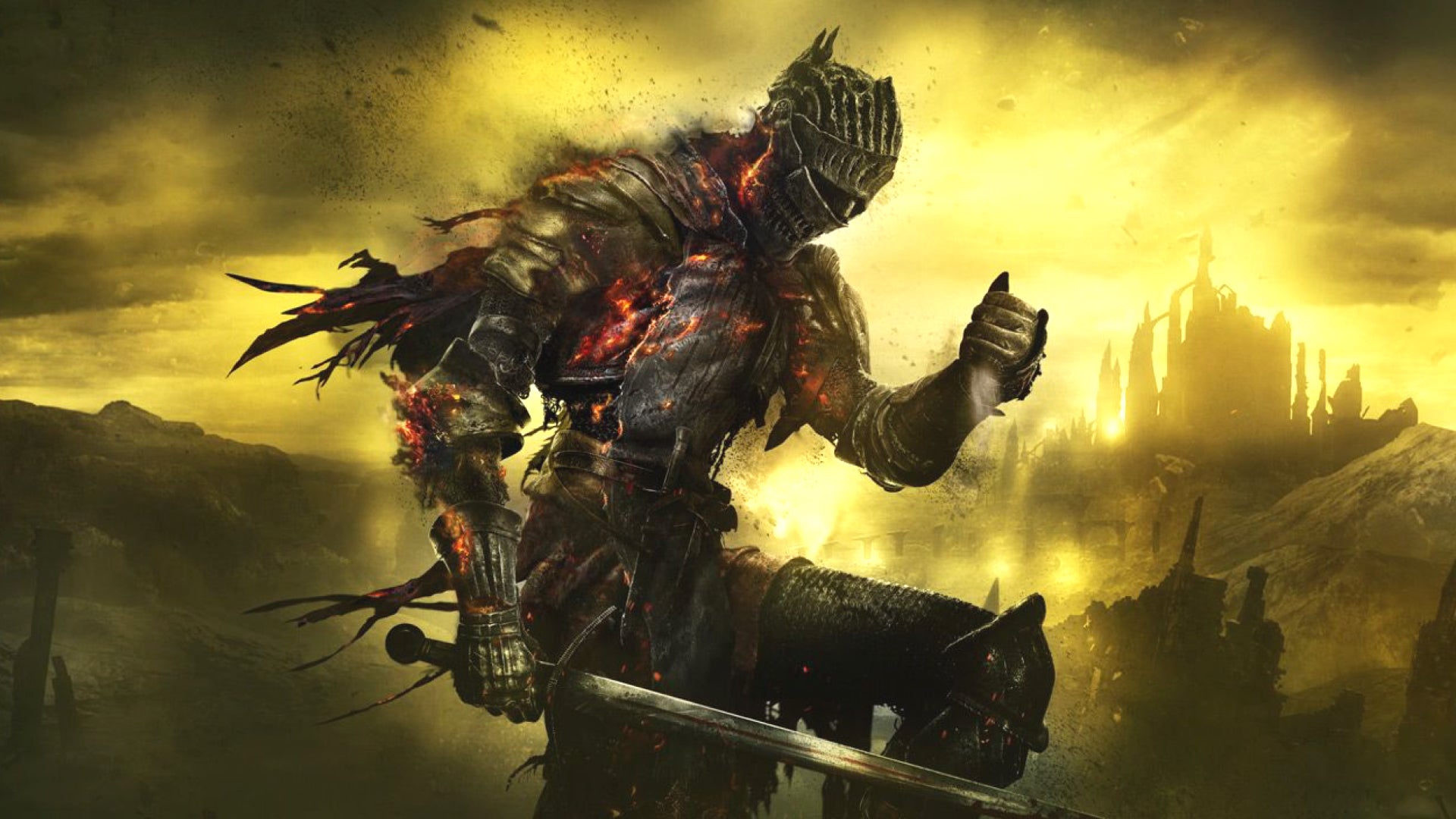
The game utilized a more advanced iteration of the proprietary FromSoftware engine, allowing for significantly higher fidelity in lighting, particle effects, and draw distances compared to its predecessors. This technological leap was essential in realizing the "apocalyptic" aesthetic of Lothric, a world characterized by the "dreg heap"—a physical manifestation of different eras and lands collapsing into one another as the primordial Flame fades.
Research into the game’s development reveals that Dark Souls 3 underwent significant structural changes late in its production cycle. Data mining and community sleuthing have uncovered an axed "time of day" system and early world layouts where Pontiff Sulyvahn was intended to be the final boss. These shifts resulted in a more linear world progression than the interconnected web of the original Dark Souls, a design choice that remains a point of debate among franchise historians.
Chronology of a Global Phenomenon
The trajectory of Dark Souls 3 is marked by several key milestones that define its lifecycle:

- June 2015: The game is officially revealed at E3 during the Xbox press conference, generating immediate global interest.
- March–April 2016: Launch period. The game receives "universal acclaim" from critics, securing a Metacritic score of 89.
- May 2016: Bandai Namco announces that Dark Souls 3 has become the fastest-selling game in the publisher’s history at the time, shipping 3 million copies within its first month.
- October 2016: The first downloadable content (DLC) expansion, Ashes of Ariandel, is released, introducing the Painted World of Ariandel and the acclaimed Sister Friede boss encounter.
- March 2017: The final DLC, The Ringed City, concludes the series’ narrative, taking players to the literal end of the world.
- May 2020: FromSoftware confirms that Dark Souls 3 has surpassed 10 million units sold, bringing the total series sales to over 27 million (a figure that has since grown to over 33 million).
- January 2022: PC servers for the entire Dark Souls trilogy are taken offline following the discovery of a critical Remote Code Execution (RCE) vulnerability.
- August 2022: After seven months of internal security overhauls, the Dark Souls 3 PC servers are the first to be restored, highlighting its priority status within the community.
Mechanical Refinement and Combat Evolution
Dark Souls 3 is frequently cited by analysts as the most "polished" entry in the trilogy, representing a middle ground between the deliberate, weighty combat of the original games and the aggressive speed of Bloodborne. The introduction of "Weapon Arts" (later known as Skills in Elden Ring) added a layer of tactical depth, allowing players to perform unique maneuvers at the cost of Focus Points (FP). This system replaced the limited spell-cast counts of previous games with a more flexible mana-style bar.
The game’s boss design is often regarded as the series’ high-water mark. According to community polling and critical reviews, encounters such as the Abyss Watchers, Nameless King, and Slave Knight Gael represent a mastery of "rhythm-based" combat. These encounters moved away from the "puzzle bosses" seen in earlier titles toward high-intensity, multi-phase duels that demand precise timing and stamina management.
Statistical data from community platforms like SteamDB indicates that Dark Souls 3 maintains a higher daily active player count than many contemporary titles, frequently seeing peaks of 10,000 to 15,000 concurrent players even a decade after launch. This longevity is attributed to the game’s refined PvP (Player vs. Player) systems and a dedicated speedrunning community that continues to find new optimizations in "All Bosses" and "Any%" categories.

Environmental Design and the Linear Narrative
While the original Dark Souls is celebrated for its vertical, looping world design, Dark Souls 3 opted for a more traditional, linear progression. Players move from the High Wall of Lothric through various distinct biomes, including the poisonous Farron Keep, the gothic Irithyll of the Boreal Valley, and the scholarly Grand Archives.
Despite the linearity of the overworld, the individual levels themselves are masterpieces of "micro-interconnectivity." The Cathedral of the Deep, for instance, is a massive, self-contained complex where players unlock multiple shortcuts back to a single central bonfire. This design philosophy ensured that while the path through the game was clearer for newcomers, the moment-to-moment exploration remained as dense and rewarding as ever.
The narrative of Dark Souls 3 serves as a self-reflective commentary on the franchise itself. The plot involves the "Lords of Cinder"—previous heroes who linked the Fire—refusing to do so again, forcing the player (the Unkindled) to hunt them down. This theme of a world exhausted by its own cycles resonated with players and critics alike, serving as a poetic conclusion to FromSoftware’s decade-long involvement with the IP before they moved on to Sekiro: Shadows Die Twice and Elden Ring.

Official Responses and Industry Impact
In various interviews, Hidetaka Miyazaki has expressed that Dark Souls 3 was a necessary "turning point" for FromSoftware. Speaking to Japanese publication GNN in 2016, Miyazaki noted that he did not want to "overstay" the series’ welcome, stating, "I believe it is time to take a step away from the Dark Souls series… it is not the end of the world, but it is a turning point."
Industry peers have frequently cited the game as a benchmark for environmental storytelling. In a retrospective on the genre, developers from various studios have noted that Dark Souls 3’s balance of difficulty and accessibility (relative to its predecessors) helped move the "Soulslike" from a niche subgenre into the mainstream. The success of Dark Souls 3 provided the financial and creative capital that allowed FromSoftware to develop Elden Ring, which would eventually go on to win Game of the Year in 2022 and sell over 25 million copies.
Technical Legacy and Modern Accessibility
On a technical level, Dark Souls 3 has aged remarkably well. On modern consoles like the PlayStation 5 and Xbox Series X, the game benefits from "Boost Mode" and official patches that allow it to run at a stable 60 frames per second at high resolutions. This technical stability has prevented the game from feeling like a "relic," a common issue with titles from the early eighth generation of consoles.

Furthermore, the game’s modding community remains one of the most active in the industry. Massive overhauls like Dark Souls 3: Archthrones and The Convergence have effectively doubled the game’s lifespan for veteran players, introducing new assets, bosses, and lore. These community-led projects underscore the deep mechanical robustness of the engine Miyazaki and his team built.
Conclusion: A Beautifully Doomed Legacy
As Dark Souls 3 enters its second decade, its legacy is defined by its role as the ultimate refiner of a formula. It may lack the revolutionary world-stitching of the first game or the experimental boldness of the second, but it offers a level of mechanical consistency and atmospheric cohesion that few titles have matched.
Lothric remains a destination for millions of players, a testament to FromSoftware’s ability to create a world that feels "beautifully doomed." Whether players are returning to face the Twin Princes one more time or a newcomer is stepping onto the High Wall for the first time, Dark Souls 3 continues to stand as a monumental achievement in interactive media—a grim, challenging, and ultimately triumphant finale to one of gaming’s most important trilogies. The fire may be fading, but the impact of Dark Souls 3 remains as bright as ever in the annals of gaming history.