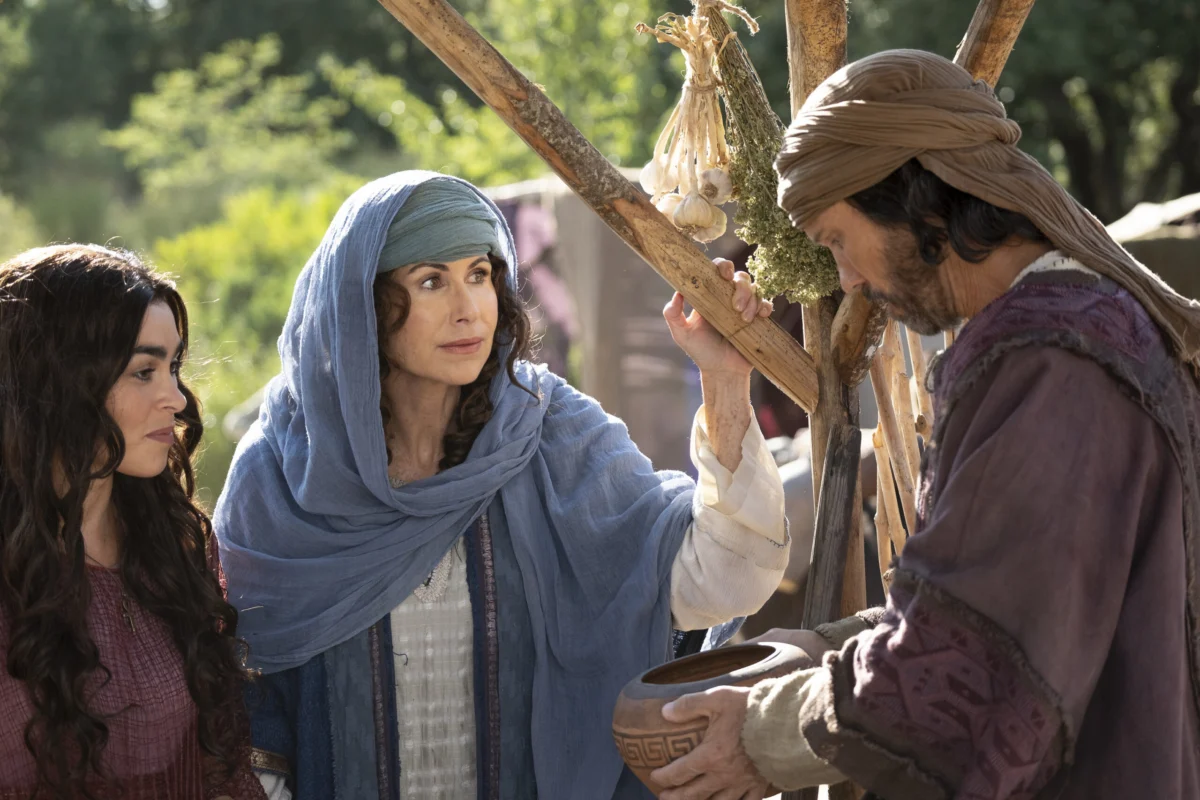
Fox’s ambitious three-part miniseries, The Faithful: Women of the Bible, sought to re-center the female perspective within some of the most foundational narratives of the Book of Genesis. Premiering on Sunday, March 23, at 8 p.m. ET, the event miniseries arrived with a promise to illuminate the often-overlooked agency and emotional lives of biblical matriarchs. However, critical reception, particularly for its inaugural installment, suggests that while the production faithfully adheres to the divine script, it struggles to imbue its characters with the nuanced human depth necessary for compelling modern drama, often relying on the inherent power of its source material rather than robust storytelling.
The Genesis of a Biblical Drama: Context and Ambition
Biblical dramas have long held a unique position in the television landscape, oscillating between grand cinematic spectacle and intimate character studies. From classic epics like The Ten Commandments and Ben-Hur to more recent television successes such as The Bible miniseries (2013) on History Channel and its NBC sequel A.D. The Bible Continues (2015), these productions often aim to bridge the gap between devout faith communities and secular audiences. The challenge lies in translating sacred texts, which are often concise and focused on theological rather than psychological detail, into extended narratives that resonate with contemporary viewers accustomed to complex character arcs and intricate plot developments.
Fox’s decision to greenlight The Faithful: Women of the Bible can be understood within this broader context. Major networks frequently seek programming that can attract specific demographics, and faith-based content has proven to be a reliable draw, particularly during significant religious periods like Lent and Easter. The series’ final episode was strategically timed to air on Easter Sunday, March 20, aiming to capitalize on heightened viewership among religious audiences. This strategic timing, coupled with the intriguing premise of focusing on female biblical figures, suggested a potential for both critical acclaim and strong ratings.
The creator, René Echevarria, known for his work on popular science fiction and drama series such as Star Trek: The Next Generation, Castle, and Terra Nova, brought a pedigree of crafting engaging narratives within established universes. His involvement indicated a potential for sophisticated storytelling, even within the confines of a sacred text. The concept of "Women of the Bible" itself reflects a growing trend in both theological scholarship and popular culture to re-examine ancient narratives through a lens that highlights the contributions, struggles, and perspectives of women, moving beyond traditionally patriarchal interpretations. This approach promised to offer a fresh, perhaps even revisionist, look at figures whose stories are often secondary to those of their male counterparts.
Chronology of a Divine Narrative: From Conception to Broadcast
The production of The Faithful: Women of the Bible would have involved several key phases. While specific dates for its conception and filming are not publicly detailed, the typical timeline for such a large-scale miniseries would involve:
- Development and Greenlight: Likely beginning several years prior to its airdate, involving script development, securing network commitment, and assembling a production team.
- Casting: A crucial phase, given the recognizable names attached. Minnie Driver (Sarai/Sarah), Jeffrey Donovan (Abram/Abraham), Natacha Karam (Hagar), Tom Mison, Alexa Davalos (Rebekah), Tom Payne, Ben Robson, Blu Hunt (Rachel), Millie Brady (Leah), and James Purefoy were announced as part of the ensemble, indicating a significant investment in talent.
- Filming: Given the desert settings depicted, filming would have likely taken place in suitable international locations, such as Morocco or the Middle East, known for their cinematic landscapes that evoke biblical eras. Danny Cannon, a seasoned director with credits ranging from CSI to Gotham, helmed the initial installment, bringing experience in visual storytelling.
- Post-Production: Editing, visual effects, and score composition would precede the final delivery to Fox.
- Marketing and Promotion: Leading up to its March 23 premiere, Fox would have engaged in extensive promotional campaigns, highlighting the star power, the unique female perspective, and the epic scope of the miniseries.
The three-part structure was designed to cover distinct generational narratives:
- Part One (March 23): Centered on Sarai (later Sarah), played by Minnie Driver, and Abram (later Abraham), played by Jeffrey Donovan, focusing on their journey, their struggle with infertility, and the divine promise.
- Part Two (Dates to be confirmed, likely following week): Expected to focus on Sarah’s daughter-in-law, Rebekah, portrayed by Alexa Davalos, and her pivotal role in the lineage.
- Part Three (Timed for Easter Sunday, March 20): Dedicated to Rebekah’s daughters-in-law, Leah (Millie Brady) and Rachel (Blu Hunt), exploring their complex sisterhood and roles in the birth of the twelve tribes of Israel.
This chronological approach allows the series to unfold the foundational stories of Genesis, emphasizing the continuity of divine purpose through generations of women.
Critique of Execution: The Weight of Divine Intervention and Generic Storytelling
The central critique leveled against The Faithful: Women of the Bible, particularly its Sarai and Abram installment, hinges on its perceived overreliance on deus ex machina plot developments. While the concept of divine intervention is inherent to biblical narratives—God’s fingerprints are indeed "all over every revelation or twist"—the series reportedly struggles to translate this theological truth into compelling dramatic tension. Instead of exploring the human struggle against or alongside divine will, the narrative often presents events as predetermined outcomes, robbing characters of meaningful agency and viewers of genuine surprise.
The first episode, spanning approximately 84 minutes (two hours with commercials), recounts the familiar tale of Sarai and Abram. Their deep love is marred by their inability to conceive, a central conflict that drives much of their early story. God’s direct command to Abram to leave his homeland for a new one, accompanied by the promise of countless descendants, serves as the primary catalyst. Abram’s unshakeable faith and immediate obedience are presented as givens, which, while biblically accurate, bypasses the dramatic potential of profound doubt, internal conflict, or the immense psychological burden of such a radical divine directive.
Sarai’s reaction, crucial for a series purporting to recenter the female perspective, is depicted as fleeting. A brief moment of confusion ("God? What God?") quickly dissolves into resolute support for her husband. Critics argue that this swift acceptance, while historically understood as a consequence of their faith and the societal structure of the time, sacrifices dramatic richness. The narrative, by moving too quickly past Sarai’s potential bewilderment or resistance, treats her more as an instrument of a preordained story than a fully realized individual grappling with extraordinary circumstances. The speed and ease of her decision, it is argued, make sense only within the context of an audience’s pre-existing knowledge of the biblical outcome, rather than as an organic development stemming from her character.
This issue extends to the overall execution. The episode is described as playing out "as the most generic version of itself," with scenes unfolding along preset story beats against plain desert backdrops. Characterizations are painted with "a brush so broad as to render them almost featureless," making it difficult for viewers to connect with the individuals beyond their archetypal roles. When characters face genuine peril, such as imprisonment by Pharaoh or life-threatening thirst, divine intervention conveniently resolves the crisis, further diminishing the sense of human struggle or the stakes involved. The series, in essence, avoids delving into the "why" of God’s actions, simply presenting them as an immutable fact of the narrative.
Flashes of Potential and Missed Opportunities
Despite these criticisms, the miniseries reportedly shows flashes of potential, particularly in its exploration of Sarai’s relationship with Hagar (Natacha Karam). This dynamic, stemming from Sarai’s desperate attempt to fulfill the divine promise of progeny through a B.C. version of surrogacy, presents a rich tapestry of emotions. Over years and decades, their relationship oscillates between fierce sisterhood, bitter jealousy, and an uneasy combination of the two—a complex and deeply human interaction that transcends the simple dictates of divine will.
Furthermore, Sarai’s internal conflict regarding her faith is highlighted as a poignant bind: she places complete trust in her husband, Abram, but not necessarily in the God in whom Abram has placed all his faith. This nuance offers a rare glimpse into the psychological complexity that could have elevated the series. Minnie Driver, with her experience in portraying multifaceted characters, is noted for her capable performance in conveying these layered emotions, even when the script offers limited opportunities.
However, these moments of potential are reportedly not explored deeply enough. The series, in its apparent desire to "lionize" its heroines, shies away from delving into "darker or harder places" of human emotion and struggle. Instead, complex feelings are acknowledged only glancingly before the narrative moves on to the next major twist or time jump, prioritizing plot progression over character introspection. This approach, while maintaining a reverent tone, ultimately sacrifices dramatic depth and emotional resonance.
Inferred Reactions and Broader Implications
While explicit statements from all parties are not detailed, we can infer reactions and intentions based on the series’ premise and critical reception:
- Creator’s Intent (René Echevarria): Echevarria’s stated goal of "recentering the female perspective" suggests an ambition to move beyond traditional retellings, aiming to highlight the agency and emotional lives of biblical women. The critique, however, implies a gap between this laudable intent and its execution, where the characters, despite the focus, still felt constrained by the preordained narrative.
- Network’s Perspective (Fox): For Fox, The Faithful likely represented an opportunity to tap into the lucrative faith-based entertainment market, particularly during a high-visibility religious period. The casting of recognizable names like Minnie Driver and Jeffrey Donovan also aimed to attract a broader audience beyond purely religious viewers. The critical reception, while not wholly negative, suggests that the series may have struggled to transcend its niche appeal to capture the attention of a general audience.
- Actors’ Commitment: The caliber of the cast, including Driver and Donovan, indicates a professional commitment to the project. Their performances, particularly Driver’s, are noted as strong within the limitations of the script, suggesting they attempted to bring as much depth as possible to their roles.
- Religious Scholars/Commentators (Inferred): A segment of religious scholars might appreciate the series’ faithfulness to the biblical text and its reverent tone, especially in its portrayal of God’s direct involvement. However, others might lament the missed opportunity to explore the rich psychological and socio-cultural dimensions of these ancient narratives, which modern scholarship often seeks to uncover. The series’ straightforward approach might be seen as simplifying complex historical and human realities for dramatic convenience.
- Audience Reception (Anticipated): The critique suggests that The Faithful would likely find its most appreciative audience in contexts such as Bible study classes or family gatherings during holidays, where its "unobjectionably religious-but-not-too" content would be welcomed. For a casual channel-surfer seeking engaging drama, however, its predictable plot developments and broadly drawn characters might fail to capture sustained interest. The series’ adherence to biblical accuracy without sufficient dramatic innovation might limit its cross-over appeal.
The broader implications of The Faithful: Women of the Bible‘s reception touch upon the ongoing evolution of biblical dramas. The series underscores the perennial challenge of adapting sacred texts for modern audiences: how to remain faithful to the source material while also delivering compelling, character-driven drama. Its struggles suggest that simply placing famous actors in biblical roles or focusing on a specific demographic (women) is not enough. Nuance, psychological depth, and a willingness to explore the complexities of human faith and doubt within a divine narrative are crucial for resonating with a diverse viewership.
For Fox’s programming strategy, the reception of The Faithful will likely inform future decisions regarding faith-based content. While the network successfully targeted a specific viewing window and demographic, the critical feedback suggests that future endeavors in this genre may need to prioritize more sophisticated storytelling and character development to achieve broader success. The series, despite its divine ambition and timely premise, ultimately falls victim to a common pitfall in historical and biographical dramas: placing too much faith in the inherent draw of its subjects and not enough in the foundational power of back-to-basics storytelling that prioritizes human connection and dramatic tension.