


The 74th Berlin International Film Festival, known colloquially as the Berlinale, has long served as a prestigious platform for global cinema, yet the 2024 selection of the Pakistani feature Lali represents a significant shift in the South Asian cinematic landscape. Directed by the acclaimed filmmaker Sarmad Sultan Khoosat, Lali has made history as the first production from Pakistan to be entirely developed, financed, and produced locally to secure a premiere in the festival’s celebrated Panorama section. This achievement marks a maturing of the Pakistani independent film industry, which has increasingly garnered international attention for its bold storytelling and technical sophistication.
Lali is described by critics and its creators as a supernatural-horror ballad, a genre-bending work that weaves together elements of folk horror, black comedy, and social commentary. The film’s narrative is rooted in a short story titled "Kaala Kambal" (Black Shawl), written by Khoosat’s aunt, which the director expanded into a multi-chaptered exploration of trauma, inheritance, and the weight of tradition. Set against the backdrop of provincial Pakistan, the film navigates the intersection of the mundane and the macabre, utilizing what Khoosat identifies as a "South Asian Gothic" aesthetic.
A Narrative of Curses and Social Legacies
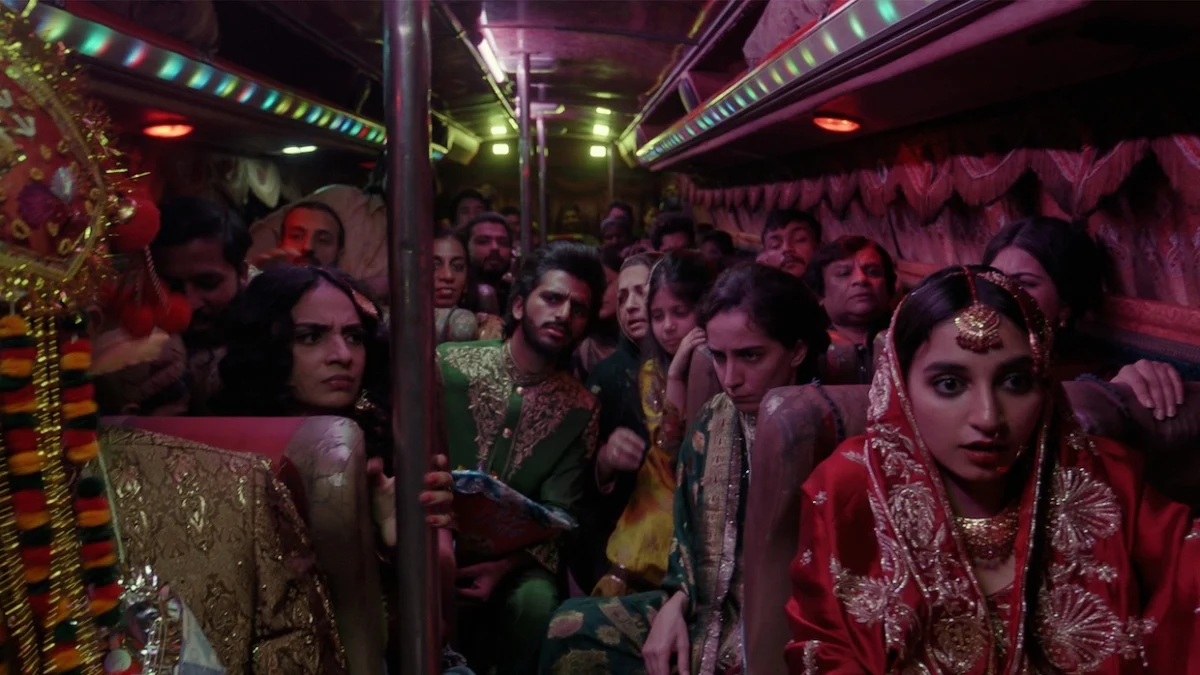
The film opens with a sequence that encapsulates the jarring blend of celebration and violence often found in traditional festivities. During a wedding, a celebratory bullet—discharged into the air as a substitute for fireworks—grazes the shin of the matriarch, Sohni Ammi, played by Farazeh Syed. While the injury is minor, requiring only stitches, it serves as a catalyst for the revival of local superstitions. The groom’s family immediately attributes the accident to the "curse" of the bride, Zeba (Mamya Shajaffar).
Zeba enters the marriage with a grim reputation; her two previous engagements ended in the mysterious deaths of her fiancés. One perished after being stung by a scorpion during a moment of intimacy on a sand dune—a detail she eventually confesses to her new husband, Sajawal (Channan Hanif). Sajawal, however, carries his own burdens. Defined by a prominent birthmark on his face that he views as a physical manifestation of his own "cursed" existence, he navigates the marriage with a mixture of seething shame and repressed anger.
The film meticulously deconstructs these perceived curses, suggesting that the true "haunting" in Pakistani society stems from unresolved sociocultural legacies. Khoosat utilizes the supernatural elements not merely for jump scares, but as metaphors for the psychological scars passed down through generations. The director explores themes of lust, grief, and loathing with a raw intensity, eschewing traditional caricatures in favor of complex, multifaceted characters.
The Creative Evolution: From Short Story to Feature Film
The transition of Lali from a short story to a feature-length screenplay involved a rigorous process of tonal experimentation. Khoosat revealed that the initial drafts were significantly darker and more focused on a singular perspective. However, during the development phase, the film evolved into a fragmented narrative that incorporates live folk singing and elements of dark comedy.
A pivotal figure in the film’s post-production phase was Saim Sadiq, the director of the Queer Palm-winning film Joyland (2022). Sadiq, serving as the editor for Lali, brought a "brutal" and "badass" sensibility to the pacing of the film. It was Sadiq who suggested placing the film’s title card at the 25-minute mark and introducing chapter headings to manage the drastic tonal shifts between the comedy of the first act and the horror of the finale.
Khoosat noted that while the script was originally written from Sajawal’s point of view, the final edit shifted the focus toward Zeba. This rebalancing allowed the film to explore the feminine experience within a patriarchal structure more deeply, highlighting the unexpected bond that forms between Zeba and her mother-in-law, Sohni Ammi. This relationship serves as a deliberate subversion of the "antagonistic mother-in-law" trope common in South Asian media.
Aesthetic Identity and the South Asian Gothic
Visually, Lali is defined by a distinctive and saturated color palette, dominated by shades of red and purple. Khoosat and his production design team, led by Kanwal Khoosat, utilized these colors to create a "mushaira" (symposium) of hues that reflect both the vibrancy of Punjabi culture and the visceral nature of the film’s themes.

The color red, or "lali," serves as a recurring motif. It represents the blood of the wedding accident, the henna on the bride’s hands, and the physical scar on Sajawal’s face. The director also drew inspiration from the red blankets commonly found in Pakistani government hospitals—a specific cultural detail that adds a layer of stark realism to the film’s more surreal moments. Purple is used to denote the "java plum" (jamun) fruit from the tree in the family courtyard, linking the characters to their domestic environment and the passage of time.
The cinematography and art direction work in tandem to create a sense of "cluttered authenticity." The settings are filled with minute details—items in cupboards, welding equipment, and specific headboards—that ground the supernatural elements in a believable, lived-in reality. This attention to detail contributes to the "South Asian Gothic" atmosphere, where the familiar becomes eerie and the traditional becomes terrifying.
Subverting Stereotypes and Representing the "Other"
One of the most notable aspects of Lali is its inclusive and progressive gaze. Khoosat, who has been a vocal advocate for queer representation in Pakistani cinema, infuses the film with what he describes as a "queer gaze." This is evident in the casting and the homoerotic undertones present in even minor characters, such as the local milkman.
Furthermore, the character of Bholi, played by Rasti Farooq, provides a crucial narrative anchor. As a non-verbal character, Bholi acts as a witness and a harbinger of the film’s darker turns. Khoosat conceived of Bholi as a "punctuation" throughout the film, representing a form of freedom that the protagonist, Sajawal, lacks. Her presence justifies the film’s shift into more experimental and tonal realities, serving as a bridge between the rational world and the world of premonitions and "jinns."
The film also addresses the internal logic of superstition. Sohni Ammi is portrayed as a modern, internet-savvy woman who nevertheless remains committed to traditional rituals, such as returning a turban to a shrine or tending to a specific tree. This duality reflects the contemporary Pakistani experience, where ancient beliefs coexist with modern technology.
Broader Impact and the Future of Pakistani Independent Cinema
The premiere of Lali at the Berlinale is a watershed moment for the Pakistani film industry, which has historically struggled with censorship, limited funding, and a lack of international distribution. The success of Lali follows the global trail blazed by Joyland, signaling that Pakistani filmmakers are increasingly finding their voice on the world stage by telling authentic, locally-rooted stories that resonate with universal themes.
Industry analysts suggest that the "all-local" nature of Lali’s production is particularly significant. By relying on domestic talent and resources, the film proves that high-quality, festival-grade cinema can be produced within Pakistan’s borders without the necessity of foreign co-production frameworks, which often come with creative compromises. This may encourage local investors to support more experimental and genre-defying projects in the future.
The film’s exploration of "cursed" legacies also mirrors the current state of Pakistan’s cultural discourse, where artists are increasingly challenging traditional norms and exploring the complexities of identity, gender, and trauma. By blending the "fable-esque" with the contemporary, Lali offers a sophisticated critique of the societal pressures that "scar" individuals and families.
As Lali begins its festival run, it stands as a testament to the resilience and creativity of the Pakistani creative community. The film not only enriches the global horror genre with its unique cultural perspective but also reinforces the idea that the most specific stories are often the ones that achieve the greatest universal reach. With its vivid color palette, haunting folk melodies, and deep psychological undercurrents, Lali is poised to leave an indelible mark on the international cinematic landscape, paving the way for a new generation of South Asian filmmakers to explore the shadows of their own heritage.