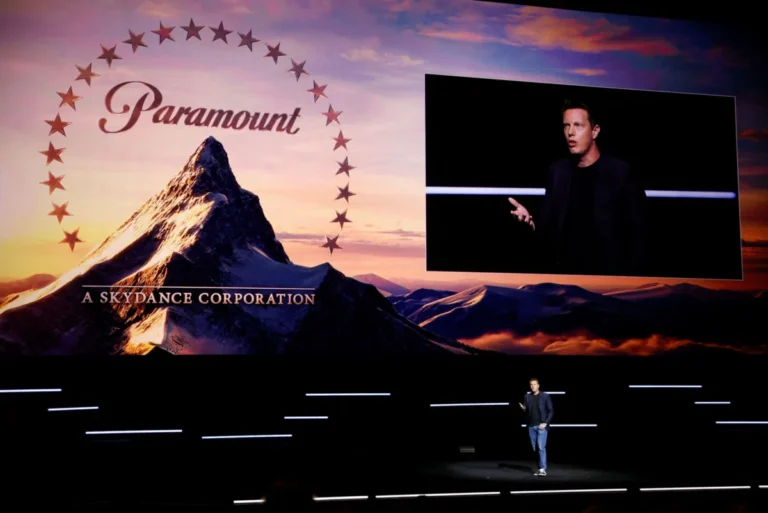
Warner Bros. Discovery (WBD) announced on Tuesday that it will officially reopen deal negotiations with Paramount Skydance (PSKY), marking a pivotal shift in a high-stakes corporate battle for the future of one of Hollywood’s most storied media empires. The decision follows the granting of a narrow seven-day waiver by Netflix, WBD’s current merger partner, which allows the company to explore what it describes as "deficiencies" in Paramount’s competing bid. This waiver, set to expire on February 23, 2026, provides a brief window for Paramount Skydance to submit its "best and final offer" as WBD leadership seeks to provide clarity to its shareholders ahead of a critical vote scheduled for late March.
The landscape of the media industry has been unsettled since the initial announcement of a merger agreement between Netflix and Warner Bros. Discovery in late 2025. Under the terms of that pending transaction, Netflix would acquire WBD’s streaming and studio assets in an all-cash deal valued at approximately $27.75 per share. However, the deal was quickly challenged by a hostile tender offer from Paramount Skydance, led by David Ellison, which bypassed the WBD board to appeal directly to shareholders with a $30-per-share cash proposal. The current waiver represents a strategic pause in the Netflix-WBD trajectory, allowing the WBD board to fulfill its fiduciary duties by vetting whether the Paramount offer can evolve into a superior, binding agreement.
A Timeline of the Tripartite Bidding War
The conflict began in earnest on December 5, 2025, when Netflix and Warner Bros. Discovery first disclosed their definitive merger agreement. The deal was seen as a transformative move for Netflix, giving the streaming giant access to WBD’s massive library—including HBO, CNN, and the Warner Bros. film studio—and effectively consolidating two of the "Big Three" streaming services.
By December 8, 2025, Paramount Skydance responded with a hostile bid, signaling a refusal to let the WBD assets fall to Netflix without a fight. Throughout January 2026, the two camps engaged in a public relations and legal tug-of-war. Netflix emphasized its financial stability and "certainty of closing," while Paramount Skydance leaned on its higher per-share valuation. On February 10, 2026, Paramount "sweetened" its offer with additional contractual enhancements regarding job protections and studio autonomy but notably stopped short of raising the $30-per-share price point.
The situation changed on Tuesday when WBD revealed that a senior representative from Paramount had informally suggested a willingness to raise the bid to $31 per share if formal talks were reopened. This prompted the WBD board to request the limited waiver from Netflix to verify the validity of this increased valuation.
Financial Discrepancies and the "Best and Final" Mandate
The primary friction between the WBD board and Paramount Skydance centers on the "actionability" of the latter’s proposal. While the $30 (and potentially $31) per share offer from PSKY is numerically higher than Netflix’s $27.75, WBD leadership has repeatedly cited unresolved "deficiencies" in the PSKY bid. These include concerns over the binding nature of the financing, the timeline for regulatory approval, and the specific terms regarding the separation of WBD’s linear television assets from its studio and streaming businesses.

WBD CEO David Zaslav emphasized that the seven-day window is not an abandonment of the Netflix deal, but a necessary step to maximize shareholder value. "Every step of the way, we have provided PSKY with clear direction on the deficiencies in their offers and opportunities to address them," Zaslav said in a statement. "We are engaging with PSKY now to determine whether they can deliver an actionable, binding proposal that provides superior value and certainty."
Market reaction to the news was cautiously optimistic. Shares of Warner Bros. Discovery rose nearly 3% following the announcement, while Paramount shares gained 5%, reflecting investor hope for a bidding war that could drive the final price higher. Netflix shares remained relatively stable, as the company maintains "matching rights," meaning that if Paramount does submit a superior offer, Netflix has the contractual right to meet that price to maintain its merger agreement.
The Regulatory Chessboard: Antitrust vs. Foreign Investment
Regardless of which suitor prevails, the acquisition of Warner Bros. Discovery faces a gauntlet of regulatory hurdles that could take a year or more to clear. The two bids present fundamentally different risks to regulators in the United States and abroad.
The Netflix Antitrust Concern
The Netflix-WBD merger would create a streaming behemoth with unprecedented market power. Lawmakers and consumer advocacy groups have raised concerns that combining Netflix and Max (formerly HBO Max) would reduce competition, leading to higher subscription prices and less leverage for content creators. Netflix co-CEO Ted Sarandos has pushed back against this narrative, arguing that the merger is necessary to "preserve jobs" in a legacy media sector that has seen tens of thousands of layoffs in recent years. Netflix maintains that its status as a "known and trusted entity" in Europe will ease the path through international antitrust commissions.
The Paramount-Skydance Foreign Funding Issue
Paramount’s bid carries a different set of complications, primarily related to its financing. The PSKY consortium is backed by sovereign wealth funds from Saudi Arabia, Abu Dhabi, and Qatar. While Paramount has stated that these Middle Eastern investors have agreed to "forgo any governance rights," the deal is expected to undergo intense scrutiny by the Committee on Foreign Investment in the United States (CFIUS).
Netflix leadership has been vocal about these risks. In a statement on Tuesday, Netflix suggested that European authorities would be "skeptical of claims" that the Middle Eastern investors are purely passive. Sarandos further challenged Paramount’s claims of a smoother regulatory path, stating, "I don’t know why the Ellisons would insinuate they have some inside track into the Department of Justice, but I can assure you they don’t."
Executive Reactions and the "Confusion" Narrative
The public discourse between the three companies has become increasingly sharp. Ted Sarandos told CNBC that the seven-day waiver was granted largely to cut through the "noise" created by Paramount. He accused the Paramount-Skydance camp of "flooding the zone with confusion" by bypassing the WBD board and speaking directly to shareholders with hypothetical offers. According to Sarandos, the waiver serves as a "put up or shut up" moment for Paramount to prove its offer is more than just talk.

Paramount, meanwhile, characterized the WBD board’s behavior as "unusual" but expressed a readiness to engage in "good faith." Despite the reopening of talks, Paramount confirmed it will continue with its hostile tender offer and its plan to nominate a slate of directors to the WBD board during the next annual meeting, ensuring that it has a path to victory even if the board remains committed to Netflix.
Implications for the Broader Entertainment Industry
The outcome of this battle will likely define the next decade of the entertainment industry. A Netflix victory would solidify the shift toward a "winner-take-all" streaming model, where legacy studios become production arms for tech-first platforms. A Paramount Skydance victory, conversely, would represent a massive bet on the continued viability of the integrated studio model, albeit one backed by significant international capital.
Industry analysts at Raymond James noted that the WBD board is in a delicate position. They must weigh the immediate financial gain of Paramount’s higher offer against the long-term "deal certainty" offered by Netflix. If the PSKY deal were to be blocked by CFIUS or European regulators a year from now, WBD could find itself in a significantly weakened state, having walked away from the Netflix merger.
Next Steps: The Road to March 20
The immediate focus now shifts to the February 23 deadline. Paramount Skydance must use this week to resolve the "deficiencies" cited by WBD and potentially formalize the $31-per-share offer hinted at in private communications. If PSKY fails to produce a binding, superior proposal by the end of the waiver period, the WBD board is expected to move forward with its unanimous recommendation for the Netflix deal.
WBD has officially scheduled a special meeting of shareholders for March 20, 2026. This date serves as the final deadline for stockholders to vote on the Netflix merger. Between now and then, the industry will be watching closely to see if David Ellison and the Skydance consortium can bridge the gap between a high-value offer and an actionable one, or if Netflix’s dominance will prove too formidable to overcome. For now, the "limited waiver" has turned a closed-door merger into a public race against the clock.