March 5 marks the official voting deadline for the Academy of Motion Picture Arts and Sciences, signaling the conclusion of a rigorous campaign season for the year’s most prominent cinematic achievements. Among the frontrunners is the Brazilian period drama The Secret Agent, which has emerged as a formidable contender in four major categories, including Best Picture. The film’s journey from a localized production in Recife to the heights of international acclaim serves as a milestone for South American cinema, particularly as it navigates a complex narrative landscape defined by Brazil’s historical trauma and its contemporary political volatility. Directed by Kleber Mendonça Filho and starring Wagner Moura, the film has transcended its status as a mere motion picture to become a central artifact in the nation’s ongoing discourse regarding democracy, censorship, and institutional memory.
As Oscar voters cast their final ballots, a separate and equally consequential voting deadline approaches in Brazil. In October, the Brazilian electorate will participate in the first round of presidential elections since the 2022 transition of power. This election represents a pivotal moment for the country, coming four years after the narrow defeat of far-right populist Jair Bolsonaro by the Workers’ Party (PT) candidate, Luiz Inácio Lula da Silva. The return of the 80-year-old Lula to the presidency marked his third term in office, following his initial leadership from 2003 to 2010. Should he secure a victory in the upcoming cycle, he would become the first president in Brazilian history to serve four terms, a prospect that has polarized the nation and intensified the cultural significance of media that explores Brazil’s authoritarian past.
Historical Parallels and the Framework of Dictatorship
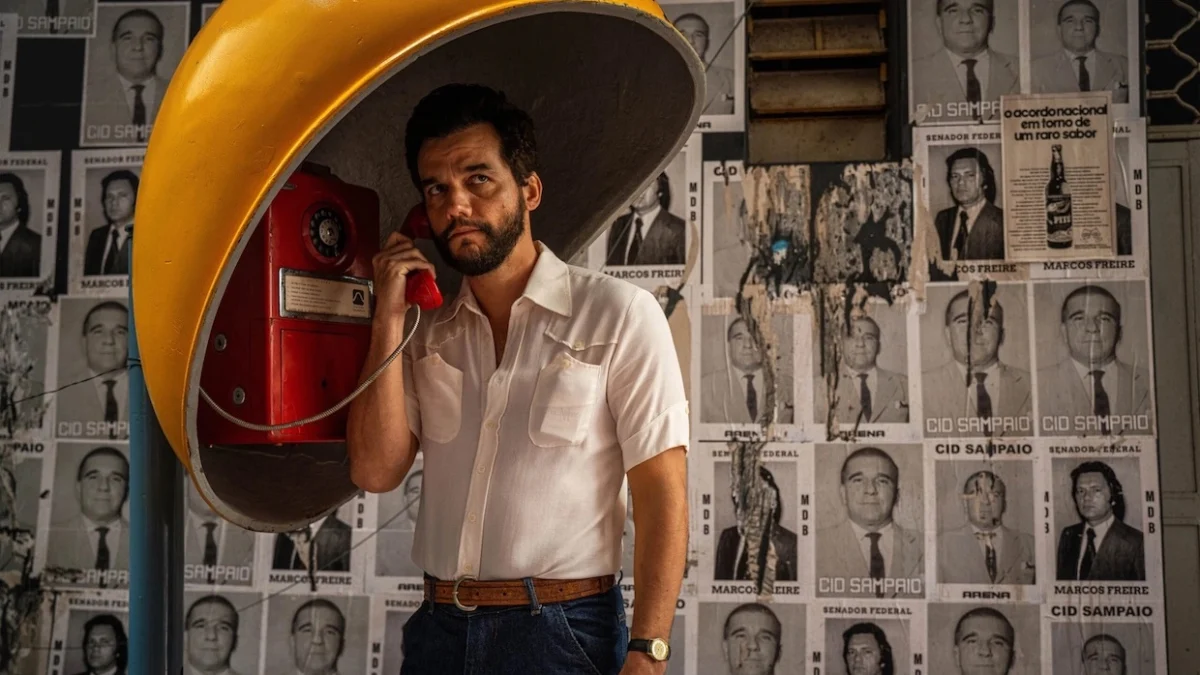
The Secret Agent is set during the height of Brazil’s military dictatorship, a period spanning from 1964 to 1985. The film follows the protagonist, Armando, played by Moura, as he returns to the city of Recife while evading the pervasive surveillance of the military regime. By grounding the narrative in the 1970s—an era characterized by both state-sponsored repression and the "Brazilian Miracle" of economic growth—Mendonça Filho provides a cinematic lens through which modern audiences can interpret the rise and fall of contemporary autocratic movements.
The relevance of this historical setting has been heightened by the legal and political fallout of the previous administration. Jair Bolsonaro’s four-year term was marked by a contentious relationship with democratic institutions, culminating in an attempted coup following his 2022 electoral loss. This period of instability resulted in a landmark judicial decision last year, which saw the former president sentenced to 27 years in prison for his role in undermining the constitutional order. For many Brazilians, the echoes of the 1964 coup are impossible to ignore, and The Secret Agent has been embraced as a cautionary tale that bridges the gap between the mid-20th-century junta and the 21st-century populist surge.
Mendonça Filho has noted that while the film was conceived as a historical exploration, its production coincided with a period where the "old guard" of the Brazilian right-wing appeared to be attempting a restoration of past ideologies. In recent interviews, the director suggested that certain political factions seemed intent on reliving the "youthful years of the dictatorship," a sentiment that caught many citizens by surprise. The film’s depiction of surveillance and state power has thus become a mirror for the anxieties of a population that recently saw its democratic foundations tested.
The Cultural Phenomenon and Box Office Dynamics
Despite the heavy thematic material, The Secret Agent has achieved unprecedented commercial success within Brazil. According to data from Ancine, the National Film Agency, the movie has outgrossed every other Best Picture Oscar contender at the Brazilian box office. This commercial dominance is particularly notable given the competitive landscape of international blockbusters and high-budget Hollywood productions.
The film’s influence has extended beyond the theater into the broader cultural fabric of the country. During the recent Carnival festivities, images and videos surfaced across social media showing participants dressed as characters from the film. A specific item of clothing—a vintage yellow t-shirt worn by Wagner Moura’s character, which was a relic of a 1978 Carnival group—has become a symbol of anti-fascist resistance. This sartorial choice by the public underscores the film’s role in shaping political identity, as the yellow jersey of the national football team had previously been co-opted as a symbol of the Bolsonaro movement. The reclaiming of yellow through a cinematic lens suggests a shift in the visual language of Brazilian patriotism.
However, this success has not been without opposition. The film has become a primary target in a "war of narratives" between supporters of the current administration and the opposition. Opponents of the Workers’ Party have utilized social media platforms to disseminate claims that cinema halls are empty and that the box office figures are fabricated. Mendonça Filho has dismissed these claims as "absurd," noting that the data is officially verified by national agencies and the independent press. This friction highlights the extent to which cultural products in Brazil are now scrutinized through a partisan lens, where even commercial success is treated as a political battleground.

A Chronology of Industry Recovery
The existence and success of The Secret Agent are inextricably linked to the shifting tides of government policy toward the arts. To understand the film’s significance, one must examine the timeline of the Brazilian audiovisual sector over the last decade:
- 2014–2018: A period of relative stability and international growth for Brazilian cinema, bolstered by the Audiovisual Sectoral Fund (FSA).
- 2019–2022: The Bolsonaro administration implements drastic budget cuts to Ancine. The government freezes funding for new productions and adopts a hostile rhetoric toward filmmakers, labeling the industry as a bastion of leftist ideology.
- 2023: Following Lula’s inauguration, the Ministry of Culture is reinstated. New funding programs are launched to revitalize the sector, and legal frameworks are established to protect freedom of expression.
- 2024–2025: The production and release of high-profile films like Walter Salles’s I’m Still Here and Mendonça Filho’s The Secret Agent signal a "renaissance" of Brazilian cinema, culminating in multiple Academy Award nominations.
Débora Butruce, Vice President of the Brazilian Association of Audiovisual Presentation, emphasizes that the current stability has allowed filmmakers to move beyond mere survival. "There’s been a real effort to rebuild funding programs and reopen dialogue with the audiovisual sector," Butruce stated. She argues that the high production quality of The Secret Agent is a testament to the resilience of the industry, proving that it can compete on a global scale when provided with institutional support.
Political Implications and the October Election
As the Oscar ceremony approaches, the political stakes in Brazil remain high. While President Lula has publicly celebrated the film’s success—treating it with the same national pride typically reserved for Olympic athletes—the opposition is mobilizing for the October elections. The Liberal Party (PL) has moved forward with the candidacy of Senator Flávio Bolsonaro, the son of the incarcerated former president.
Current polling data suggests a highly competitive race. Recent surveys indicate that Flávio Bolsonaro trails Lula by approximately eight percent, a margin that suggests the "Bolsonarismo" movement remains a potent force in Brazilian politics despite the legal troubles of its founder. In this environment, The Secret Agent serves as a touchstone for voters. For the left, it is a reminder of the dangers of authoritarianism; for the right, it is often framed as state-subsidized propaganda, despite the director’s insistence on the film’s independence.
Silvia Cruz, founder of Vitrine Filmes and the distributor of the film, suggests that the movie’s impact lies not in its ability to flip votes, but in its contribution to national memory. "The question is what kind of memory Brazil wants to leave for the future about this moment in time," Cruz noted. This sentiment is echoed by industry analysts who believe that the success of the film industry serves as a tangible metric for the success of Lula’s cultural policies, potentially influencing moderate voters who prioritize economic and cultural stability.
Conclusion: Cinema as a Democratic Tool
The Secret Agent’s four Oscar nominations represent more than just artistic achievement; they symbolize the reintegration of Brazil into the global cultural conversation after a period of perceived isolation. The film’s exploration of Armando’s struggle for survival in a time of surveillance resonates with a global audience concerned about the fragility of democratic norms.
Director Kleber Mendonça Filho maintains that his primary goal was storytelling rather than political activism. However, he acknowledges that discussing society inevitably involves discussing politics. His focus on the "value of getting together with friends" as a survival tactic during oppressive times offers a humanist counterpoint to the rigid ideologies that have dominated Brazilian discourse in recent years.
As the Academy prepares to announce its winners and as Brazil prepares for another historic election, The Secret Agent stands as a bridge between the past and the future. Whether or not it secures the Best Picture statuette, its legacy is already cemented in its ability to mobilize a nation to look at its own history with a critical, yet hopeful, eye. The film serves as a reminder that while political regimes may rise and fall, the stories a society tells about itself remain the most durable components of its identity.