


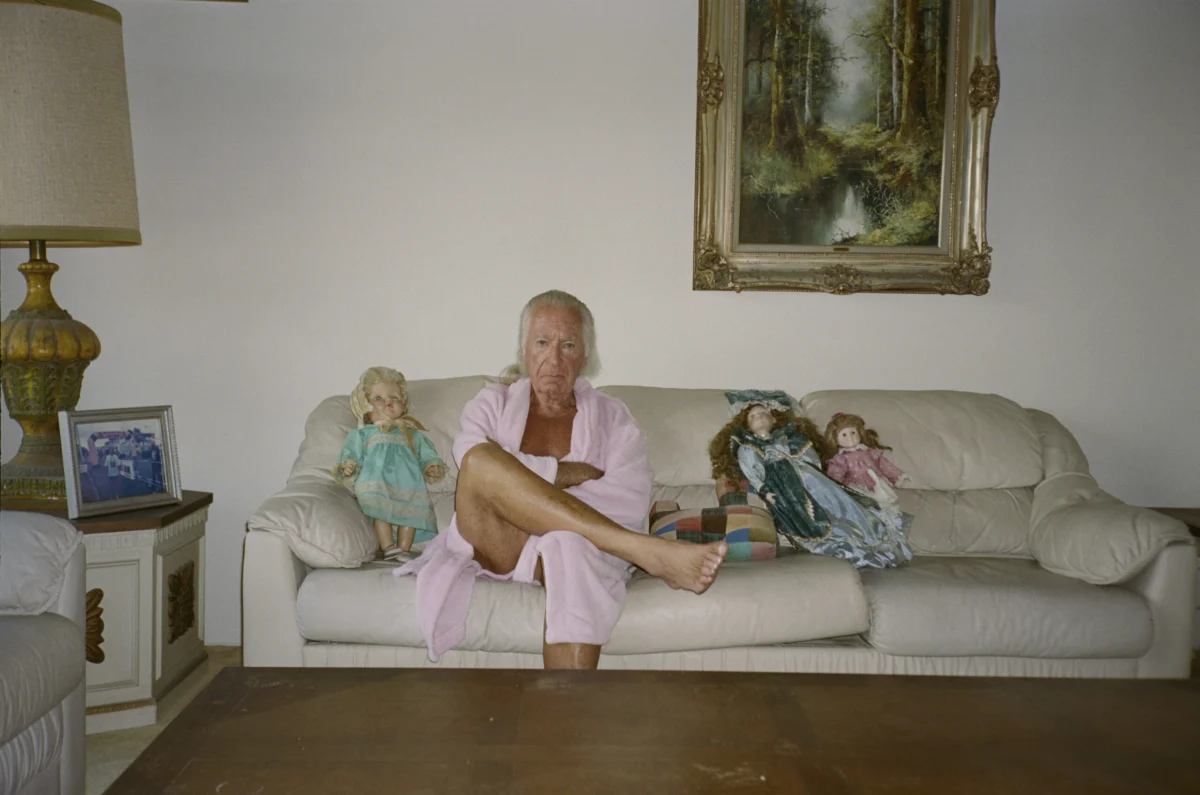
Danny Smiechowski, a 72-year-old San Diego resident, recently found himself stepping into a waiting limousine, bound for a splashy Hollywood finale event. This dramatic shift from local pariah to celebrated television personality marks the culmination of an extraordinary transformation chronicled in the HBO/A24 documentary series, Neighbors. Smiechowski, long ostracized and subjected to what he describes as "emotional abuse" for his unconventional habit of exercising in his driveway clad only in yellow briefs, has become the unlikely star of the show’s supersized finale, a testament to resilience, individuality, and the often-hilarious, sometimes brutal, dynamics of community life. His journey, from neighborhood outcast to the subject of a critically acclaimed documentary, offers a profound reflection on societal norms, the quest for belonging, and the unexpected paths to vindication.
The Catalyst: Smiechowski’s Journey to the Limelight
For years, Smiechowski endured the scorn and ridicule of his San Diego neighbors, his preferred attire for driveway workouts — minimal yellow briefs — serving as a constant source of contention. The "emotional abuse" he describes paints a vivid picture of persistent social exclusion, a scenario many might recognize in the subtle and overt judgments that can plague residential communities. This prolonged period of isolation and misunderstanding ultimately spurred Smiechowski to seek a platform for his story. His initial contact with the Neighbors production team came years ago, in response to a Craigslist advertisement placed by casting director Harleigh Shaw. "I just wanted to do it to get the word out," Smiechowski recounts, highlighting his desire not for fame, but for understanding and perhaps, validation.
The path from a Craigslist ad to an HBO series, however, was far from instantaneous. After an initial conversation, a prolonged silence followed, stretching for over a year. This period of uncertainty led to considerable frustration for Smiechowski, prompting him to block the phone numbers of several individuals associated with the show. Fortuitously, producer Rachel Walden remained unblocked, eventually reconnecting with Smiechowski when the production was ready to move forward. This initial reluctance and subsequent persistence on both sides underscore the raw, authentic nature of the series, which often delves into the lives of individuals at their most vulnerable and exasperated.
"Neighbors": A New Wave of Documentary Storytelling
Neighbors, billed as a late-night documentary series, distinguishes itself through its immersive, often chaotic, style, drawing comparisons to the distinctive filmmaking approach of executive producers Josh Safdie, Ronald Bronstein, and Eli Bush, known for their work on projects like Marty Supreme and other gritty, character-driven narratives. The series typically explores multiple, intense disputes within local communities across the United States in each of its six episodes. This multi-narrative structure allows for a kaleidoscopic view of human friction, showcasing the myriad ways individuals navigate the challenges of coexisting.
The show’s aesthetic, characterized by its kinetic camerawork and unvarnished realism, has resonated with audiences and critics alike, establishing it as a significant entry in the burgeoning field of unscripted television. HBO and A24, both stalwarts in producing high-quality, thought-provoking content, have found a compelling synergy in Neighbors, offering a platform for stories that might otherwise remain unheard. A24, in particular, has garnered a reputation for championing unique voices and unconventional narratives, making it an ideal partner for a series that spotlights the idiosyncratic lives of individuals like Smiechowski. The show’s commitment to capturing the unfiltered realities of neighborly conflict offers a mirror to society, reflecting the petty grievances, profound misunderstandings, and occasional moments of unexpected camaraderie that define residential life.
From Ostracism to Limelight: The San Diego Saga
Smiechowski’s story begins firmly rooted in his San Diego neighborhood, where his predilection for minimal attire during his driveway exercises had made him a figure of derision. Local residents would openly mock and insult him, contributing to his sense of being an "outcast." The initial segments of the finale capture this tension, showcasing locals confronting Smiechowski on camera about his choice of clothing. His bewilderment at their criticisms is palpable. "I do it to be happy, I do it because I feel good inside — I feel younger," he explains, highlighting the personal, intrinsic motivation behind his actions, which stood in stark contrast to his neighbors’ judgmental reactions. This conflict between personal freedom and community expectations forms the narrative bedrock of the finale, inviting viewers to ponder the boundaries of acceptable behavior in shared spaces.
The attention from an HBO/A24 series, however, began to subtly shift the dynamic. The sight of a limousine arriving to whisk Smiechowski away to Hollywood for the finale event sent ripples of disbelief through his neighborhood. "The neighbors were looking out their window, going, ‘Oh my God, that guy,’" Smiechowski recounts, mimicking their incredulity. This public validation, a visible sign of his newfound celebrity, began to dismantle the years of marginalization. The irony was not lost on Smiechowski, who observed that "for the people who were abusing me — and are abusing me — this is almost impossible for them to believe." This reversal of fortune, a clear instance of "the best revenge is success," served as a powerful turning point, transforming a source of humiliation into a badge of honor.

The Florida Experiment: Eden and Self-Discovery
The creators of Neighbors, Harrison Fishman and Dylan Redford, conceived an intriguing experiment for Smiechowski’s narrative arc: exploring a nudist community. "We had come across a couple disputes in nudist communities… and Harleigh had the idea of, ‘Would Danny be interested in living in a place like this?’" Fishman explains. Redford adds, "He had considered moving at various points, so it felt like a natural experiment that Danny was interested in doing and wanted to try." This provided a compelling contrast to his experiences in San Diego, offering a potential sanctuary where his lifestyle might be not just tolerated, but celebrated.
Smiechowski’s temporary relocation to Eden, a nudist community in Florida, became a central element of the finale. Upon arrival, he experienced a profound sense of liberation, a stark departure from the judgment he faced back home. He quickly integrated into the community, finding a welcoming group of people and embracing the uninhibited atmosphere. The documentary captures him letting loose at karaoke, a candid portrayal of his newfound freedom. A particularly poignant subplot involves his falling for a much younger woman, who initially shows a "glancing interest" in him, adding a layer of romantic vulnerability to his journey.
Despite the seemingly idyllic environment of Eden, Smiechowski ultimately returned to San Diego. This decision, while surprising to some, underscores a central theme of Neighbors: the complex and often inescapable pull of home. For better or worse, home is home, and the series suggests that true resolution often involves confronting one’s original environment, rather than escaping it entirely. His time in Eden, however, provided an invaluable period of self-discovery and affirmation, allowing him to experience acceptance and freedom, which he could then carry back to his challenging San Diego reality.
The Paradox of Home: Acceptance and Vindication
Smiechowski’s return to San Diego after his immersive experience in Eden marked a new chapter in his relationship with his neighbors. The success of the Neighbors series and his newfound celebrity status created an undeniable shift. "The best revenge is success, so that’s the nail in the coffin with [my neighbors] — and now they ignore me," he states with a mixture of satisfaction and wry observation. This "ignoring" is, in itself, a form of altered respect or, at the very least, a cessation of active hostility.
He offers a striking anecdote about a French neighbor who had previously been "horrible" during his mayoral campaign, betraying him with money and calling him a "crook." This same individual, upon learning of Smiechowski’s success, called to offer congratulations and inquire, "’Can I go to LA with you?’" This overt shift from antagonist to aspiring hanger-on vividly illustrates the transformative power of public recognition. Smiechowski’s question, "what are these people thinking?", encapsulates the profound irony and vindication he now experiences. While the dynamic isn’t one of warm embrace, it signifies a decisive victory against years of disparagement. Indeed, Smiechowski reports that since filming and returning home, his situation is "about 90% better," indicating a tangible improvement in his daily life and interactions.
The Man Unhypnotizable: Smiechowski’s Unique Psyche
Throughout his ordeal and the filming process, Smiechowski demonstrated a remarkable steadfastness and commitment. He describes his approach to the documentary production: "I just threw caution to the wind — if they say jump, I say how high, and that’s what we did." This willingness to fully engage, even in potentially vulnerable situations, speaks to a unique constitution. He meticulously committed to the filmmaking process, often repeating scenes multiple times to achieve the desired effect. "I would repeat something literally 20 times until I got it right, and then I would go, ‘Well, let’s do it again’ — because I had that Iron Man in me," he asserts.
This self-professed "Iron Man" mentality extends beyond his dedication to the show. Smiechowski claims an unusual psychological resilience, citing an inability to be hypnotized. "Dr. Michael Dean was known all over the world as a hypnotist in San Diego. He tried to crack me. He couldn’t do it, and he became frustrated because he was hypnotizing everybody in the room. I was the only one. So I’m one of the few people in the world who cannot be hypnotized," he confidently states. This anecdote, whether literally true or a reflection of his self-perception, reinforces the image of a man impervious to external influence and deeply anchored in his own identity.
In the run-up to the episode’s airing, Smiechowski began taking drama classes, further embracing his newfound public persona. He acknowledges the potential for continued public scrutiny and even abuse, yet remains unfazed. "People are going to call me a freak, but they don’t understand… Even my drama teacher said to me, ‘Danny, I’m really sorry for you. You’re going to take a lot of abuse,’" he recounts. His response, "George, don’t even worry about it, man. Water off the duck’s back. Just forget about it," perfectly encapsulates his indomitable spirit. Fishman, one of the show’s creators, aptly summarizes Smiechowski’s essence: "It’s rare to find somebody who is so truly themself. You’re, like, aggressively yourself." This aggressive authenticity is precisely what made him such a compelling subject for Neighbors.

The Broader Commentary on Community and Coexistence
The Neighbors series, particularly through Smiechowski’s narrative, offers a profound commentary on the nature of community and the challenges of coexistence. Fishman and Redford’s exploration of nudist communities revealed an unexpected paradigm. "Once we got in there, we saw that a lot of these communities were actually functioning much at a much higher and more forgiving level than many of the neighborhoods that we had been to throughout the country," Redford observes. He attributes this to a collective desire to preserve their unique way of life: "Everyone there really wanted these communities to work. They didn’t want to lose it. They didn’t want the infighting or whatever conflict existed within there to get to a point where they would lose this place that they love so much." Fishman adds, with palpable enthusiasm, "People were so happy there. It was insane."
This observation presents a stark contrast to the often-petty and intractable disputes documented in conventional neighborhoods. The nudist community, despite its outward unconventionality, appeared to foster a deeper sense of mutual respect and a shared commitment to harmony. Smiechowski, however, remains realistic about the broader societal impact of such revelations. He believes that only "a minority that will, what’s the word to use, gravitate or become interested" in the nudist lifestyle, expressing less confidence in significant changes in public perception. "For most people, it’s too socially dangerous. They would be embarrassed. Most people couldn’t do it," he posits, acknowledging the deep-seated social conditioning that governs most people’s comfort levels.
Despite living outside the nudist community, Smiechowski ponders his continued connection: "Kind of an existential question," he replies when asked if he still considers himself part of it. "My behavior, where I live, is somewhat related to that community." This statement highlights the lasting impact of his experience, suggesting that the lessons learned and the sense of self-acceptance cultivated in Eden continue to inform his identity and actions, even back in his conventional San Diego neighborhood. The series, therefore, transcends mere documentation of disputes, evolving into a philosophical exploration of belonging, acceptance, and the human need for authentic self-expression.
Industry Impact and Future Prospects
The critical and audience reception of Neighbors has been strong enough to warrant its official renewal for a second season. This decision by HBO speaks volumes about the show’s resonance and its ability to capture the zeitgeist of contemporary community dynamics. While Smiechowski’s story, having reached a relatively peaceful conclusion in his San Diego block, is unlikely to be a central focus of the next season, his journey has set a high bar for the series’ character-driven narratives.
Fishman and Redford are clearly enthusiastic about the future. "There’s so many subjects and places that we didn’t get to explore in season one for a bunch of different reasons, so we’re just so excited to get back and see what’s out there," Fishman shares. The creators envision the series as an ongoing "portrait of America," with each new story adding complexity and depth to their collective canvas. "The more we’re painting this portrait of America, in a way, and the more that we add to it, the more exciting it gets," he concludes. This ambitious vision suggests that Neighbors is poised to continue its exploration of the diverse, often contentious, yet undeniably human tapestry of American neighborhoods.
The success of Neighbors also reinforces HBO’s position as a premier destination for unscripted content, while further cementing A24’s reputation for backing innovative and artistically daring projects. In an era where reality television often leans towards sensationalism, Neighbors distinguishes itself by offering a more nuanced, observational, and often darkly humorous look at the friction inherent in human proximity. The series taps into a universal experience – the challenges of living alongside others – making it both relatable and endlessly fascinating.
Conclusion: An Enduring Message
Danny Smiechowski’s journey from a ridiculed San Diego resident to the unlikely star of an HBO/A24 documentary finale is more than just a personal triumph; it is a powerful narrative about the search for self-acceptance and the complex dynamics of community. His story, marked by resilience, defiance, and an unwavering commitment to his own truth, resonates deeply with audiences who have ever felt misunderstood or marginalized. The Neighbors series, through its immersive storytelling and keen observational eye, has not only given a voice to individuals like Smiechowski but has also sparked a broader conversation about what it means to coexist in an increasingly polarized world. As the series looks ahead to its second season, its enduring legacy will undoubtedly be its ability to illuminate the brutally funny, often frustrating, but ultimately human reality of living, quite literally, next door to one another. The first season of Neighbors is currently streaming in its entirety on HBO Max, inviting viewers to delve into these compelling portraits of American community life.