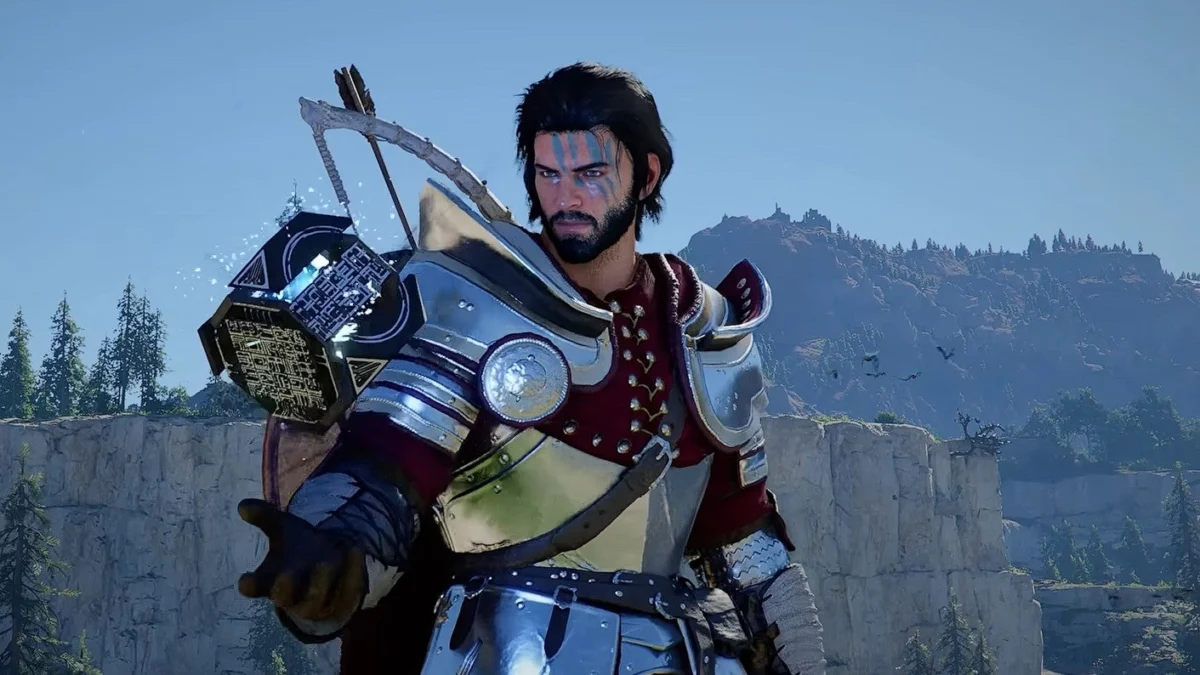
The global gaming community saw the highly anticipated arrival of Crimson Desert this week, as South Korean developer Pearl Abyss officially transitioned its ambitious project from the realm of marketing trailers to the hands of the public. While the title achieved significant commercial milestones within its first 24 hours—ascending to the top of the Steam global best-sellers list and securing hundreds of thousands of concurrent players—the launch has been characterized by a stark divide between commercial momentum and user satisfaction. Early data from Valve’s Steam platform indicates a "Mixed" review aggregate, driven largely by technical inconsistencies, optimization hurdles, and a perceived disconnect between the game’s high-octane promotional material and its deliberate early-game pacing.
A Commercial Triumph Met with Technical Turbulence
Upon its debut, Crimson Desert demonstrated the immense weight of its multi-year marketing campaign. The title peaked at a concurrent player count of 239,045 on Steam, a figure that positioned it as the third most-played game on the platform at the time, trailing only the perennial esports staples Counter-Strike 2 and Dota 2. This surge followed a pre-launch period where the game had already secured over three million wishlists, signaling a level of consumer interest typically reserved for established Western franchises or massive sequels.
However, the raw numbers tell only part of the story. As of the first 24 hours post-launch, the user sentiment on Steam remains volatile. A significant portion of the negative feedback centers on the game’s visual presentation and technical stability. Players have reported "disjointed graphics" and "repeated assets," with particular scrutiny placed on the implementation of modern rendering technologies. According to several technical reviews from the community, the game struggles with lighting consistency when raytracing is disabled, yet performance drops precipitously—often from 100 frames per second (fps) down to 30 fps—when advanced features like Ray Reconstruction are enabled.
Upscaling technologies, intended to bridge the gap between performance and fidelity, have also become a point of contention. Users utilizing FidelityFX Super Resolution (FSR) or Deep Learning Anti-Aliasing (DLAA) have noted that while these tools mitigate shimmering and graininess in the game’s dense foliage, they frequently introduce "ghosting" artifacts. For players attempting to run the game in native resolution without upscaling, the visual output has been described as "shimmering" and "grainy," leading to a fragmented experience across different hardware configurations.
Chronology of Development: From MMO to Single-Player Epic
To understand the current state of Crimson Desert, one must look at its protracted and transformative development cycle. Originally announced in 2019, the project was initially envisioned as a prequel to Pearl Abyss’s successful Massively Multiplayer Online Role-Playing Game (MMORPG), Black Desert Online. However, as development progressed, the studio made the strategic decision to pivot the project into a standalone, single-player action RPG focused on narrative and character-driven mechanics.
This shift was intended to allow Pearl Abyss to compete in the high-end AAA space dominated by titles like The Witcher 3: Wild Hunt and Elden Ring. Throughout 2023 and early 2024, the developer released a series of "gameplay" trailers that showcased fluid, high-speed combat, complex environmental interactions, and a sprawling open world. These previews were met with universal acclaim from content creators and industry analysts, many of whom questioned if the final product could truly deliver on such high visual and mechanical fidelity.
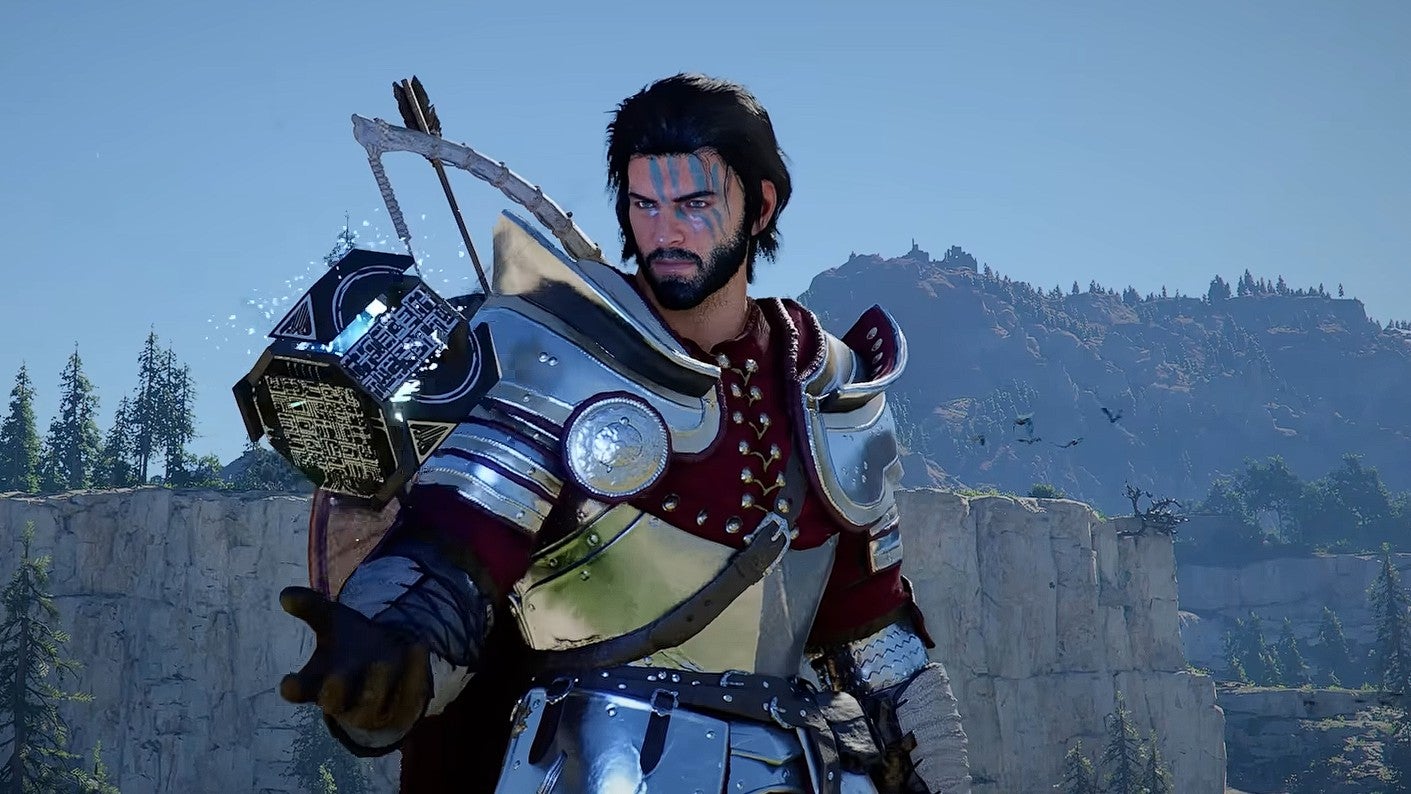
The launch day reality has revealed that many of the most impressive features shown in these trailers—such as massive boss encounters and intricate aerial maneuvers—are gated behind several hours of gameplay. This has led to early-game frustration among players who found themselves engaged in "filler" activities, such as arm-wrestling minigames and slow-paced delivery quests, rather than the high-stakes combat they had expected.
The Player Experience: Systems, Controls, and Interaction
Beyond the technical hurdles, the gameplay loop itself has come under fire for feeling "bloated" and "sluggish." In various user testimonials, players have expressed disappointment with the UI scaling and control schemes. On PC, the controls have been described as "clunky," leading to a notable uptick in launch-day refund requests. The disparity between the game’s ambition and its execution in the opening hours has prompted some critics to describe the systems as lacking a cohesive "hook."
In contrast to these criticisms, a segment of the player base has found charm in the game’s more granular interactions. Specifically, the game’s treatment of domestic animals has become an unexpected viral success. Players have praised the ability to interact with, pick up, and carry cats throughout the various villages in the world of Pywel. For some, these small details of world-building provide a sense of immersion that offsets the broader mechanical issues. One reviewer noted that finding a "crying cat in the bushes" and being able to comfort it was a "10/10" experience, highlighting the idiosyncratic nature of modern player satisfaction.
Market Analysis and the "Game of the Year" Narrative
The launch of Crimson Desert has had immediate repercussions in the financial and prediction markets. Prior to release, the game was a "darling" of speculative platforms like Kalshi, where traders can bet on real-world outcomes. At its peak of anticipation, Crimson Desert was given a 30 percent chance of winning the "Game of the Year" award at the upcoming The Game Awards (TGA), placing it second only to Grand Theft Auto VI (which held a 45 percent chance).
However, following the "Mixed" reception on Steam and the publication of early critical reviews, these odds have suffered a dramatic decline. Bloomberg analyst Jason Schreier noted that the predicted probability of a TGA win plummeted to just five percent within hours of the game’s release. This shift reflects a broader market correction, as the "hype" built by carefully curated trailers met the reality of a public launch.
Critical Comparison: The Witcher and the "Cardboard" Conundrum
Professional critics have been equally measured in their praise. Eurogamer’s three-star review, authored by Lewis Gordon, serves as a representative example of the critical consensus. Gordon compared Crimson Desert to the genre-defining Witcher series, noting that while CD Projekt Red’s titles feel "gritty" and "idiosyncratic," Crimson Desert often feels like a "banquet where almost every dish has the faint taste of cardboard."
The critique suggests that while Pearl Abyss has mastered the technical ability to create large-scale environments and complex assets, the "soul" or "texture" of the world may be lacking in comparison to its peers. The review did, however, highlight the game’s impressive giant trolls as a standout feature, suggesting that when Crimson Desert leans into its high-fantasy spectacle, it manages to find its footing.

Supporting Data: Steam Charts and Engagement
Despite the polarized reviews, the sheer volume of engagement cannot be ignored. At the time of this report, over 115,000 players remain active in the world of Pywel, making it the sixth most-played game on Steam. It currently sits behind PUBG: Battlegrounds, Slay the Spire 2, and the surprise indie hit Bongo Cat.
This level of retention suggests that despite the technical complaints, there is a substantial audience willing to look past the "shimmering" graphics and "clunky" controls to explore the narrative of the protagonist, Kliff. Historical data suggests that player counts for major RPG launches often see a second peak during their first weekend, as more casual players gain access to the title. Whether Pearl Abyss can convert this initial massive audience into a long-term player base will likely depend on the speed and efficacy of post-launch patches.
Implications for Pearl Abyss and the Industry
The launch of Crimson Desert serves as a significant case study for the burgeoning South Korean AAA development scene. Following the success of titles like Lies of P and Stellar Blade, Crimson Desert was viewed as the next major step in proving that Korean studios could successfully transition from the "pay-to-win" MMO models to prestige single-player experiences.
The mixed reception suggests that while the technical talent and ambition are present, the challenges of optimization and gameplay pacing remain significant hurdles. For Pearl Abyss, the immediate future will involve damage control regarding technical performance. The studio has a history of robust support for its titles, and many in the industry expect a series of rapid updates to address the UI scaling and graphical glitches reported by Steam users.
In the broader context of the gaming industry, Crimson Desert’s launch reinforces the growing trend of "trailer vs. reality" skepticism. As developers utilize increasingly powerful proprietary engines—in this case, the BlackSpace Engine—the gap between a cinematic trailer and the actual user experience on mid-range hardware continues to be a primary source of consumer friction. For now, Crimson Desert remains a commercial powerhouse, but its legacy as a critical success remains in the balance as the developers work to polish the rough edges of their ambitious desert epic.