The profound questions of what constitutes family, the essence of home, and the very definition of belonging, alongside who holds the authority to impose these concepts upon individuals, form the bedrock of Taekyung Tanja Inwol’s poignant second feature documentary, Homesick (Hjemsøgt). This film, following her acclaimed A Colombian Family, plunges audiences into a challenging introspection on the nature of "good" and "bad" families and homes, particularly through the lens of transnational adoption. Premiering in the NORDIC:DOX competition at the 23rd edition of CPH:DOX, the Copenhagen International Documentary Film Festival, Homesick offers a raw, unfiltered chronicle that bridges the cultural and geographical divides between Western Denmark and South Korea.
A Deep Dive into Personal and Systemic Trauma
Described as a "raw family chronicle," the documentary intricately weaves together Inwol’s personal narrative as an adoptee from South Korea into a Danish family. The film navigates the often-unspoken complexities of her upbringing, revealing a stark contrast between a seemingly perfect surface and the hidden realities beneath. A synopsis for the film highlights: "In Taekyung’s family in Denmark, everything was meant to look perfect on the surface, but behind the façade, there was domestic violence, breakups, divorce, suicide attempts, death, loneliness, and much more." This unsettling revelation sets the stage for a central inquiry: "When one’s origins have been erased in Korea, where does one turn when the family one has been placed in begins to crack?"
Homesick doesn’t shy away from exposing systemic injustices that have long shadowed the transnational adoption landscape. Central to its narrative is the startling revelation from June 2025, when the Korean Truth and Reconciliation Commission confirmed that Inwol’s adoption case was among 56 instances where human rights violations were identified. The Commission explicitly concluded that her adoption documents had been falsified, deliberately misrepresenting her as a "foundling" to expedite the adoption process for financial gain. Despite these groundbreaking findings, Inwol continues to face significant obstacles in accessing genuine information about her birth parents, and both the Korean and Danish states have yet to implement concrete actions or provide meaningful redress.
The Director’s Journey: From Silence to Self-Discovery
Taekyung Tanja Inwol’s motivation to create Homesick emerged from a deeply personal space of grief and unanswered questions following the deaths of her adoptive parents. "You know this whole thing about rest in peace?" Inwol shared with THR. "People have this idea: let’s not speak ill of the dead. But I was like: ‘No, now’s the time to talk about all the stuff that we couldn’t talk about before.’ It was too difficult when they were alive. Nobody seemed to really agree with me, but I just had all these questions."
Initially, Inwol’s vision for the film was broader, intending to explore "all the things that we don’t talk about in the family." Her aim was to "create a visual language for the things for which a language doesn’t exist." However, as she began interviewing family members, a profound realization dawned upon her: "I realized that I was part of the secrets. So, I thought, okay, well, I guess it will have to be a film about me, or at least from my position in the family, as being one who we don’t talk about." This pivot transformed the project into an urgent and extensive journey of self-healing, a testament to the therapeutic power of artistic expression.
This exploration of familial complexities and unresolved trauma is not new to Inwol’s cinematic repertoire. Her first feature, A Colombian Family, delved into a mother-daughter relationship seeking healing in Colombia. Inwol herself quips, "You can see a trend here," acknowledging that film served as a mirror, allowing her to process her own experiences through the narratives of others. Homesick, therefore, represents a more direct and unvarnished engagement with these recurring themes, positioning her personal story at the heart of the inquiry.

Navigating the Dual Role: Director and Protagonist
Assuming the dual role of director and protagonist presented unique challenges for Inwol. "It was never my wish to be a protagonist in my own film," she admitted. "So, when I started out making it, it was so important for me to have control over how I was presented and what people were allowed to see." This desire for control necessitated establishing a stringent set of rules for herself, meticulously crafting how she would be perceived and how the world would be presented through her "gaze."
One significant hurdle Inwol identified was the absence of a conventional language to articulate her experience of difference. "There is just no language for difference, and so I had to [think about] how to give myself that language," she explained. Furthermore, she recognized the inherent power dynamic: "I am also very aware that the audience is not necessarily on my side, because I’m the minority in the story. So, how do I turn the gaze around? It means I had to make up a gaze. They have never seen my gaze on them." This conscious effort to reclaim narrative control and shift perspective is a defining characteristic of Homesick.
Artistic Choices: Visual Metaphors for Identity
Inwol employs a rich tapestry of interviews, photographs, evocative landscapes, and introspective voice-overs to construct her experience as the sole adoptee in her Danish family and "as someone who has been erased from Korea her entire life." The film skillfully interweaves personal memories and imaginative sequences with the stark political realities of a transnational adoption system that, as press notes aptly put it, "long ago lost its shine."
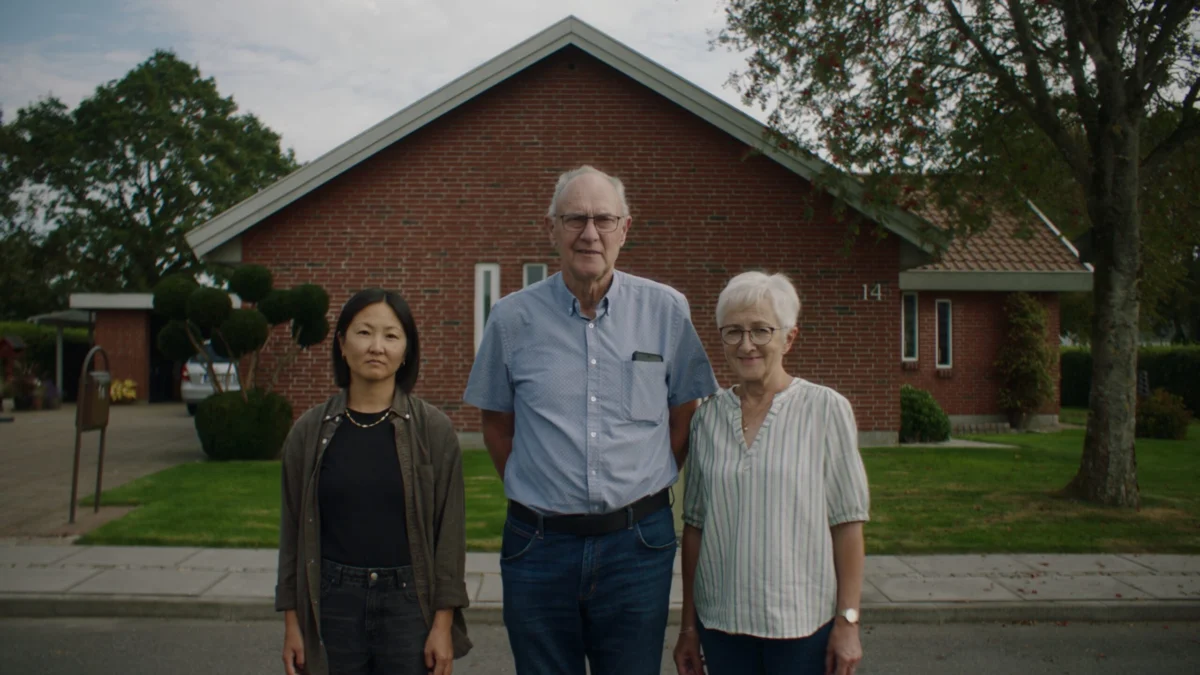
A distinctive visual element in Homesick is the recurring motif of "moving portraits." These scenes feature Inwol standing alongside other individuals, whose identities are not immediately disclosed, reminiscent of traditional family photographs. Inwol describes them: "Because it’s as if you take a portrait, but then just keep it going. This is the first moment that you get to meet these people, because these people are both family, but also somebody who I want to invite the viewer to look at." This deliberate ambiguity, she explains, underscores the randomness of her own placement: "Putting myself next to them means you cannot tell from that shot alone whether it’s my parents or my brother or whoever. And I think that just shows the randomness of it all. So, by introducing them in that way next to me, it gives you the idea of the randomness of my being there."
Another powerful performative aspect of the film unfolds in Korea, where Inwol and three other women, also adopted from Korea to Denmark, are depicted wearing hanbok, the traditional Korean attire. "The idea for me was to show that I’m not alone, although the core feeling in the film is loneliness and not being seen or recognized," Inwol elaborated. This collective imagery "creates a sense of community," with the hanbok symbolizing not only cultural heritage but also resilience and resistance in the face of Korea’s complex history as a "nation suffering" from the legacy of war and division.
The Historical and Ethical Landscape of Transnational Adoption
To fully appreciate the gravity of Inwol’s narrative, it is crucial to understand the historical context of transnational adoption from South Korea. Following the Korean War (1950-1953), South Korea emerged as a primary source country for international adoptions, initially driven by humanitarian concerns for war orphans and mixed-race children. However, as the decades progressed, the system evolved, becoming increasingly institutionalized and, in many instances, commercialized. Between the 1950s and the early 2000s, an estimated 200,000 Korean children were adopted overseas, primarily to Western countries like the United States, Sweden, Norway, and Denmark. Denmark, in particular, adopted a significant number of Korean children relative to its population size, fostering a substantial Korean-Danish adoptee community.

While often framed as a benevolent solution for children in need and infertile couples, the system was plagued by ethical shortcomings. Reports and testimonies from adoptees and birth families have consistently highlighted issues such as insufficient efforts to find birth families domestically, coercion of birth mothers, and, critically, the widespread practice of falsifying documents. The "foundling" narrative, where children were falsely registered as abandoned without any traceable family, became a common mechanism to circumvent legal requirements and expedite adoptions, often for profit. This practice effectively erased the origins of countless adoptees, severing their ties to their biological families and cultural heritage, a theme central to Inwol’s film.
The Korean Truth and Reconciliation Commission and Its Implications
The findings of the Korean Truth and Reconciliation Commission in June 2025 regarding Inwol’s case, and 55 others, mark a pivotal moment in the ongoing struggle for adoptee rights and historical accountability. Established in 2020, the Commission is tasked with investigating past human rights abuses committed by state or public institutions. Its acknowledgement of falsified documents and human rights violations in adoption cases represents a significant official recognition of the systemic problems within the transnational adoption industry.
For adoptees like Inwol, this official confirmation of wrongdoing validates years of personal struggle and advocacy. However, the lack of "concrete action from either the Korean or Danish state" following these findings underscores the persistent challenges in translating such acknowledgements into tangible support, access to information, or restorative justice for those affected. Adoptee communities globally have long called for comprehensive investigations, transparent access to original documents, and robust mechanisms for family reunification, yet progress often remains slow and fragmented. The implications extend beyond individual cases, raising profound questions about national responsibility, international law, and the ethical frameworks governing future intercountry adoptions.
Broader Impact and Future Directions
Homesick is more than just a personal story; it is a powerful indictment of a system that prioritized convenience and profit over the fundamental human right to identity and family connection. By giving voice to her "erased" experience, Inwol contributes to a growing global dialogue among adoptees seeking to reclaim their narratives and challenge the often-romanticized view of international adoption. The film serves as an educational tool, shedding light on the complexities and traumas that can persist for generations.
The production of Homesick involved a dedicated team, including producers Rikke Tambo Andersen, Sona Jo, and Virpi Suutari. The cinematography, handled by Catherine Pattinama Coleman and Mathias Døcker, captures both the intimate vulnerability of Inwol’s journey and the broader landscapes of her dual heritage. Editing by Matilda Henningsson ensures a cohesive and impactful narrative flow. Impronta Film is managing international sales for the Tambo Film production, aiming to bring this crucial story to a wider global audience.
Looking ahead, Inwol remains committed to exploring themes of family, diaspora, and conflict. She reveals, "There’s a red thread through my films, and that is the theme of family divided by conflict or war or diaspora experiences." Her next project, currently in early development, focuses on one of the oldest Korean communities in Mexico. This continued thematic exploration reflects Inwol’s enduring quest to understand identity and belonging within diverse cultural and historical contexts, constantly asking herself, "What films can I make? What films are for me?" Homesick stands as a testament to her unique voice and her unwavering commitment to bringing hidden truths to light.
Viewers are encouraged to watch the trailer for Homesick to gain a glimpse into this compelling and essential documentary.