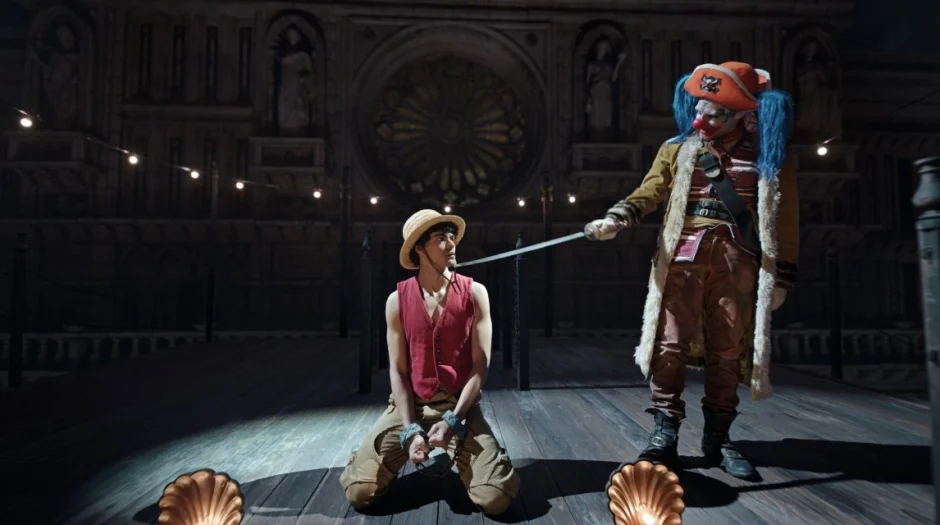
The journey of American live-action adaptations of Japanese anime has been a tumultuous one, fraught with skepticism and a history of critical and commercial failures. For years, the very concept was widely dismissed as a misguided endeavor, destined to alienate existing fanbases and confuse new audiences. However, recent successes, most notably Netflix’s One Piece, suggest a significant shift, potentially marking a new era for the genre in Western media production. This evolution is not merely about replicating existing narratives but about understanding the cultural nuances and creative spirit that made these stories resonate globally in the first place.
From Skepticism to Surprise: The One Piece Revelation
The initial reception to a live-action One Piece series was predictably fraught with apprehension. Many considered it an almost impossible undertaking, given the anime’s expansive world, fantastical elements, and deeply ingrained lore. Early critiques of the first season, while acknowledging the monumental task, often pointed to pacing issues and narrative choices that struggled to capture the source material’s unique blend of humor and drama. One particular storyline, described as a "sinister mansion with sinister servants," was criticized for its lack of atmosphere and the jarring inclusion of poorly integrated flashbacks. Furthermore, the depiction of a slavery backstory for monstrous piscine villains was noted for its insensitivity, drawing unfavorable comparisons to more nuanced explorations of such themes in other media.
Despite these critiques, the first season also showcased moments of genuine brilliance. The casting of Iñaki Godoy as Monkey D. Luffy was widely lauded, with his portrayal imbuing the character with a contagious, guileless joy that captured the essence of the beloved protagonist. The series also demonstrated a commendable willingness to embrace the manga’s audacious tonal shifts, seamlessly transitioning from slapstick comedy to profound despair and ultimately to redemption, exemplified by the emotionally charged "Help me" scene involving Nami. The innovative use of "Den Den Mushi," or snail phones, was another highlight, providing a touch of whimsical ingenuity that underscored the series’ potential.
The recently released second season has further solidified One Piece‘s surprising success. While acknowledging a few initial stumbles, particularly in the first episode, the season quickly found its stride, delivering action and adventure that significantly surpassed its predecessor. The narrative maintained its infusion of gaiety and silliness, featuring supervillains as flamboyant as those in the classic Adam West Batman series. Reviews have noted the series’ remarkable ability to "flit between Saturday-morning cartoon and adult drama/action show," a characteristic that has long defined manga and anime for decades. The introduction of a beloved furry character, whose arrival evokes the pathos of Paddington Bear, has been a particular talking point, alongside a subtle nod to the 2001 CG film Monster House through an "uvula" gag. This evolution suggests a growing understanding of how to translate the unique spirit of anime to a live-action format, moving beyond mere superficial adaptation.
A Legacy of Stumbles: The Troubled History of American Live-Action Anime
The success of One Piece stands in stark contrast to the often-disastrous history of American attempts to adapt anime into live-action. This history is punctuated by a series of critical failures and commercial disappointments, creating a deep-seated skepticism within both fan communities and the broader entertainment industry.
Early Obscurity and Z-Grade Efforts (1990s)

The earliest forays into live-action anime adaptations in America were largely relegated to the fringes of the film industry, often characterized by low budgets and questionable creative choices.
- 1991: The Guyver: Based on the Japanese manga of the same name, this film featured a young man who discovers alien armor and battles mutants. While the alien suits and some special effects were deemed adequate, the script and characters were widely panned as "braindead." The film’s protracted fight sequences were often compared unfavorably to the Power Rangers series.
- 1994: Guyver: Dark Hero: A more gore-focused sequel that also failed to garner significant attention.
- 1995: Fist of the North Star: This live-action adaptation, despite the involvement of actor Malcolm McDowell, is largely remembered for its trailer and its perceived inability to capture the gritty, post-apocalyptic essence of the original manga.
- 1995: Crying Freeman: A French-Canadian-Japanese production filmed in English, this adaptation of a crime manga by Christophe Gans also largely flew under the radar.
A notable early attempt that never saw the light of day was the 1993 bid for an American Sailor Moon TV series. This project, conceived before the original anime gained traction in the U.S., aimed to blend live-action with newly produced American animation. A pilot was eventually discovered and documented by YouTuber Ray Mona, offering a glimpse into what could have been a pivotal, albeit potentially misguided, early adaptation.
The Wachowskis’ Ambitious Vision and Box-Office Blues (Late 1990s – 2000s)
The late 1990s and early 2000s saw a more prominent engagement with anime influences, culminating in ambitious, high-profile projects that, while artistically significant, did not always translate to commercial success.
- 1999: The Matrix: While not a direct adaptation, the Wachowskis’ groundbreaking film was heavily influenced by the visual language of anime, particularly titles like Ghost in the Shell and Ninja Scroll. Its innovative use of bullet time and stylized action sequences brought anime aesthetics into mainstream Hollywood cinema, proving the genre’s potential for inspiring Western filmmaking.
- 2008: Speed Racer: This vibrant, visually audacious adaptation of the classic 1960s anime was a passion project for the Wachowskis. The film captured the nostalgic spirit of the original, with its hyper-stylized visuals and breakneck racing sequences. However, despite its artistic merits and impressive technical execution, Speed Racer was a significant box-office disappointment. Critics and audiences were divided, with some praising its unique aesthetic and others finding its narrative unfocused and its pacing detrimental to the core racing elements. The film’s struggle highlighted the challenge of translating the specific charm of older anime to a contemporary audience without alienating them.
The Era of Fiascos: Dragonball Evolution and The Last Airbender (Late 2000s – Early 2010s)
The late 2000s and early 2010s marked a particularly grim period for live-action anime adaptations, characterized by critically panned films that became cautionary tales for the industry.
- 2009: Dragonball Evolution: This live-action adaptation of Akira Toriyama’s iconic Dragon Ball franchise was a catastrophic failure. Directed by James Wong, the film was lambasted by fans and critics alike for its nonsensical plot, wooden performances, and complete disregard for the source material’s spirit. It became a benchmark for how not to adapt beloved anime.
- 2010: The Last Airbender: While technically an adaptation of the Nickelodeon animated series Avatar: The Last Airbender (which was itself heavily influenced by anime), M. Night Shyamalan’s film became notorious for its casting controversies and its failure to capture the depth and charm of the original show. It also brought the term "racebending" into widespread discussion, referring to the casting of actors whose ethnicity differed from that of the characters they portrayed, sparking significant debate about cultural representation in adaptations.
The "Racebending" Debate and Shifting Criticisms
The issue of "racebending" became a significant point of contention in the mid-to-late 2010s, particularly with adaptations like Ghost in the Shell and Netflix’s Death Note.

- 2017: Ghost in the Shell: The casting of Scarlett Johansson as the cyborg protagonist Major Motoko Kusanagi ignited a firestorm of criticism. While Johansson is a prominent actress, the decision to cast a white actress in a role originating from a Japanese manga and anime sparked accusations of whitewashing. The film itself received mixed reviews, with some praising its visual effects and action sequences but others criticizing its narrative departures from the original.
- 2017: Death Note: Netflix’s adaptation, set in Seattle and featuring a predominantly white cast, also faced accusations of whitewashing and cultural insensitivity. Critics argued that the film failed to capture the "culture-specific" essence of the original Japanese manga, leading to discussions about the ethics of transposing culturally rooted narratives.
This debate highlighted a growing awareness of cultural appropriation and representation in Hollywood. However, the author of the original article also pointed out inconsistencies in these arguments, questioning why certain adaptations like Parasyte: The Grey (a South Korean adaptation of a Japanese manga) or the Hollywood film Edge of Tomorrow (based on a Japanese novel) did not elicit the same level of outcry. The analysis suggested that the focus on "racebending" could sometimes be America-centric and overlook broader issues of creative adaptation and cultural exchange.
Glimmers of Hope: Alita and Cowboy Bebop
Despite the string of failures, there were glimmers of hope that suggested a more nuanced approach to live-action anime adaptations was possible.
- 2019: Alita: Battle Angel: Directed by Robert Rodriguez and produced by James Cameron, this film based on the Battle Angel Alita manga was met with a more positive reception from both fans and some critics. The casting of Rosa Salazar, a Latinx actress, as Alita avoided the racebending controversy, and the film was praised for its stunning visuals and Alita’s compelling characterization as a CG creation with a childlike wonder. While the film’s financial performance was debated due to its substantial budget, the prospect of a sequel, driven by fan enthusiasm and the filmmakers’ commitment, indicated a growing appetite for faithful yet innovative adaptations.
- 2021: Cowboy Bebop: Netflix’s live-action adaptation of the beloved anime Cowboy Bebop also garnered mixed reactions. While some fans were alienated by changes to the characters and plot, others, including the original article’s author, found it to be a bold and impressive series that captured the spirit of the original, even if it deviated in certain aspects. The series was praised for its lead performances and its attempts to enrich the world-building, though it ultimately faced cancellation after its first season. The show’s reception underscored the delicate balance required to satisfy long-time fans while attracting new viewers.
The Path Forward: Understanding and Respecting the Source Material
The success of One Piece in its second season, following a strong debut, marks a significant turning point. It suggests that Hollywood is finally beginning to understand the alchemy required to translate the vibrant, often audacious, spirit of anime into live-action. This success can be attributed to several key factors:
- Respectful Adaptation: The One Piece team has demonstrated a deep understanding and respect for the source material, preserving its core themes, character dynamics, and unique tone.
- Authentic Casting: The casting of Iñaki Godoy as Luffy and the diverse ensemble of actors has been crucial in bringing the beloved characters to life with authenticity.
- Embracing the Absurd: The series has not shied away from the inherent silliness and over-the-top nature of the manga, allowing it to shine through in a way that feels natural to the narrative.
- World-Building Excellence: The production design and visual effects have successfully translated the fantastical world of One Piece into a believable and immersive live-action setting.
The announcement of Tomorrow Studios developing a live-action series based on Samurai Champloo, with the involvement of its creator Shinichiro Watanabe, further signals a commitment to more authentic and collaborative adaptations. This approach, which prioritizes the vision of the original creators and fosters a deeper understanding of Japanese storytelling traditions, is likely to be the key to future successes.
The history of American live-action anime adaptations is a testament to the challenges and rewards of cross-cultural creative endeavors. From early missteps and outright fiascos to the more recent triumphs, the landscape has evolved significantly. The continued production of shows like One Piece and the proactive involvement of original creators suggest that the "Worst Idea Ever" is slowly, but surely, becoming a viable and exciting frontier for global entertainment. The lessons learned from past failures, coupled with a newfound respect for the source material, are paving the way for a future where anime’s magic can be effectively translated to live-action, captivating audiences worldwide.