Versant Media Group, the newly independent media entity comprising a suite of cable television networks and digital properties recently spun off from Comcast Corporation, released its first full-year and fourth-quarter earnings report on Tuesday. The results offer the first comprehensive financial look at the company since its debut on the Nasdaq in early January 2026. While the report underscored the persistent challenges facing the traditional pay-TV landscape, it also detailed an aggressive capital return strategy and a roadmap intended to transform the company into a digital-first media powerhouse.
For the full fiscal year 2025, a period during which the assets were still technically under the ownership of Comcast’s NBCUniversal but operated with increasing autonomy in preparation for the separation, Versant reported total revenue of approximately $6.69 billion. This figure represents a 5% decline compared to the previous year, highlighting the revenue erosion typical of the legacy cable sector. Net income attributable to Versant for the year stood at $930 million, while the company’s stand-alone adjusted earnings before interest, taxes, depreciation, and amortization (EBITDA) reached $2.18 billion.
The financial data reflects a company in the midst of a profound structural shift. As the media industry grapples with the accelerating migration of viewers from traditional cable bundles to streaming platforms, Versant’s core linear business remains its primary—though shrinking—revenue driver. The company’s first public filing serves as a benchmark for Wall Street to evaluate whether a collection of "non-core" cable assets can thrive as a standalone, high-margin entity focused on shareholder returns and digital evolution.
Detailed Financial Performance and Segment Breakdown
The fourth quarter ending December 31, 2025, provided a more granular view of the current headwinds. Total quarterly revenue fell nearly 7% year-over-year to $1.61 billion. The decline was most pronounced in the company’s traditional pillars: linear distribution and advertising. Linear distribution revenue, which includes the fees paid by cable and satellite providers to carry Versant’s channels, dropped nearly 6% to $997 million. Advertising revenue, sensitive to both declining linear viewership and broader macroeconomic fluctuations, fell 9% to $370 million.
Despite these declines, the company’s "platforms" segment—which includes digital-native brands and transactional services—showed resilience, remaining roughly flat at $202 million for the quarter. On a full-year basis, the platform business was the only segment to report year-over-year growth, contributing $826 million to the total revenue. This segment is increasingly viewed by management as the engine for future stability.
Stand-alone adjusted EBITDA for the fourth quarter was reported at $521 million, a 19% decrease from the same period in the prior year. This contraction reflects the high fixed costs associated with television production and distribution against a backdrop of thinning margins in the linear space. However, Versant executives emphasized that the company’s low debt load and substantial cash flow generation provide a unique advantage compared to more heavily leveraged media peers.
Aggressive Shareholder Return Policy
In a move designed to signal confidence to investors and distinguish itself as a "total return" stock, Versant’s board of directors authorized a $1 billion share repurchase program. Additionally, the board declared a quarterly dividend of 37.5 cents per share, which equates to an annualized dividend of $1.50 per share.
This capital allocation strategy is a cornerstone of Versant’s value proposition. By returning a significant portion of its free cash flow to shareholders, the company aims to maintain investor interest even as it navigates the transition away from its legacy roots.
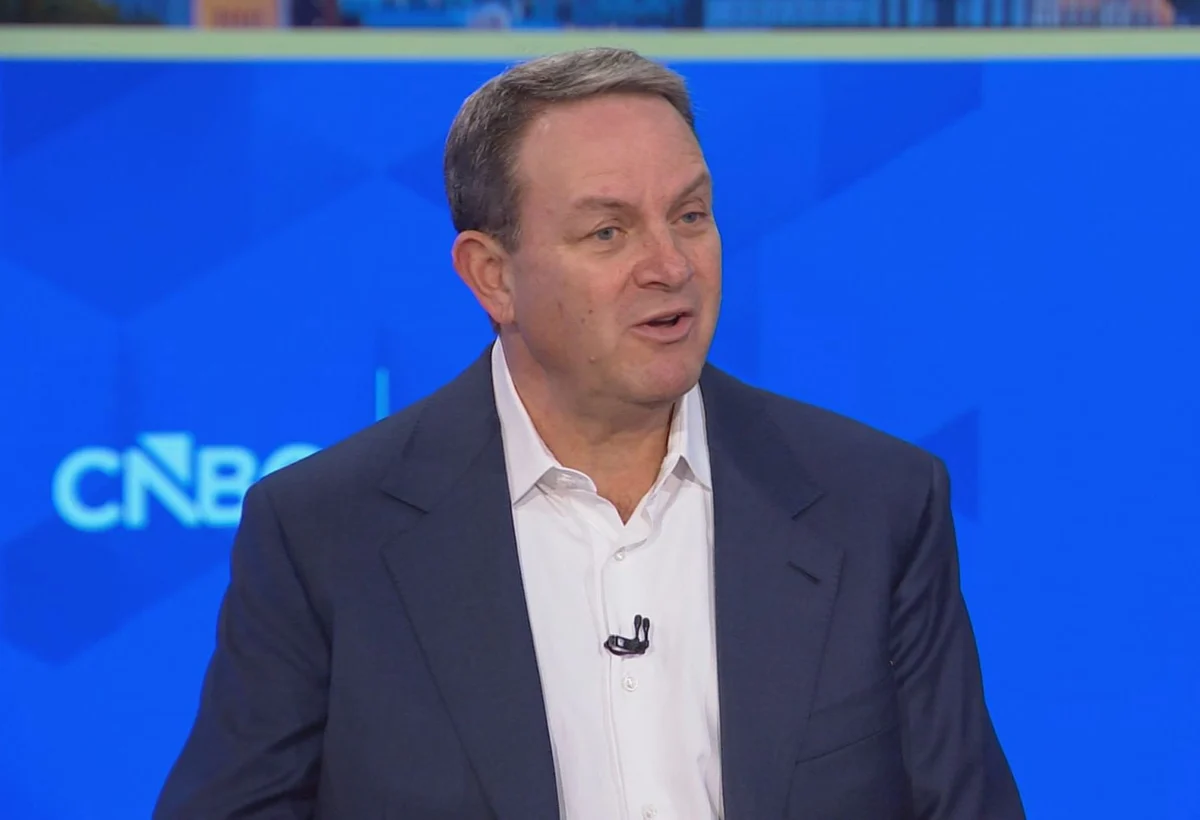
"Returning capital to shareholders remains a top priority for us, alongside disciplined investing to support long-term growth," stated Anand Kini, Versant’s Chief Operating Officer and Chief Financial Officer, during Tuesday’s earnings call. Kini noted that the company’s lean balance sheet, a byproduct of the spinout structure from Comcast, allows for this level of capital return while still leaving room for strategic investments in digital infrastructure and content.
Chronology of the Spinout: From Comcast to Nasdaq
The path to Versant’s independence began in late 2024 when Comcast leadership first signaled a strategic review of its cable network portfolio. In November 2024, Comcast officially announced its intention to spin off its cable networks into a separate, publicly traded company. The move was interpreted by industry analysts as a way for Comcast to insulate its core growth drivers—specifically its broadband business, wireless services, and the Peacock streaming service—from the secular decline of the cable bundle.
Throughout 2025, Versant management worked behind the scenes to decouple these assets from the NBCUniversal ecosystem. This involved establishing independent corporate functions, including legal, human resources, and financial reporting systems. The separation was finalized in early 2026, with Versant Media Group (ticker: VSNT) officially beginning trade on the Nasdaq on January 5, 2026.
The portfolio inherited by Versant includes some of the most recognizable names in cable and digital media. The linear lineup features CNBC, MS Now, USA Network, Golf Channel, Syfy, E!, and Oxygen. On the digital and transactional side, the company owns Fandango, the leading movie ticketing service; Rotten Tomatoes, the influential review aggregator; and specialized sports platforms like GolfNow and Sports Engine.
The Strategic Roadmap: The 2026 Transition Year
Currently, more than 80% of Versant’s revenue is tied to the traditional pay-TV business. However, CEO Mark Lazarus has designated 2026 as a pivotal "year of transition." The company has set an ambitious long-term goal to shift its revenue mix so that 50% of its income is derived from digital, platform, subscription, and transactional sources.
In the near term, Versant aims to increase the non-pay-TV share of revenue to 33% within the next three to five years. In 2025, this segment accounted for 19% of total revenue. To achieve this, the company is betting on several key growth drivers:
- MS Now Direct-to-Consumer (DTC): The upcoming launch of a standalone digital product for MS Now is expected to capture audiences who have abandoned traditional cable but remain loyal to the brand’s news and perspective programming.
- CNBC Pro and Retail Investor Tools: Leveraging CNBC’s status as a leader in business news, Versant is developing new subscription products aimed at the growing community of retail investors, seeking to monetize high-value financial data and analysis.
- Fandango at Home: The company plans to launch an ad-supported version of its Fandango at Home service in 2026, tapping into the burgeoning Free Ad-supported Streaming TV (FAST) market.
- Transactional Synergy: By integrating its sports and entertainment platforms—such as using GolfNow to drive engagement with Golf Channel content—Versant hopes to create a more cohesive ecosystem that encourages multi-platform spending.
"We’re going to continue to report, of course, kind of good visibility in the platforms revenue line, which we think provides a good, meaningful indicator of how that business is scaling," Kini added during the call.
Industry Context and Broader Implications
Versant’s debut comes at a crossroads for the American media industry. For decades, the cable bundle was the most profitable business model in media history. However, the rise of Netflix, Disney+, and other streaming giants has led to "cord-cutting" on a massive scale. According to industry data, the number of U.S. households with a traditional pay-TV subscription has fallen to levels not seen since the early 1990s.
By spinning off these assets, Comcast has effectively created a "pure-play" entity that allows investors to bet specifically on the management of declining legacy assets and their conversion into digital properties. Other media conglomerates, such as Warner Bros. Discovery and Paramount Global, have faced significant stock price volatility as they struggle to balance the massive debts incurred during the "streaming wars" with the shrinking profits of their linear networks.
Versant’s strategy appears to be one of "managed decline" for linear, using the resulting cash to fund a "digital rebirth." Analysts suggest that if Versant can successfully transition its high-value brands like CNBC and USA Network into the digital age without the baggage of a massive corporate parent, it could serve as a blueprint for other media companies looking to offload legacy assets.
Market Reaction and Future Outlook
The market’s initial reaction to the earnings report was focused on the company’s commitment to dividends and buybacks, which provided a floor for the stock price despite the revenue declines. Investors appear willing to tolerate the shrinking linear footprint as long as the platform business shows signs of acceleration and the company remains disciplined with its capital.
The launch of the MS Now DTC product and the ad-supported Fandango service in 2026 will be the first major tests of Mark Lazarus’s vision. Success will depend on the company’s ability to maintain the brand equity of its networks while adapting to the different consumption habits of digital audiences.
As the media landscape continues to consolidate and evolve, Versant Media Group stands as a unique experiment in the industry: a legacy-heavy company attempting to outrun the sunset of the cable era by leaning into a high-margin, digital-first future. The 2025 results confirm the scale of the challenge, but the 2026 roadmap provides a clear, if difficult, path forward.