The Historical Foundation of the Feminine Undead
The cultural obsession with the resurrected woman traces its origins back to Mary Shelley, the daughter of feminist philosopher Mary Wollstonecraft. Shelley’s Frankenstein; or, The Modern Prometheus was born from a period of personal and maternal grief, establishing a precedent where the "monster" serves as a vessel for outsider status and existential angst. While the 1818 novel focused on Victor Frankenstein and his creation, the cinematic evolution of the story took a pivotal turn in 1935 with James Whale’s Bride of Frankenstein. In that film, Elsa Lanchester’s portrayal of the Bride, despite lasting only minutes on screen and ending in a scream of rejection, became an indelible icon of the "rictus rebel daughter."
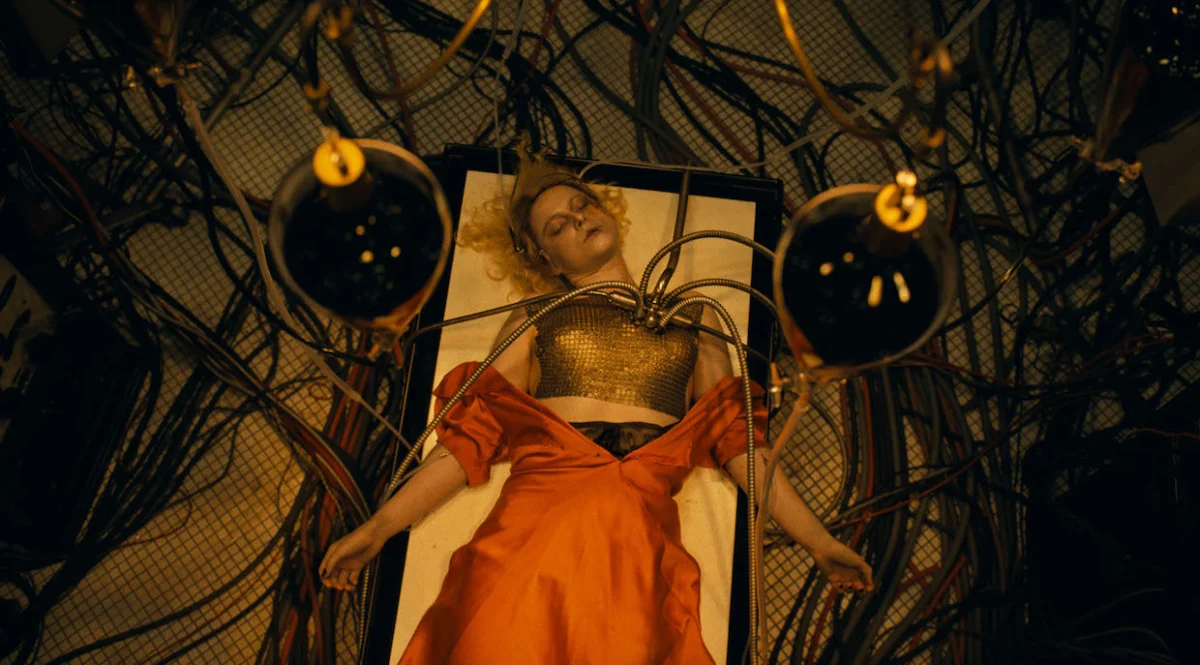
For nearly a century, the Bride has represented the "othered" woman—created by male hands to satisfy male desires, only to be discarded when she displays independent will. Gyllenhaal’s The Bride! explicitly addresses this historical silence. The film is inspired by the original 1935 production’s discarded frame narrative, which was intended to feature Mary Shelley herself addressing the audience to claim authorial credit. By integrating Shelley into the plot, Gyllenhaal attempts to bridge the gap between the 19th-century author and the 20th-century cinematic icon.
A Chronology of the Modern Zombie Revival
The release of The Bride! occurs during a notable surge in female-centric undead narratives. This "micro-revival" reflects a shift in how horror utilizes the zombie trope, moving away from mass-extinction events and toward intimate, character-driven explorations of the body.
- 2023: Poor Things. Directed by Yorgos Lanthimos, this film presented a self-consciously feminist take on the Frankenstein mythos. It garnered significant critical acclaim, winning four Academy Awards and grossing over $117 million worldwide. Its success demonstrated a commercial appetite for "reanimated" feminine coming-of-age stories.
- Early 2024: Lisa Frankenstein. Written by Diablo Cody and directed by Zelda Williams, this film merged 1980s pop-punk aesthetics with gothic romance. It focused on a teenager’s quest for independence and a partner who understands her, positioning the undead as a romantic and rebellious alternative to suburban life.
- Late 2024: Queens of the Dead. Directed by Tina Romero, daughter of legendary filmmaker George A. Romero, this project brought a queer, comedic sensibility to the genre, setting a zombie outbreak within a Brooklyn nightclub.
- March 2025: Dead Lover. Directed by Grace Glowicki, this "raunchily gothic" tale features a female gravedigger attempting to revive a deceased partner, further flipping the gender dynamics of the resurrection trope.
This timeline illustrates that The Bride! is not an isolated experiment but part of a broader industry trend seeking to modernize the gothic tradition for a contemporary audience.
Narrative Structure and Genre Blending in The Bride!
Gyllenhaal’s film is set in the 1930s and adopts a "Bonnie & Clyde" period aesthetic, yet it incorporates a dizzying array of subplots that span multiple genres. The story begins with Mary Shelley (Jessie Buckley) possessing the body of Ida, a mob moll murdered for her proximity to criminal secrets. Revived by a scientist (Annette Bening) at the behest of Frankenstein’s Monster (Christian Bale), the character embarks on a journey of self-discovery that is frequently interrupted by tangential narratives.
The film’s complexity has been a point of significant critical discussion. It attempts to weave together:
- A Metatextual Authorial Ghost Plot: The possession of Ida by Mary Shelley.
- A Gangland Drama: Involving the mob elements of Ida’s former life.
- A Procedural Detective Story: Featuring Penélope Cruz as a female police officer navigating a "Girlboss" empowerment arc.
- A Riot Grrrl Revolution: A subculture of rebellious women that echoes the aesthetics of the 1980 film Times Square.
- A Romantic Subplot: Featuring Jake Gyllenhaal as a beloved musical actor.
The inclusion of these disparate elements has led some analysts to describe the film as "overstuffed." Critics have noted that while the "Riot Grrrl" fragments and the possession plot offer flashes of punk-rock energy, they often vanish for long stretches, leaving the central narrative feeling fragmented.

Technical Execution and Production Value
Despite narrative inconsistencies, The Bride! has been praised for its high production standards. Gyllenhaal recruited top-tier talent to establish the film’s visual and auditory identity. The cinematography and score were handled by the team behind the 2019 film Joker, including cinematographer Lawrence Sher and composer Hildur Guðnadóttir. This collaboration resulted in a sleek, "mall-goth" aesthetic that distinguishes the film from more traditional period pieces.
The lead performances by Jessie Buckley and Christian Bale have also been highlighted as a stabilizing force. Buckley’s portrayal of the Bride involves a "Jack Sparrow-ish" affect—eccentric, physical, and unpredictable—which serves as a direct contrast to the silent, terrified Bride of 1935. Bale’s Monster provides a grounded emotional counterpoint, and their chemistry forms the "good-hearted" core of the film. The character design, featuring ink splattering from the Bride’s mouth, has been noted as a visual metaphor for the film’s "narrative overflow."
Philosophical Implications: The Monster as Outcast
The enduring affinity between women and monsters is a central theme of The Bride!. As noted in Jess Zimmerman’s 2021 study Women and Other Monsters, both groups are frequently viewed as "biological freaks" whose bodies transgress societal norms and threaten established power structures. In horror, the zombie represents a unique form of this "otherness" because it involves a lack of initial agency. Unlike vampires or ghosts, who often retain their memories and status, zombies are typically resurrected against their will.
In The Bride!, the protagonist’s scream of "Me too!" serves as a literal and figurative reference to modern feminist movements. However, analysts suggest that the film struggles to fully articulate this agency. While earlier films like Frankenhooker (1990) or Life After Beth (2014) used the "uncontrollable" nature of the female zombie to satirize male attempts at control, The Bride! occasionally retreats into flatter, more simplified tropes of empowerment. The "systemic misogyny" inherent in the Bride’s creation is acknowledged, but the film’s rapid pacing often prevents a deep exploration of the "tragic and satisfying" nature of her resistance.
Commercial Outlook and Industry Impact
As The Bride! moves through its theatrical and festival run, its commercial prospects remain a subject of debate. While its narrative "muddle" has led to comparisons with the erratic nature of Victor Frankenstein’s own experiments, the film’s creative ambition suggests it may find a second life as a cult classic.
The film’s performance is being closely watched by studios as a barometer for the viability of high-budget, auteur-driven "revisionist" horror. Following the box office success of Poor Things and the critical interest in Lisa Frankenstein, The Bride! represents a significant investment in the idea that classic monsters can be repurposed for feminist storytelling. Even if it fails to achieve mainstream blockbuster status, its inventive production design and distinct "riot grrrl" energy ensure its place in the ongoing dialogue regarding gender and the gothic.
In conclusion, Maggie Gyllenhaal’s The Bride! is a testament to the enduring power of Mary Shelley’s creation. By attempting to give the Bride the voice she was denied in 1935, the film honors its source material even as it struggles with the weight of its own ambitions. It stands as a vibrant, if messy, reminder that the story of the zombie has always been, and continues to be, a story about the struggle for a soul in a world that would prefer a corpse.