The rapid integration of generative artificial intelligence into the modern workplace has revealed a significant demographic rift, as new data suggests that men and women are approaching the technology with vastly different levels of enthusiasm and ethical concern. According to the 5th annual CNBC SurveyMonkey Women at Work survey, a widening gender gap is emerging in the professional landscape, characterized by higher rates of adoption among men and a more cautious, often skeptical, stance from women. This disparity comes at a critical juncture for the global economy, as businesses across all sectors race to incorporate large language models (LLMs) and automated workflows into their core operations.
The survey, which polled 6,330 individuals between February 10 and February 16, 2026, indicates that while the "AI craze" has dominated headlines for years, the actual implementation of these tools in daily tasks remains uneven. Roughly 69% of men surveyed described AI as a "valuable assistant and collaborator" in their professional lives. In contrast, only 61% of women shared this positive outlook. Perhaps more striking is the moral hesitation expressed by female professionals: 50% of women surveyed stated that using AI at work "feels like cheating," a sentiment shared by only 43% of men. This psychological barrier suggests that for many women, the use of automated assistance conflicts with traditional perceptions of professional merit and individual contribution.
A Chronology of the Generative AI Revolution
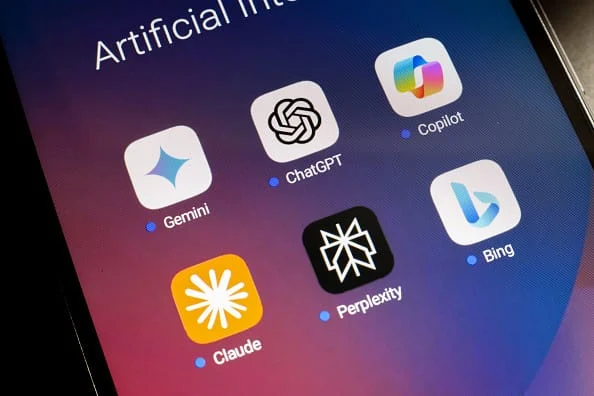
To understand the current state of workplace AI, it is necessary to trace the trajectory of the technology over the past several years. The boom effectively began in late 2022 with the public release of OpenAI’s ChatGPT, which introduced the general public to the capabilities of generative pre-trained transformers. What started as a novelty for writing emails and essays quickly evolved into a multi-billion-dollar arms race involving tech giants like Microsoft, Google, and Meta, as well as startups such as Anthropic and Perplexity.
By 2024, the focus shifted from simple chatbots to sophisticated multimodal systems capable of generating high-resolution images, video, and complex computer code. By early 2025, the industry saw the rise of "AI agents"—tools designed not just to answer questions, but to execute multi-step tasks independently, such as managing calendars, conducting market research, and writing software updates. As of early 2026, the market has matured to a point where AI is no longer an optional add-on but is being positioned by Wall Street as a replacement for significant portions of the enterprise software stack. This shift explains the recent volatility in traditional software stocks, as investors bet on specialized AI agents to disrupt legacy platforms.
Quantifying the Usage Gap
The CNBC SurveyMonkey data provides a granular look at how these historical developments are manifesting in the cubicle and the home office. The frequency of use highlights a persistent "power user" gap. Approximately 14% of men reported using AI tools multiple times a day, whereas only 9% of women reached that level of frequency.
The discrepancy extends to those who avoid the technology entirely. Nearly two-thirds of women (64%) reported that they never use AI at work, compared to 55% of men. This lack of engagement among women is particularly concerning to labor economists, as early adoption of transformative technology is often a predictor of long-term career resilience and salary growth. The data suggests that men are not only more comfortable with the technology but are actively seeking ways to integrate it into their routine, potentially gaining an efficiency advantage over their female counterparts.
The Institutional Mandate: From JPMorgan to the Tech Sector
The push for AI adoption is not merely a bottom-up trend driven by individual workers; it is a top-down mandate from the highest levels of corporate leadership. Jamie Dimon, CEO of JPMorgan Chase, has been one of the most vocal proponents of the technology. In his communications regarding the bank’s 2026 strategy, Dimon labeled AI as "critical to our company’s future success." He revealed that nearly two-thirds of the firm’s employees now utilize an internal large language model designed to streamline everything from risk management to customer service.
However, Dimon’s enthusiasm is tempered by the reality of labor displacement. He has publicly acknowledged that AI will inevitably eliminate certain roles, suggesting that the only path forward for workers is aggressive retraining. This corporate stance creates a high-stakes environment: if women are less likely to engage with AI tools due to skepticism or ethical concerns, they may find themselves more vulnerable during periods of corporate restructuring or "AI-driven rightsizing."

The Fear of Missing Out vs. The Need for Training
Interestingly, the survey found that men’s higher usage rates do not necessarily equate to higher confidence. In fact, men were more likely to express a "Fear of Missing Out" (FOMO) regarding AI. Approximately 39% of men said they feared falling behind if they did not embrace the technology, compared to 35% of women. Furthermore, 59% of men admitted they need more training to effectively use AI at work.
On the other hand, 42% of women "strongly disagreed" with the notion that failing to embrace AI would result in them missing out on career opportunities, compared to 36% of men. This suggests a potential "perception gap" where a significant portion of the female workforce may be underestimating the impact AI will have on their specific roles or the broader job market. While men appear to be driven by a mix of enthusiasm and anxiety, a plurality of women remain unconvinced of the technology’s necessity or are perhaps waiting for more formal guidance from their employers.
Implications for Gender Equality and the "Broken Rung"
The potential consequences of this gender gap in AI adoption extend far beyond individual productivity. Sheryl Sandberg, founder of LeanIn.Org and former Chief Operating Officer of Meta, has warned that the AI divide could exacerbate existing inequalities in the corporate world. In recent discussions, Sandberg emphasized that AI will be most challenging for those who do not know how to use the tools, noting that women are already at a disadvantage in the "first promotion" to manager—a phenomenon known as the "broken rung" of the corporate ladder.
If entry-level and mid-level men are using AI to amplify their output while women remain skeptical, the performance gap could widen, making it even more difficult for women to secure those critical early-career promotions. "We are going to see disproportionate impacts," Sandberg noted, suggesting that a failure to bridge this gap would be detrimental not only to individual careers but to the economy as a whole, which thrives on diverse perspectives and talent.
Analysis of the "Cheating" Sentiment
The finding that 50% of women view AI use as "cheating" warrants a deeper analysis of workplace culture and gendered expectations. Sociologists have long noted that women often face higher scrutiny in professional environments and may feel a greater pressure to prove that their work is entirely their own. The use of an AI "assistant" might be perceived as a shortcut that undermines the validity of their achievements.
Conversely, the male tendency to view AI as a "collaborator" reflects a more utilitarian approach to technology, where the end result is prioritized over the process. If this cultural difference persists, organizations may need to redefine "merit" in the age of AI. Companies that fail to establish clear guidelines on what constitutes acceptable AI use may inadvertently penalize women who avoid the tools out of a sense of integrity, while rewarding men who use them to boost their metrics.
Looking Ahead: The Need for Targeted Upskilling
As the generative AI boom continues into the latter half of the decade, the focus for HR departments and policymakers must shift toward inclusive training. The survey data suggests that there is a latent desire for education, particularly among the 59% of men and a significant portion of women who feel they lack the necessary skills.
To prevent the AI gender gap from becoming a permanent fixture of the labor market, experts suggest several interventions:
- Formalized Training Programs: Companies should move away from "self-taught" AI adoption and provide structured, gender-neutral training that emphasizes AI as a standard tool rather than an ethical grey area.
- Redefining Ethical Boundaries: Clear corporate policies on AI usage can alleviate the "cheating" stigma, providing women with the psychological safety to experiment with these tools.
- Mentorship and Role Modeling: Highlighting female leaders who successfully integrate AI into their workflows can provide a roadmap for younger professionals.
The transition to an AI-augmented economy represents one of the most significant shifts in labor history since the Industrial Revolution. While the technology offers the promise of unprecedented productivity, the CNBC SurveyMonkey data serves as a stark reminder that the benefits of innovation are rarely distributed equally by default. Without a conscious effort to address the gendered perceptions and usage patterns of AI, the professional world risks trading one set of inequalities for a newer, more technologically ingrained version. The goal for the coming years will be to ensure that AI serves as a bridge to greater opportunity for all workers, rather than a barrier that leaves half the workforce behind.