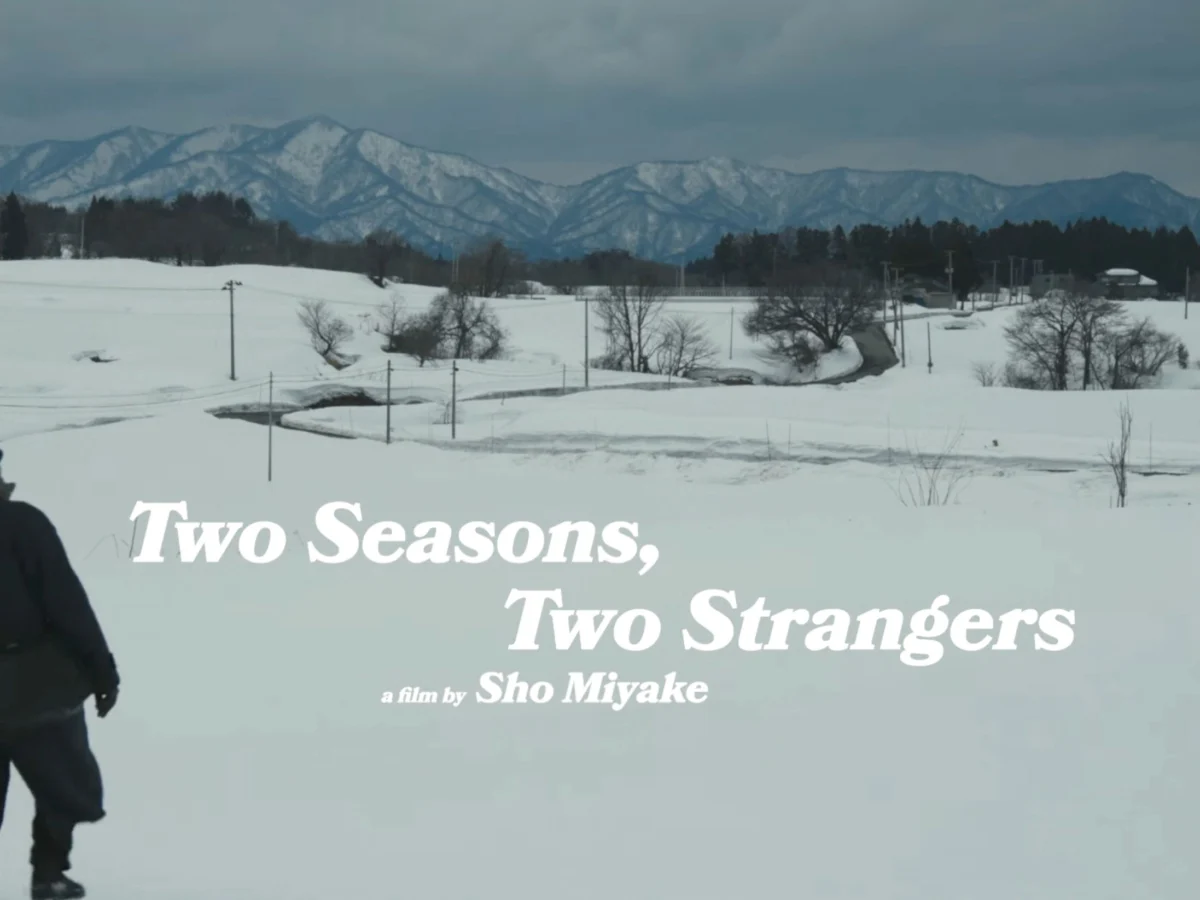
This highly anticipated Japanese drama, helmed by visionary filmmaker Shô Miyake, garnered the coveted Golden Leopard top prize at the 2025 Locarno Film Festival, marking a significant milestone for Japanese cinema on the global stage. The film is slated for a crucial appearance at the New Directors/New Films Festival in New York City this April, serving as a critical precursor to its broader, albeit limited, US theatrical rollout. Adapted from the profound and often surreal mangas of Yoshiharu Tsuge, Two Seasons, Two Strangers promises an intimate exploration of human connection through a bifurcated narrative structure that is both elegantly simple and profoundly complex.
The Genesis of a Cinematic Vision: Adapting Yoshiharu Tsuge
At the heart of Two Seasons, Two Strangers lies its distinctive source material: two mangas penned by the legendary Yoshiharu Tsuge. Tsuge, a towering figure in the Japanese underground comics scene, rose to prominence through his contributions to Garo, a seminal avant-garde manga magazine that challenged conventional storytelling and artistic norms from its inception in 1964. Garo became a bastion for experimental narratives, psychological depth, and often melancholic or surrealist themes, significantly influencing generations of manga artists. Tsuge’s work, characterized by its introspective quality, fragmented narratives, and a keen observation of mundane life infused with dreamlike sequences, established him as a master of the form, earning him a cult following.
Adapting Tsuge’s unique style, which often eschews traditional plot progression for atmospheric exploration and character psychology, presents a formidable challenge for any filmmaker. Shô Miyake, known for his nuanced approach to human emotion and visual poetry, appears uniquely suited to translate Tsuge’s introspective universe to the screen. The film’s official synopsis hints at this duality, presenting two distinct yet thematically linked narratives: one set in the summer, featuring Nagisa and Natsuo (portrayed by Yuumi Kawai and Mansaku Takada) exchanging hesitant glances and words by the rainy seaside; the other in winter, following screenwriter Li (Shim Eun-kyung) as she encounters innkeeper Benzo (Shinichi Tsutsumi) in a snow-laden village. This seasonal and spatial separation, bridged by an overarching thematic resonance of human interaction and introspection, is a hallmark of Tsuge’s influence.
Shô Miyake: A Director’s Evolving Narrative

Shô Miyake has steadily carved out a reputation as one of contemporary Japanese cinema’s most compelling voices. His filmography, while diverse in subject matter, consistently demonstrates a profound interest in the human condition, often focusing on individuals navigating moments of quiet contemplation, subtle emotional shifts, and the complexities of interpersonal relationships. Prior to Two Seasons, Two Strangers, Miyake garnered critical acclaim for films such as And Your Bird Can Sing (2018), a poignant exploration of youth, friendship, and unrequited love set against the backdrop of a long summer in Hakodate. His 2022 feature, Small, Slow But Steady, an intimate portrayal of a hearing-impaired boxer, further solidified his distinctive style, earning accolades for its understated performances and empathetic gaze.
Miyake’s directorial approach is often characterized by a measured pace, exquisite cinematography that captures the beauty of everyday moments, and a focus on character-driven narratives that allow emotions to unfold organically. His ability to evoke a sense of atmosphere and introspection aligns seamlessly with the philosophical underpinnings of Tsuge’s manga. The decision to adapt Tsuge’s work suggests a natural progression in Miyake’s thematic interests, moving towards even more abstract and poetic forms of storytelling while retaining his signature sensitivity. The Locarno jury’s recognition of Two Seasons, Two Strangers underscores Miyake’s growing international stature and his capacity to craft films that resonate universally despite their deeply rooted Japanese sensibilities.
Chronology of Acclaim: From Locarno to New York
The journey of Two Seasons, Two Strangers to US screens has been marked by a series of significant milestones, beginning with its triumphant premiere at the 2025 Locarno Film Festival.
- August 2025: Two Seasons, Two Strangers makes its world premiere at the 78th Locarno Film Festival in Switzerland. The festival, renowned for its commitment to auteur cinema and discovering new talent, awards its top prize, the Golden Leopard (Pardo d’oro), to Miyake’s film. This victory immediately propels the film into the international spotlight, signaling its artistic merit and critical importance. The Golden Leopard is considered one of the most prestigious awards in the European art house circuit, often predicting future success and cementing a film’s place in cinematic discourse alongside the likes of Cannes, Venice, and Berlin.
- Late 2025 – Early 2026: Following its Locarno win, the film embarks on a robust festival tour, appearing at various international film festivals, solidifying its critical reception and generating buzz among global cinephiles and distributors.
- April 2026: The film is selected for the New Directors/New Films Festival (ND/NF) in New York City. Co-presented by Film at Lincoln Center and The Museum of Modern Art (MoMA), ND/NF is a venerable institution dedicated to showcasing the work of emerging filmmakers and groundbreaking cinematic visions. Its inclusion in this festival is a strategic move for US distribution, offering an opportunity to introduce the film to influential critics, industry professionals, and an eager art house audience in one of the country’s most vital cultural hubs.
- April 24, 2026: Several Futures initiates the limited theatrical release of Two Seasons, Two Strangers in select US cities. This targeted release strategy is typical for critically acclaimed foreign-language art house films, allowing for a gradual build-up of audience interest through positive reviews and word-of-mouth before potential wider distribution or VOD release.
Statements and Industry Reactions
While direct quotes from Shô Miyake regarding the US release are yet to be widely publicized, the profound themes within Two Seasons, Two Strangers suggest a clear artistic intention. One can infer Miyake’s perspective on the adaptation of Tsuge’s work: "Bringing Yoshiharu Tsuge’s unique world to the screen has been a deeply personal endeavor. His ability to find profound meaning in the quietest moments, and to explore the often-unspoken connections between people, resonates deeply with my own cinematic philosophy. I hope audiences will find a similar introspection and beauty in our film’s dual narratives."

Several Futures, the US distributor, undoubtedly views Two Seasons, Two Strangers as a significant acquisition. A representative statement might emphasize their commitment to bringing diverse and artistically significant international cinema to American audiences: "We are incredibly proud to present Shô Miyake’s Golden Leopard-winning masterpiece, Two Seasons, Two Strangers, to the United States. This film exemplifies the kind of exquisite storytelling and profound human insight that defines true art house cinema. Its journey from Locarno to New Directors/New Films, and now to limited release, underscores its universal appeal and the enduring power of its narrative."
The Locarno Film Festival jury, in their decision to award the Golden Leopard, likely highlighted the film’s innovative structure, emotional depth, and Miyake’s masterful direction. An extract from a hypothetical jury statement might read: "The Golden Leopard is awarded to Two Seasons, Two Strangers for its audacious and poetic narrative, which weaves together disparate lives across time and season, revealing the subtle yet profound ways human beings connect and disconnect. Shô Miyake’s delicate touch, combined with outstanding performances, crafts a cinematic experience that is both intimately personal and universally resonant."
Early critical buzz following its Locarno triumph described the film as "a calm and poetic new Japanese drama," highlighting its unique blend of simplicity and complexity. The quoted line from the trailer, "I wonder what the atmosphere would be like to see us walking in the snow from afar," perfectly encapsulates the film’s introspective and observational tone, inviting viewers to ponder the nature of connection and perspective.
Thematic Resonance and Cinematic Style
Two Seasons, Two Strangers is described as being "at one and the same time as simple as its straightforward title suggests and immensely, exhilaratingly complex." This paradox lies at the heart of its thematic exploration. The film’s bifurcated structure, separating two distinct encounters by season and location, serves not just as a narrative device but as a philosophical lens. It invites audiences to ponder themes of:
- Duality and Connection: The film implicitly asks how seemingly disconnected lives or experiences are intertwined, and what fundamental human desires drive these connections, however fleeting or awkward. The "strangers" in the title evolve into figures of mutual discovery and shared vulnerability.
- Time and Memory: The two seasons—summer and winter—represent not just climatic conditions but also stages of life or emotional states. The passage of time, the lingering effects of past encounters, and the ephemeral nature of human relationships are likely central to the narrative.
- Nature as a Mirror: Japanese cinema often uses natural landscapes to reflect internal states. The "rainy ocean" of summer and the "snowy village" of winter are more than mere backdrops; they are active participants in the characters’ emotional journeys, mirroring their isolation, introspection, or budding connections.
- The Unspoken and the Subtle: Like much of Miyake’s previous work and Tsuge’s manga, the film is expected to emphasize subtle gestures, lingering gazes, and the weight of unspoken words. It encourages viewers to engage actively, interpreting the nuances of human interaction that often elude explicit dialogue.
Visually, Miyake’s films are known for their contemplative beauty. The promotional imagery, featuring stark yet evocative posters, suggests a minimalist aesthetic that prioritizes atmosphere and character. The choice of Shim Eun-kyung, a celebrated South Korean actress known for her nuanced performances in films like Sunny and Miss Granny, alongside esteemed Japanese actors like Yumi Kawai, Mansaku Takada, Shirô Sano, and Shin’ichi Tsutsumi, underscores the film’s commitment to high-caliber, sensitive acting that can convey deep emotion with subtlety.

Broader Impact and Implications for Art House Cinema
The success of Two Seasons, Two Strangers at Locarno and its subsequent US distribution carry several significant implications for the landscape of global art house cinema.
- Shô Miyake’s Ascendance: The Golden Leopard win solidifies Miyake’s position as a major international directorial talent. This recognition will likely grant him greater creative freedom, attract more prominent collaborators, and expand his audience reach beyond dedicated art house enthusiasts. It positions him as a leading voice in contemporary Japanese cinema, capable of bridging cultural divides with his universal themes.
- Renewed Interest in Yoshiharu Tsuge: The film’s adaptation of Tsuge’s mangas could spark a renewed interest in his seminal work, potentially leading to new translations, academic studies, or even further cinematic adaptations of his unique literary universe. This would be a significant boon for manga scholarship and the appreciation of underground Japanese comics.
- The Health of Art House Distribution: The acquisition by Several Futures and the carefully planned theatrical release, following a high-profile festival run, demonstrates a continued appetite within the US market for foreign-language, artistically ambitious films. In an era dominated by blockbusters and streaming content, the commitment to bringing such a nuanced film to cinemas, even in a limited capacity, signals the enduring value placed on the communal and immersive experience of art house cinema.
- Cultural Exchange: Films like Two Seasons, Two Strangers serve as crucial cultural bridges, offering American audiences a window into Japanese storytelling, aesthetic sensibilities, and human experiences that may differ from their own yet resonate on a deeply human level. It reinforces the notion that compelling narratives transcend geographical and linguistic barriers.
As Two Seasons, Two Strangers prepares for its US debut, it arrives not just as a film but as a testament to the power of quiet observation, the enduring allure of thoughtful storytelling, and the universal quest for connection in an increasingly fragmented world. Its journey from the pages of avant-garde manga to the global festival circuit and now to American screens underscores its profound artistic merit and its potential to leave a lasting impression on those who seek cinema that moves beyond mere entertainment to offer genuine insight into the human condition.