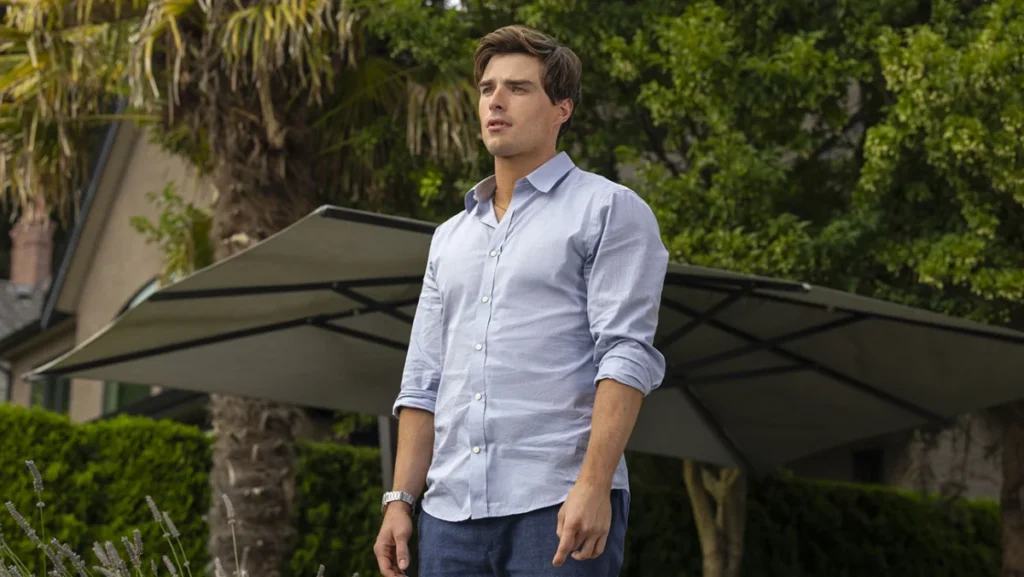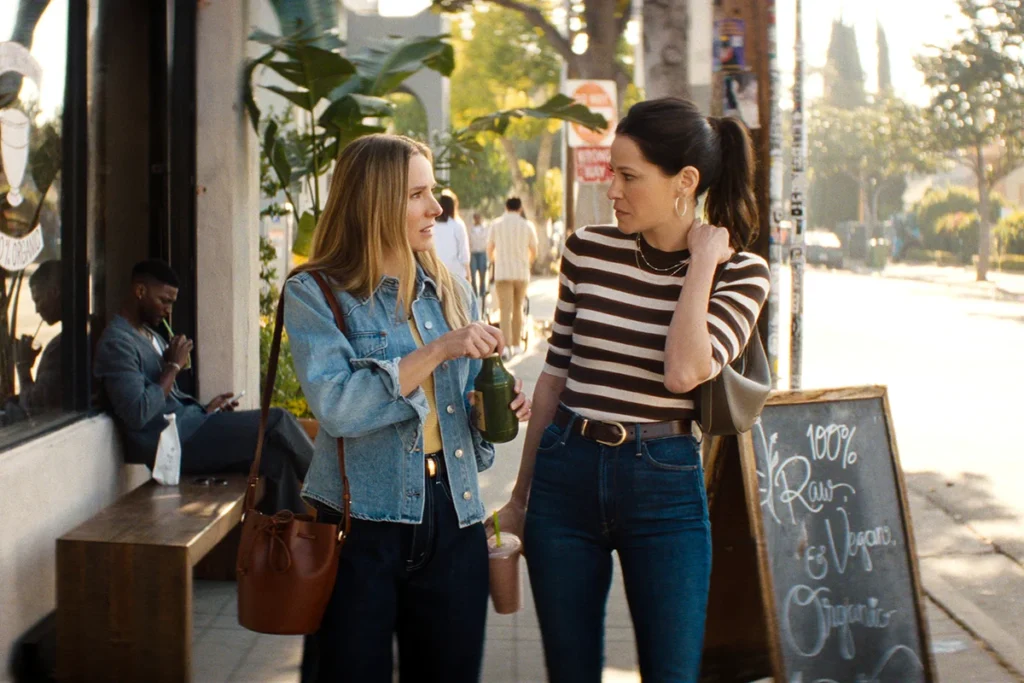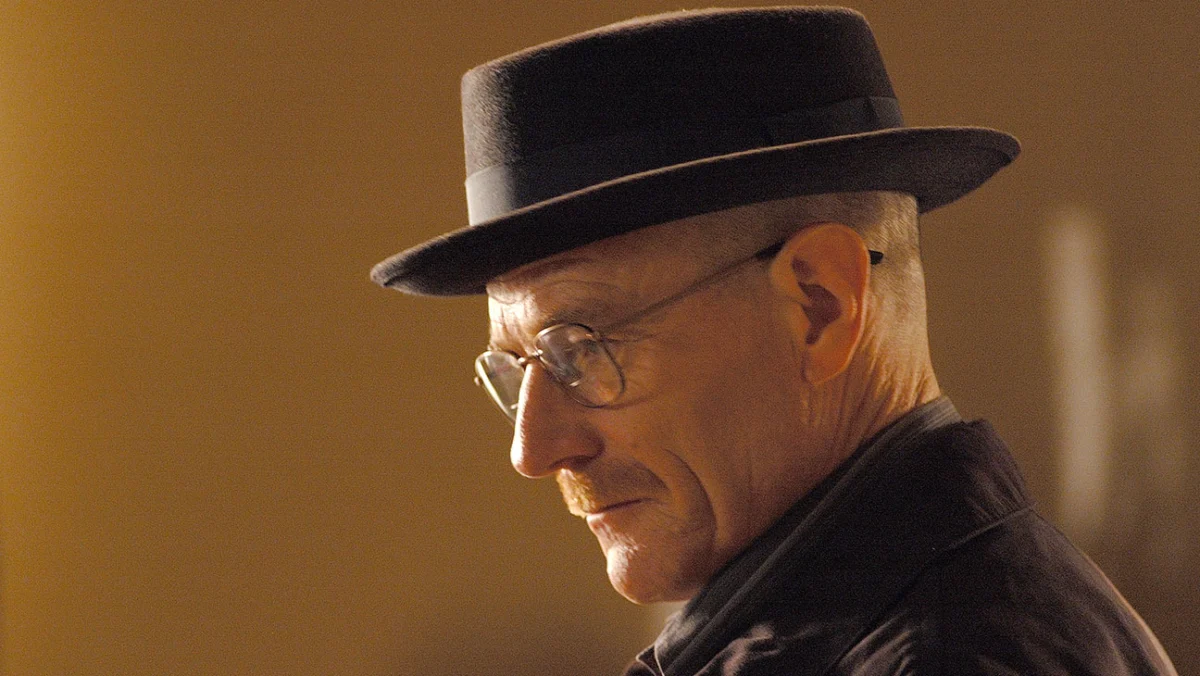
Austin, TX – The South by Southwest (SXSW) Film & TV Festival served as a nexus for deep dives into the craft of television storytelling this past Saturday, featuring acclaimed creator Vince Gilligan and his frequent collaborator, actress Rhea Seehorn. During a panel titled "Albuquerque Aftermath: From Breaking Bad to Pluribus," Gilligan offered rare insights into the nascent stages of his groundbreaking crime drama, Breaking Bad, while Seehorn robustly challenged conventional critiques leveled against female characters in modern television, specifically concerning her role in Gilligan’s upcoming series, Pluribus. The session, which also featured composer Dave Porter, costume designer Jennifer Bryan, and producer Trina Siopy, provided a comprehensive look at the creative process behind some of television’s most revered and anticipated projects.
The Genesis of a Phenomenon: Breaking Bad‘s Unlikely Origins
Gilligan, celebrated for crafting intricate narratives and complex anti-heroes, began by revisiting the well-trodden lore of Breaking Bad‘s inception. While the popular narrative often cites his vision of a "Mr. Chips-type everyman transforming into Scarface," Gilligan revealed a more elemental origin. He recounted discovering an old notepad in his office containing the very first seed of the idea, distilled into a mere nine words: "Good guy does something bad to save his family." This minimalist pitch, unearthed years after the show’s monumental success, underscored the foundational moral dilemma that would come to define Walter White’s descent into the criminal underworld.
The journey from this simple premise to a critically adored, multi-award-winning series was fraught with skepticism. Gilligan shared the now-infamous anecdote of pitching his concept to Sony Pictures Television, where a top executive, since departed from the company, declared it "the single worst idea I’ve ever heard." Gilligan, ever gracious, added that the executive later acknowledged his misjudgment. This initial dismissal highlights the inherent risks and subjective nature of greenlighting innovative television projects, especially those that defy conventional hero archetypes. In the early 2000s, while cable television was beginning to embrace darker, more morally ambiguous protagonists with shows like HBO’s The Sopranos and FX’s The Shield, a high school chemistry teacher turning meth kingpin was still a significant departure from mainstream network fare.
The rejections didn’t stop there. Gilligan famously recounted a particularly disheartening meeting with HBO executives, describing their response to his pitch as radiating "a toxic gamma radiation of disinterest." At the time, HBO was a dominant force in prestige television, known for its cinematic quality and mature themes. However, even with their reputation for embracing edgy content, Breaking Bad‘s premise evidently didn’t resonate with their vision or perceived brand fit at that moment. These early struggles serve as a powerful testament to Gilligan’s conviction in his story and the resilience required to bring a truly original vision to fruition.
Ultimately, Sony Pictures Television embraced the project, with AMC coming on board as the distributor. AMC, then primarily known for classic film screenings, took a calculated risk on Breaking Bad, a decision that would dramatically redefine its brand and usher in a new era of scripted original programming for the network. The show, which premiered in 2008, gradually built a dedicated audience and critical momentum, culminating in widespread acclaim and numerous accolades, including 16 Primetime Emmy Awards and a Golden Globe. Its series finale in 2013 drew 10.28 million viewers, a record for AMC, cementing its place in television history as one of the most significant dramas of its time, lauded for its intricate plotting, character development, and cinematic execution. Breaking Bad‘s success not only elevated Gilligan to the pantheon of television creators but also validated the appetite for complex, serialized narratives that challenged viewers’ moral compasses.
The Collaborative Canvas: Gilligan’s Writers’ Room Philosophy
Beyond the dramatic origins of Breaking Bad, Gilligan also delved into his approach to leading a writers’ room, a crucial element in maintaining the consistent quality and narrative integrity of his shows. Known for his affable demeanor despite managing complex productions, Gilligan articulated a philosophy centered on collaborative meritocracy: "The best thing to do is very quickly learn to not pay attention to whose ideas are whose. I’m not keeping score in my head. The moments I’m the most proud in [my] shows, I don’t remember who [suggested the idea]. The best idea wins."
This "best idea wins" ethos fosters an environment where creative contributions are valued irrespective of hierarchy, encouraging writers to freely pitch and develop concepts without fear of proprietary attachment. It contrasts sharply with more autocratic showrunning styles, emphasizing collective ownership of the narrative. Gilligan elaborated on the importance of this approach, stating, "There’s a lot of ways to do this job, and we could be dictatorial, and that maybe works for some, but at the end of the day, I’m so proud of the work. We’re not curing cancer in our respective TV shows. There’s no reason for people not to enjoy coming to work. Once they get there, they’re going to work hard. But there’s no reason they have to make it tough on each other."
This insight into Gilligan’s leadership offers a glimpse into why his projects, including the equally lauded Better Call Saul, have consistently achieved such high levels of critical and commercial success. A supportive and creatively open writers’ room is often cited as a cornerstone for developing nuanced characters and intricate storylines, allowing for the organic evolution of ideas that can withstand intense scrutiny and audience engagement. This collaborative spirit, as described by Gilligan, is instrumental in producing the meticulously crafted narratives that have become his hallmark, ensuring a rich tapestry of perspectives contributes to the final product.
Challenging the ‘Unlikable’ Trope: Rhea Seehorn on Pluribus
The panel transitioned to Gilligan’s highly anticipated new series, Pluribus, which will stream on Amazon Prime Video and marks his return to television after the conclusion of Better Call Saul. The conversation took a sharp turn when an audience member posed a question to star Rhea Seehorn, suggesting that her character on the show, Carol, was "unlikable." Seehorn, renowned for her critically acclaimed portrayal of Kim Wexler in Better Call Saul, firmly pushed back against this categorization, delivering a thoughtful and impassioned critique of a pervasive double standard in character assessment.
"I understand the question, but the question behind the question with the word ‘unlikable,’ I think, is a misuse, or overuse, about female characters," Seehorn asserted. She highlighted how the definition of "likable" for women in media is often restrictively applied, constraining the range of behaviors and motivations allowed for female protagonists. "It’s much more important that that character be accessible in some way, and for me behaving truthfully and honest a moment when people would say, ‘Wow, she’s really not polite when they bring her things.’"
Seehorn passionately defended Carol’s complex emotional state, providing context for her character’s challenging demeanor: "The Others killed my wife. My career is gone. I might die alone watching Golden Girls, so sorry if I’m a bit chirpy… Carol is allowed to be the full spectrum of human behavior… I find her complex and difficult and challenging." Her statement resonates with a growing movement within the industry and among critics to dismantle the gendered expectations placed on fictional characters. While male anti-heroes like Walter White, Tony Soprano, or Don Draper are often celebrated for their moral ambiguities and flaws, female characters exhibiting similar traits frequently face dismissal as "unlikable," hindering their development and audience acceptance.
Gilligan reinforced Seehorn’s point, noting that within the narrative framework of Pluribus, where "The Others" are depicted as "so crushingly and uniformly nice," it becomes "Drama 101" to have a protagonist who provides a counter-balance. This narrative design intentionally positions Carol as a disruptive force against a saccharine backdrop, making her complexity not a flaw but a crucial element of the show’s dramatic tension and thematic exploration. Seehorn’s articulate defense of Carol underscores a broader conversation about evolving portrayals of women in television, advocating for characters who are authentically human, with all their contradictions, vulnerabilities, and difficult edges, rather than conforming to superficial standards of pleasantness.
The Enigmatic Narrative of Pluribus
The discussion then naturally veered towards the thematic core of Pluribus, a series shrouded in mystery, with its premise guarded by Gilligan and Amazon. An audience member asked Seehorn when she figured out what Pluribus was truly about, to which she responded with an insightful reflection on her character’s perspective: "It’s really wonderful that I’m playing a character that doesn’t understand what’s going on. I don’t know. Is it about human nature? What it means to be human, and redefining the pursuit of happiness? How do you find success, love and relationships?" Her response suggests that the show delves into profound philosophical questions, with Carol’s journey of discovery mirroring the audience’s own.
Gilligan, known for crafting narratives with intricate layers and deep thematic resonance, adopted a characteristic humility when pressed on the show’s ultimate meaning. "I was going to dodge the question of the meaning of Pluribus," he admitted, acknowledging the difficulty in articulating the essence of his most recent creation. He added, "This is the hardest [show] of all of them to explain. I’m going to try to let other folks tell me what our show is about, because I learn stuff all the time when people tell me. What is any show about? What is According to Jim about?"
This playful evasion underscores Gilligan’s appreciation for audience interpretation and the organic evolution of meaning in art. It speaks to a creator confident enough to allow his work to speak for itself, understanding that a show’s impact and message can be multifaceted and deeply personal for each viewer. His comparison to According to Jim, a sitcom known for its straightforward humor, highlights the stark contrast in thematic depth and ambiguity that Pluribus is likely to offer, inviting viewers to engage in a more introspective and analytical experience. The decision to keep the show’s core message somewhat open-ended until its release builds anticipation while also reflecting a modern trend in prestige television where narratives often resist easy categorization, prompting broader discussions about societal values, human psychology, and existential queries.
Concluding Thoughts on the Evolving Landscape of Television
The "Albuquerque Aftermath" panel at SXSW served as a rich testament to the enduring influence of Vince Gilligan’s creative vision and the evolving dialogue within the television industry. From the surprising, humble beginnings of Breaking Bad to the philosophical depths and character complexities promised by Pluribus, Gilligan continues to push boundaries. His commitment to collaborative storytelling and a positive work environment provides a model for successful creative leadership, while Rhea Seehorn’s articulate challenge to the "unlikable female character" trope underscores the critical importance of diverse and authentic portrayals in media.
As the industry continues to mature, discussions like these are vital, shaping not only how stories are told but also how characters are perceived and critiqued. The anticipation for Pluribus is heightened not just by Gilligan’s pedigree but by the promise of a show that engages with profound questions of human nature and challenges conventional narrative expectations, guided by a creative team dedicated to pushing the art form forward.