


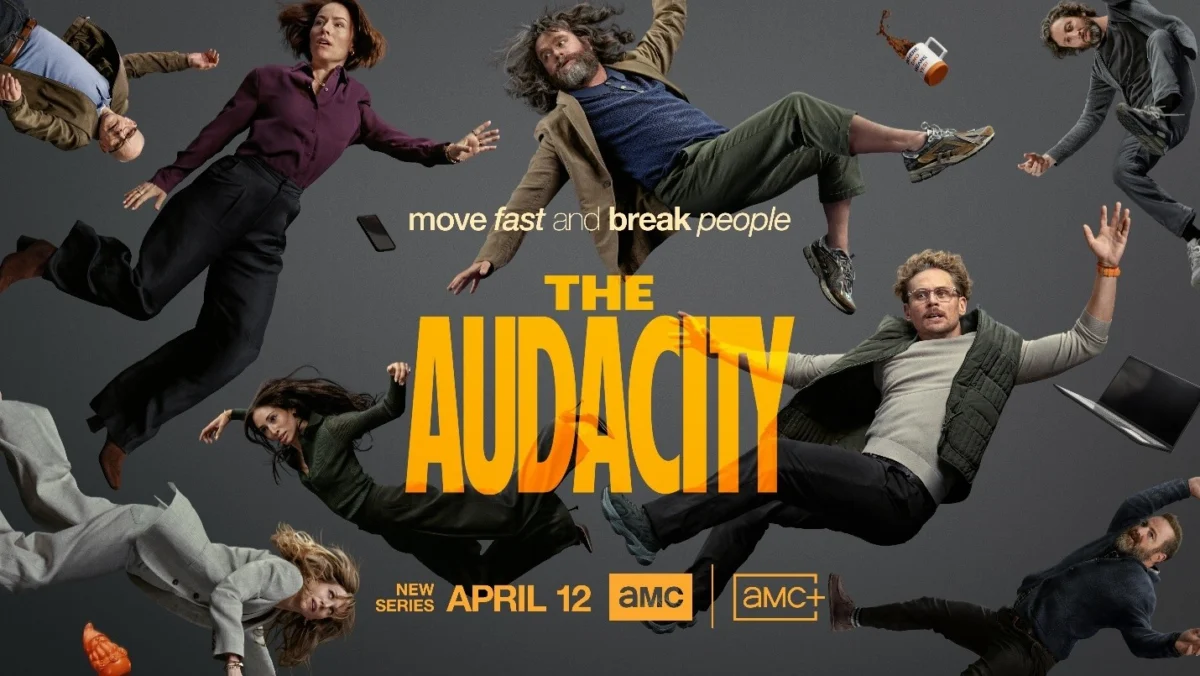
AMC’s ambitious new series, "The Audacity," boldly dives into the often-unsettling underbelly of Silicon Valley, presenting a darkly comedic and ethically ambiguous portrait of its inhabitants. Spearheaded by showrunner and co-writer Jonathan Glatzer, a talent honed by his acclaimed work on prestige dramas such as "Better Call Saul," "Bloodline," "Bad Sisters," and the universally lauded "Succession," the series attempts to dissect the peculiar brand of madness and moral compromise that defines the tech industry’s elite. The network’s confidence in Glatzer’s vision is underscored by an early renewal for a second season, signaling a significant investment in this exploration of ambition, desperation, and the blurred lines between professional and personal conduct in the hyper-competitive world of innovation.
A Troubled Titan and His Unconventional Confidant
At the heart of "The Audacity" lies the volatile world of Duncan Park, portrayed with a compellingly erratic energy by Billy Magnussen. Park is the embattled CEO of Hypergnosis, a tech company teetering on the precipice of either a groundbreaking acquisition or a catastrophic downfall. The series opens as Park finds himself in a precarious position, grappling with the fallout from a leak of sensitive acquisition discussions, a misstep that threatens to unravel the last vestiges of his professional credibility and financial stability. His marriage is demonstrably fractured, his standing among industry peers is diminished, and his creative wellspring appears to have run dry, leaving him vulnerable to the very real prospect of legal repercussions.
It is in this climate of escalating crisis that Park makes a controversial decision, one that hinges on the unorthodox therapeutic relationship he shares with Dr. Joanne Felder, brought to life by Sarah Goldberg. Recognizing a potential, albeit ethically dubious, lifeline, Park begins to view his sessions with Dr. Felder not merely as a means of mental healing but as a strategic partnership. This alliance, born from desperation and a willingness to transgress professional boundaries, sets the stage for a narrative that promises to be as intellectually stimulating as it is morally complex. The series suggests that this unconventional therapeutic dynamic could prove far more lucrative and consequential than either party could initially imagine, weaving a narrative thread of calculated risk and potential exploitation.
Glatzer’s Signature Style and the Satirical Landscape
Glatzer’s tenure alongside Jesse Armstrong on "Succession" has clearly left an indelible mark on his writing style, evident in "The Audacity’s" dialogue, which is frequently peppered with the esoteric jargon of the tech world and sharp, often biting, one-liners. The series endeavors to blend drama with comedy, aiming for a scathing takedown of the personalities that populate Silicon Valley, individuals who, despite their often-unpleasant traits, hold a certain fascination for Glatzer. However, the execution of its humor is a point of contention, with many comedic beats failing to land with the intended impact.
Examples of this uneven comedic tone include the character of Lili Park-Hoffsteader, played by Lucy Punch, who orchestrates a roundtable of professionals and engages in blatant body-shaming to secure her daughter’s college admission. Similarly, Zach Galifianakis portrays the disconnected billionaire Carl Bardolph, whose on-screen presence is characterized by explosive temper tantrums. The effectiveness of these comedic elements appears to be heavily reliant on the audience’s investment in the characters, an investment that the series struggles to consistently cultivate. A recurring theme is the profound impact these wealthy adults have on their children, who often inherit and perpetuate their parents’ worst traits, thus perpetuating a cycle of problematic mindsets that seems to be a pervasive feature of the Silicon Valley ethos.
Performance and Pacing: A Balancing Act
Amidst the ambitious narrative and stylistic choices, Billy Magnussen’s performance as Duncan Park stands out as a significant asset. He injects an erratic, yet captivating, energy into the series, breathing life into a character who often feels like a pawn in the larger narrative chess game. However, the series’ tendency to treat characters as strategic pieces for future plot developments, rather than fully realized individuals in their own right, can be a detractor. While Magnussen’s larger-than-life portrayal is at times hilariously over-the-top, it can overshadow the moments when the focus shifts to Sarah Goldberg’s character.
Goldberg, who demonstrated remarkable talent in previous works like "Barry," attempts to tap into a similar manic energy as Dr. Felder. Yet, when she is not sharing the screen with Magnussen, her storylines, particularly those involving her dynamic with her son, can feel tedious. The chemistry between Magnussen and Goldberg is undeniably compelling, but the series dedicates a considerable amount of time to developing this crucial dynamic, leading to a sense of delayed gratification.

The series also introduces other notable characters who, while potentially integral to the broader narrative, often feel like checkpoints rather than fully fleshed-out individuals. Simon Helberg appears as Martin Phister, an aloof billionaire ostensibly driven by a desire to create adaptive AI. Rob Corddry portrays Tom Ruffage, a veteran aiming to leverage Big Tech to support underserved veterans. These characters, and their respective plotlines, often serve the larger picture more than they deepen their own individual arcs, leaving the audience to anticipate their eventual convergence with the central conflict.
The Arc of "The Audacity": From Slow Burn to Convergence
By the halfway point of its inaugural season, "The Audacity" begins to exhibit a more cohesive structure, as Glatzer’s initially disparate storylines start to coalesce. While the pacing of the first half can be described as deliberately slow and, at times, unengaging, the narrative gears begin to turn with greater momentum. The involvement of Carl Bardolph in Duncan Park’s affairs, oscillating between potential ally and adversary, injects a welcome dose of intrigue. However, the considerable amount of setup required to reach this more compelling stage leaves the viewer questioning whether the investment of time is entirely warranted. The progression is discernible, and the season finale’s ability to stick the landing could prove crucial for the series’ future, potentially allowing Magnussen, Goldberg, and the ensemble cast to continue their exploration of data pilfering, elaborate cons, and, one hopes, more successful comedic endeavors.
Supporting Data and Industry Context
The creation of "The Audacity" by Glatzer, a writer with a proven track record in crafting complex narratives for acclaimed television shows, aligns with AMC’s strategy of investing in distinctive, character-driven programming. The series’ early season two renewal is a testament to the network’s belief in its potential to capture an audience, particularly those who appreciate sharp satire and morally ambiguous characters. This renewal also reflects a broader trend in the television landscape, where networks are increasingly willing to commit to promising projects early on, aiming to build brand loyalty and secure a stable of popular series. The financial implications of such early renewals can be significant, allowing for greater creative freedom and long-term planning, but also place immense pressure on the series to deliver consistent quality.
The portrayal of Silicon Valley in "The Audacity" taps into a rich vein of public discourse and critical examination of the tech industry. Over the past decade, numerous documentaries, books, and journalistic investigations have highlighted the industry’s significant economic and cultural impact, alongside concerns about its ethical practices, monopolistic tendencies, and the psychological toll it can take on its leaders and employees. Series like "Silicon Valley" (HBO) and "Halt and Catch Fire" (AMC) have previously explored different facets of this world, but "The Audacity" appears to focus on the more rarefied and ethically compromised echelons of power, where immense wealth and influence can seemingly bend rules and create their own moral frameworks.
Potential Implications and Industry Reactions
The series’ exploration of the blurred lines between therapy and business partnerships raises important questions about professional ethics and the potential for exploitation. While the narrative is fictional, it draws upon real-world anxieties surrounding the power dynamics inherent in therapeutic relationships and the insatiable drive for success that can permeate high-stakes industries. The potential implications of such a narrative could resonate with audiences who are critical of unchecked corporate power and the moral compromises often associated with extreme ambition.
While direct statements from industry leaders or therapeutic associations regarding "The Audacity" are not yet available, the series’ premise is likely to spark conversation within both the tech and mental health communities. The portrayal of a therapist engaging in such a partnership, while fictionalized for dramatic effect, could prompt discussions about ethical guidelines and the importance of maintaining professional boundaries. Similarly, the series’ satirical take on Silicon Valley titans could elicit varied reactions, from amusement and recognition to defensiveness, depending on individual perspectives and affiliations. The success of the series in navigating these sensitive themes will be a key factor in its reception and long-term impact.
Conclusion: A Promising, Yet Uneven, Debut
"The Audacity" presents a compelling, if at times uneven, examination of the moral complexities and inherent absurdities within the Silicon Valley ecosystem. Jonathan Glatzer’s proven writing acumen shines through in the sharp dialogue and intricate plotting, while Billy Magnussen delivers a standout performance that anchors the series. The show’s willingness to delve into ethically murky territory, exploring the consequences of ambition and the erosion of professional boundaries, holds significant promise. However, the series’ slow pacing in its initial episodes and inconsistent comedic execution prevent it from achieving immediate greatness. The early season two renewal indicates AMC’s faith in the project’s long-term potential. If "The Audacity" can maintain the momentum it builds in its latter half and further refine its comedic voice, it could evolve into a sharp and insightful commentary on a powerful and often-criticized industry, solidifying its place as a noteworthy addition to the television landscape. The final score of 5/10 for its initial outing suggests a solid foundation with considerable room for growth and improvement in future seasons.