


Tony Gilroy returns to feature filmmaking with his latest project, Behemoth!, marking his first theatrical release in 14 years. The film, which serves as a centerpiece selection for the New York Film Festival’s Main Slate, arrives following Gilroy’s extensive tenure as the showrunner and primary architect of the critically acclaimed Disney+ Star Wars series, Andor. The transition from the high-stakes, serialized world of galactic rebellion back to the intimate, character-driven narratives of independent cinema represents a significant shift in tone for the filmmaker, though the reception suggests a complex, albeit uneven, execution.
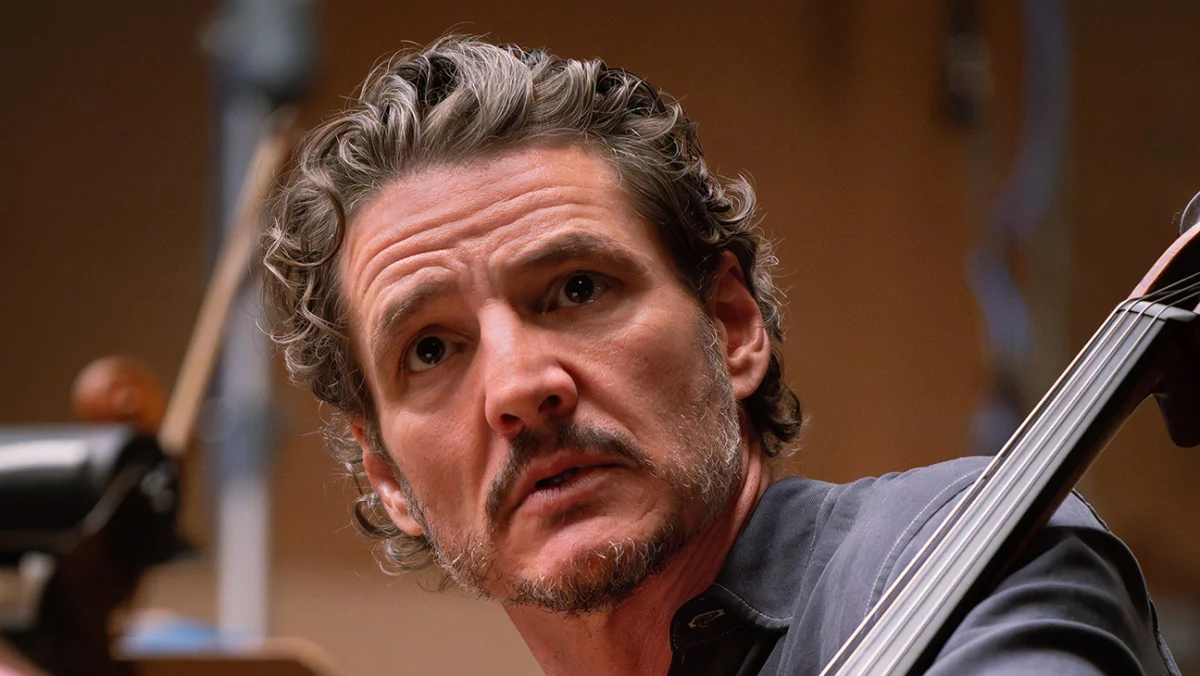
The film, which is scheduled for a wide theatrical release on December 4, stars Pedro Pascal as Alex Serian, a virtuoso cellist navigating a career defined by the precarious nature of orchestral work. Despite the presence of a robust ensemble cast—including Olivia Wilde, Will Arnett, Hank Azaria, and JoBeth Williams—the narrative struggles to find its footing, often hampered by a fragmented temporal structure that frequently disrupts the dramatic momentum.
Chronology of a Career Return
Gilroy’s career has been defined by a penchant for tight, high-tension screenplays, most notably evidenced by his Academy Award-nominated work on Michael Clayton. Following a long hiatus from the director’s chair, his return was highly anticipated. The production of Behemoth! began following the wrapping of the second season of Andor, suggesting a desire to pivot toward a more grounded, music-centric narrative.
The film’s structure relies heavily on a hopscotching timeline that spans two decades. It follows Serian’s professional exodus from major orchestral institutions in Boston, Dallas, and Chicago, eventually culminating in his return to Los Angeles. This non-linear approach is intended to mirror the disjointed nature of Serian’s personal history, yet the pacing often leaves the audience struggling to connect with the protagonist’s emotional trajectory.
The Intersection of Music and Narrative
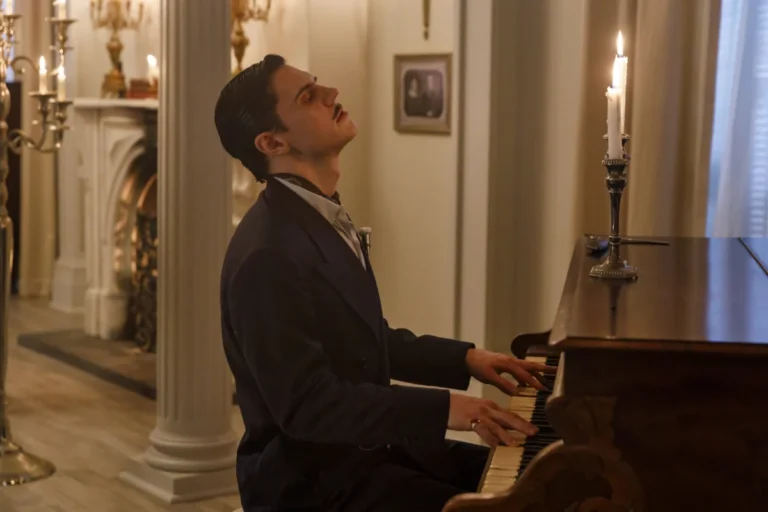
One of the most notable aspects of Behemoth! is its detailed depiction of the Hollywood scoring stage—a milieu rarely captured with such technical precision in contemporary film. By utilizing the Barbra Streisand Scoring Studio at Sony, the production team achieved a level of authenticity that differentiates the film from standard musical dramas.
The score itself is a collaborative feat. Billed as The Behemoth! Collective, the project features original compositions from nine industry-leading figures, including Michael Giacchino, James Newton Howard, and Alan Silvestri. The inclusion of diverse musical forms—ranging from harp concertos to avant-garde art rock—serves as the film’s most consistent success. The integration of these pieces, optimized for Dolby Atmos sound systems, provides a sensory depth that often exceeds the narrative content.
However, industry analysts have noted that the film misses a significant opportunity to demystify the scoring process. While the music is prominently featured, the synchronization between the orchestral performance and the visual beats on screen is largely relegated to the background. For a film that purports to be a love letter to the craft of film scoring, the lack of focus on the technical synergy between composer and picture editor is a point of contention for cinephiles.
Character Development and Casting Analysis
At the center of the film is Pedro Pascal’s portrayal of Alex Serian. Pascal, known for his charismatic and often physically commanding roles, is here tasked with playing a character who is fundamentally passive—a man who consistently occupies the sidelines of his own life. Critics argue that the script fails to provide the necessary dimension to make this passivity compelling. Rather than manifesting as deep-seated psychological complexity, Serian’s detachment often feels like a lack of agency, which complicates the audience’s ability to engage with his journey.
The supporting characters, particularly those within Serian’s orbit, are equally scrutinized. Olivia Wilde’s portrayal of Carol Spedding, a wealthy arts patron, is designed as a volatile foil to Serian’s reserved nature. Her character’s arc—characterized by a desperate, aggressive fixation on Serian following their separation—has been likened to archetypal tropes of domestic thriller cinema. The film provides limited exploration into the socio-economic dynamics of her patronage, leaving her motivations to be inferred through fragmented dialogue rather than narrative exploration.
Similarly, the familial dynamics involving Will Arnett’s character, Andy, and the late father, played by Hank Azaria, offer glimpses into a potentially rich backstory that remains largely underdeveloped. The script hints at a legacy of narcissism and competitive brilliance—where music was used as a tool for parental validation rather than artistic expression—but it lacks the narrative space to fully examine how this history shaped the brothers’ adult lives.
Production Data and Technical Specifications
- Director/Screenwriter: Tony Gilroy
- Running Time: 127 minutes
- Director of Photography: Damián García
- Key Cast: Pedro Pascal, Olivia Wilde, Eva Victor, Alexa Swinton, Kaya Ralls, Erik Griffin, JoBeth Williams, Margarita Levieva, Hank Azaria, Will Arnett.
- Scoring Collective: Michael Abels, Emily Bear, Lukas Frank, Michael Giacchino, James Newton Howard, Henry Jackman, Nami Melumad, Brandan Roberts, and Alan Silvestri.
The technical craftsmanship of the film, led by cinematographer Damián García, is undeniable. Having collaborated with Gilroy on Andor, García brings a sleek, disciplined visual language to the scoring stages and the various metropolitan settings of the film. The use of natural light and the architectural framing of the studio spaces highlight a clear intent to elevate the film to the status of a visual experience, even when the script falters.
Broader Implications and Critical Reception
The film’s reception highlights a growing tension between artistic ambition and narrative clarity in the current theatrical landscape. By positioning itself in the same sphere as films like Tár or Maestro, Behemoth! invites direct comparison to works that delve deep into the psychological toll of musical obsession. While Behemoth! manages to capture the technical reality of the musician’s life, it lacks the thematic cohesion of its contemporaries.
The implication for Gilroy’s career is one of continued experimentation. Having demonstrated his mastery of the political thriller genre, this foray into an character-study, music-driven drama shows a filmmaker willing to take risks with tone and structure. While the film is currently being categorized as an "odd duck" by early reviewers—alternately described as intriguing in its musical exploration and frustrating in its character beats—it will likely find a dedicated audience among those interested in the craft of film production.
The film’s final act, which introduces the possibility of a biological connection between Serian and the young composer Viviana (Alexa Swinton), provides the narrative with a long-overdue sense of urgency. Swinton’s performance is noted for its maturity, providing a necessary counterweight to the more opaque elements of the earlier acts. However, because this emotional payoff arrives late in the 127-minute runtime, the cumulative effect of the film remains disjointed.
As Behemoth! prepares for its wide release in December, it stands as a testament to the challenges of translating the abstract nature of musical creation into a coherent dramatic narrative. While it may not achieve the singular focus of a traditional biopic, its dedication to the sonic architecture of the film industry ensures that it will remain a subject of discussion regarding the evolution of the modern musical drama. For now, the verdict remains that the film is a technically proficient, aesthetically pleasing endeavor that, while occasionally brilliant in its sensory execution, struggles to sustain its own internal logic.