The atmosphere inside the New York Film Festival (NYFF) following the screening of Tender Loving Care was characterized by an uncommon, palpable reverence. For the audience in attendance, the film represented more than a mere addition to the cinematic calendar; it functioned as a final valediction for Mike Leigh, the 81-year-old British auteur whose career has spanned over five decades. Having announced earlier this year that his health would necessitate a departure from feature filmmaking, Leigh has imbued this project with a finality that has prompted both critical acclaim and a surge of nostalgic goodwill from the film community. This reception follows a successful premiere at the Telluride Film Festival, where the project began to generate momentum that has now reached a fever pitch in New York.
A Career Defined by Character and Naturalism
Mike Leigh’s body of work—notably Secrets & Lies, Vera Drake, and Another Year—has long been defined by his unique improvisational rehearsal process, which emphasizes deep character development and social realism. Over the course of his career, Leigh has secured seven Academy Award nominations, establishing himself as a fixture of the British New Wave. His influence extends beyond his own directing credits; his process has frequently propelled his actors into the awards spotlight, most recently with Marianne Jean-Baptiste’s performance in Hard Truths.
Despite the critical success of Hard Truths, the film encountered significant hurdles during the previous awards cycle, failing to secure major nominations despite Jean-Baptiste’s strong showing at various critics’ circles. This recent history has created a degree of institutional caution regarding the prospects of Tender Loving Care, particularly given the distribution constraints often associated with Bleecker Street, which has faced challenges in navigating the highly competitive landscape of modern Academy campaigning.
The Path to Oscar Consideration
The conversation surrounding Tender Loving Care centers on whether the Academy will view this as a legacy opportunity to honor one of cinema’s most respected voices. In the Best Original Screenplay category, a domain where Leigh has historically found success, the film faces a formidable field. Current contenders include high-profile projects such as Wild Horse Nine and The Debut, which are currently leading the conversation. However, the distinct, dialogue-heavy nature of Leigh’s writing provides a compelling case for his inclusion. Unlike many contemporary films that rely on structural spectacle, Leigh’s work is predicated on "lived-in" dialogue and character-driven stakes—elements that often resonate with the Writers Branch of the Academy.
The challenges for Best Picture and Best Director nominations are more pronounced. Historically, the Academy’s voting body has shifted in composition, trending toward a broader, more international demographic, yet the "Euro-coded" nature of Leigh’s storytelling often requires significant institutional backing to gain traction. For Tender Loving Care to break into these categories, it would likely need to demonstrate sustained support throughout the pre-cursor season, including the British Academy Film Awards (BAFTA) and the Golden Globes. The underperformance of Hard Truths at the BAFTAs remains a cautionary tale, suggesting that even a filmmaker of Leigh’s stature is not immune to the volatility of current industry trends.
Analysis of the Ensemble Performance
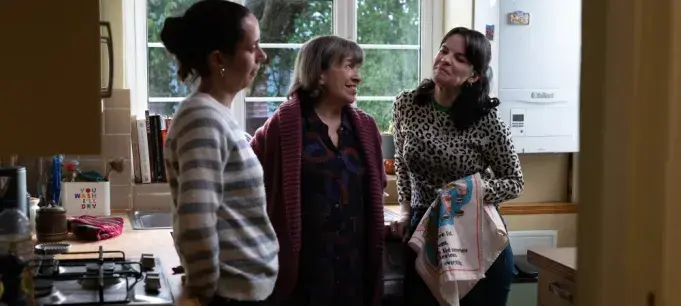
Central to the film’s potential are its performances. The ensemble cast, featuring long-time Leigh collaborators, is viewed as the production’s primary asset. Kate O’Flynn has emerged as the most discussed performer among early reviewers. Her work in Tender Loving Care follows a period of increased industry visibility, partly bolstered by her recent accolades for Widow’s Bay.
Industry analysts observe that while ensemble films often face difficulty in securing individual acting nominations—as the screen time is naturally divided among the cast—the emotional weight of O’Flynn’s performance provides a potential pathway for a Supporting Actress nod. Marion Bailey, another frequent collaborator, also delivers a performance that critics have highlighted as foundational to the film’s internal logic. However, the path for Bailey remains more speculative, as she lacks the current momentum of her co-stars.
The Evolution of the Casting Category
The Best Casting category, introduced by the Academy in 2023, presents an unconventional opportunity for Tender Loving Care. As a category currently in its infancy, its voting trends are not yet fully codified, though early indicators suggest a tendency to align with films that possess strong Best Picture momentum. Nina Gold, the casting director behind the project, has a storied history of collaboration with Leigh and a proven track record with the Academy, having been nominated for Hamnet. If the film manages to maintain a presence in the broader awards conversation, the casting branch may recognize the distinct, authentic character-building that is a hallmark of Leigh’s filmography.
Strategic Implications and Industry Outlook
The distribution strategy employed by Bleecker Street will play a definitive role in whether Tender Loving Care transcends its status as a critical darling to become a mainstream awards contender. In the current marketplace, independent films require substantial "For Your Consideration" campaigns to capture the attention of voters who are bombarded with a surplus of content from major streaming services and high-budget studio features.
The "finality" narrative serves as both a benefit and a potential distraction. While the sentimentality surrounding Leigh’s retirement could galvanize voters, there is a risk that the film is viewed primarily as a legacy tribute rather than a standalone achievement. To succeed, the film’s supporters must emphasize the quality of the work itself, rather than relying solely on the historical significance of the filmmaker.
Chronology of the Awards Season
As the season progresses, the film’s trajectory will be tested by several key benchmarks:
- Critics’ Groups Awards: The initial wave of recognition from regional critics’ associations in New York, Los Angeles, and Chicago will be the first indicator of whether the film has broad critical consensus.
- The Guild Awards: The Screen Actors Guild (SAG) and the Producers Guild (PGA) nominations will serve as the most accurate bellwether for the film’s standing within the industry. A nomination here would signal a significant shift in the film’s viability.
- BAFTA Nominations: Given Leigh’s stature in the British film industry, a strong showing at the BAFTAs is essential for keeping the film’s momentum alive during the final weeks of voting.
- Academy Award Nominations: The ultimate test will be the announcement of the nominations, where the film’s performance in the Screenplay and Acting categories will provide a final assessment of the industry’s willingness to recognize a career of such duration and influence.
Conclusion
The reception of Tender Loving Care at the New York Film Festival underscores the enduring respect for Mike Leigh within the filmmaking community. While the hurdles for an awards campaign—ranging from competitive field dynamics to the historical performance of his recent distributors—are undeniably significant, the film’s artistic merit remains uncontested. Whether the Academy will opt to honor this final project as a capstone to a distinguished career or allow it to be overshadowed by more commercial competitors remains the central question of this awards season. For observers, the coming months will provide a clear view into how the institution balances the recognition of historic legacies against the evolving priorities of a new generation of voters. Regardless of the final tally, the film has already succeeded in its primary objective: to serve as a poignant, meticulously crafted final chapter for one of the most influential directors of the late 20th and early 21st centuries.