
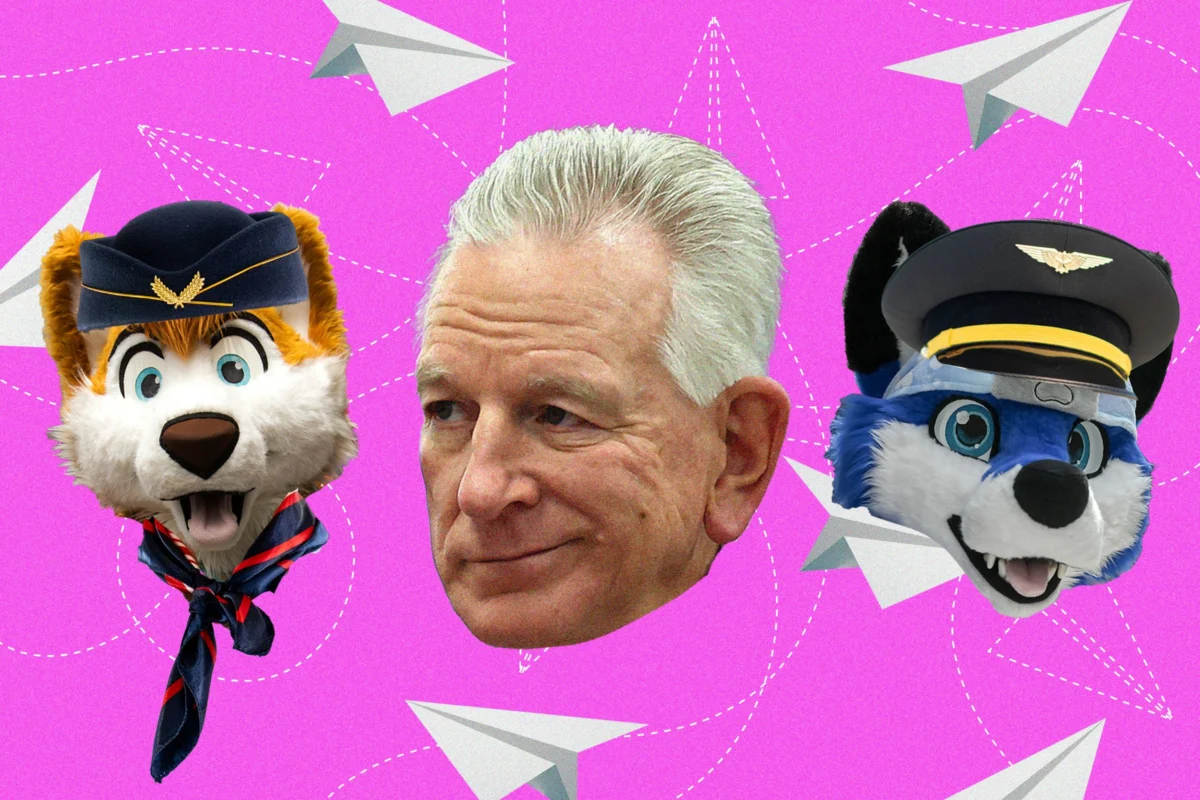
The intersection of federal legislation, transportation workforces, and niche online subcultures became an unexpected focal point of congressional discourse following remarks delivered by Senator Tommy Tuberville on the floor of the United States Senate. During an extended policy address addressing gender identity and military personnel policies, the Alabama Republican introduced an unanticipated line of commentary concerning the furry fandom—a global subculture focused on anthropomorphic animal characters—and its alleged prevalence among commercial airline pilots, flight attendants, and air traffic controllers.
The commentary immediately generated widespread attention across national media platforms and social networks. While mainstream political figures and late-night television programs treated the statements with satire and ridicule, aviation professionals and cultural analysts identified a more complex reality underlying the political rhetoric. Specifically, industry insiders noted that while the senator’s tone was alarmist, the underlying observation regarding a statistical crossover between aviation professionals and the furry community is, anecdotally and observationally, largely accurate.
This unexpected convergence of high-altitude transportation and digital-age subcultures highlights broader questions regarding workforce demographics, the boundaries of personal privacy in professional environments, and the recurrent utilization of cultural tropes within political discourse.
Chronology of Events and the Senate Floor Address
The sequence of events leading to the public debate began during a routine legislative session in the United States Senate. Senator Tuberville took to the floor to deliver a prepared speech focusing on cultural conservatism, military readiness, and federal policies regarding gender and identity. Approximately midway through the address, the discourse shifted toward institutional safety and personnel standards within critical infrastructure sectors.
It was during this portion of the address that the senator raised concerns regarding the composition of commercial flight crews and air navigation personnel. Asserting that modern cultural shifts were permeating critical safety-sensitive industries, Tuberville warned colleagues that members of the transportation workforce might harbor unconventional personal interests. To substantiate his claims regarding unprofessional conduct within the cockpit, the senator subsequently shared or referenced a viral audio recording circulating online. This clip featured commercial pilots at Ronald Reagan Washington National Airport playfully meowing and barking over standard radio frequencies—an audio artifact that aviation historians and pop-culture observers quickly identified as an internet meme potentially inspired by cinematic depictions rather than evidence of a systemic cultural infiltration.
Within hours of the address, excerpts of the speech were disseminated across social media platforms, including X (formerly Twitter) and Bluesky. Public figures, commentators, and entertainment programs seized upon the juxtaposition of commercial aviation safety and anthropomorphic subcultures. Despite the widespread public mockery, aviation professionals within the furry community acknowledged the remarks with a mixture of bemusement and frustration, noting that the political framing mischaracterized the separation between personal hobbies and professional responsibilities.
Demographic Overlaps: Examining the Aviation and Furry Subcultures
To understand why a United States senator might connect commercial pilots with anthropomorphic animal fandom, observers must examine the demographics and operational characteristics of both communities. While precise demographic data regarding employment within the furry fandom remains sparse due to social stigmas and the decentralized nature of the subculture, qualitative evidence compiled by convention organizers and community leaders indicates a notable concentration of individuals employed in science, technology, engineering, mathematics (STEM), and transportation sectors.
Toby, a professional flight instructor and long-time community organizer who hosts aviation-themed panels at major furry conventions, notes that these gatherings consistently draw significant crowds. Panels focused on aviation topics frequently attract upward of 400 attendees, drawing participants from across the aerospace spectrum, including aerospace engineers, aviation mechanics, air traffic controllers, and licensed pilots. According to community organizers, while participants adopt various animal personas—known as "fursonas"—aviation professionals frequently gravitate toward avian species, reflecting their professional focus on flight.
Similarly, Vulan, a commercial airline pilot who manages an online communication network for aviation-affiliated furries, reported knowing dozens of self-identified members within a single airline alone. These participants span multiple operational roles, including flight deck crews, cabin attendants, and ground support personnel.
Industry analysts suggest several factors contribute to this intersection:
- The Transit Nerd Overlap: Subcultural researchers have long noted a correlation between an interest in complex, highly regulated systems—such as rail networks, maritime shipping, and aviation—and involvement in imaginative roleplay communities.
- Childhood Media Influences: Prominent media properties featuring anthropomorphic aviators, such as Hayao Miyazaki’s 1992 animated feature Porco Rosso and the 1990s animated television series TaleSpin, played a foundational role in inspiring early career interests among individuals who later pursued aviation.
- The Demographics of Passion-Driven Careers: Aviation is rarely viewed by its practitioners as a routine nine-to-five occupation; it demands rigorous training, ongoing certification, and an all-encompassing lifestyle. This intense dedication mirrors the deep community engagement found within specialized subcultures.
Professional Boundaries and Workplace Realities
A central concern raised during the political commentary involved flight safety and the potential impact of personal hobbies on professional duties. Representatives from the aviation community have strongly rejected the implication that personal self-expression outside of work interferes with the rigorous safety standards required in the aviation industry.
Commercial pilots and air traffic controllers operate under strict regulatory oversight overseen by government agencies such as the Federal Aviation Administration (FAA). These regulations include comprehensive medical certifications, psychological evaluations, rigorous recurrent training, and strict adherence to professional conduct standards while on duty.
Members of the furry community who work within aviation emphasize a strict separation between their professional obligations and their personal lives. Interviews with working professionals reveal a consensus regarding workplace norms:
- Strict Compartmentalization: Personal hobbies, including involvement in fandoms, are strictly kept separate from the workplace.
- Lack of Workplace Expression: Most aviation professionals who participate in the subculture do not display their fursonas or fandom affiliations at work, viewing the activity purely as a private recreational outlet.
- Physical and Logistical Realities: Practical constraints make the integration of subcultural elements into the workplace impossible. As one pilot noted regarding the physical design of specialized costumes, full-body suits are entirely incompatible with the confined space of a commercial flight deck, not least because of restricted visibility.
Broader Political Context and Cultural Policy Debates
The utilization of niche cultural subcultures as a rhetorical device in political discourse is not an isolated incident. Over preceding election cycles, conservative political figures have frequently invoked non-traditional youth and adult subcultures—ranging from debates over classroom behavior to institutional policies—as proxies for broader anxieties concerning social change and shifting cultural norms.
Previous instances of this phenomenon include widely circulated, unsubstantiated rumors regarding public schools accommodating students identifying as animals through the provision of litter boxes, as well as viral controversies surrounding school district policies. Fact-checking organizations and educational authorities have repeatedly debunked these claims as urban legends or deliberate exaggerations designed to generate political mobilization.
Analysts examining the Senate floor address view the incorporation of the furry subculture into a speech ostensibly focused on gender identity as part of a broader messaging strategy. By associating technical and safety-sensitive industries with unconventional cultural practices, political speakers aim to evoke public unease and question institutional competence. However, the overwhelmingly satirical public response suggests that such tactics may encounter diminishing returns when applied to professional sectors bound by stringent, highly visible safety regulations.
Implications for Public Discourse and Industry Perception
The episode underscores the growing tension between specialized internet subcultures and mainstream political narratives. As digital communities scale and diversify, their members occupy an increasingly broad spectrum of mainstream employment, including critical infrastructure and safety-sensitive roles.
For the aviation industry, the public discussion has generated little operational impact, serving instead as a momentary point of curiosity. Industry representatives emphasize that public trust in commercial aviation relies upon objective safety metrics, standardized training, and regulatory compliance rather than the private recreational pursuits of individual employees.
Ultimately, while the intersection of commercial pilots and anthropomorphic fandom may appear incongruous to external observers, it serves as a reminder of the complex, multifaceted lives led by the individuals responsible for modern transportation infrastructure. As long as professional standards and safety protocols remain uncompromised, the private hobbies of aviation personnel remain strictly distinct from their performance in the cockpit.