


Adrian Chiarella’s feature-length directorial debut, Leviticus, establishes itself within the contemporary cinematic landscape as a chilling genre-bending parable that marries classic horror tropes with the harsh realities of institutionalized homophobia. Premiering in 2026, the film utilizes the cinematic language of terror to dissect the psychological toll of conversion therapy, religious dogma, and systemic bigotry. By reframing traditional horror tropes through a distinctly queer lens, Chiarella joins a legacy of filmmakers who have weaponized the genre to articulate the anxieties of marginalization, positioning Leviticus as both a thrilling piece of art and a stark sociological commentary.
Main Facts and Narrative Premise
At its core, Leviticus constructs a narrative universe where the societal dictum often used to subjugate queer youth—that their desires will result in their destruction—becomes literalized. The film opens in a desolate industrial Australian town, plunging viewers straight into an atmospheric nightmare. A lesbian lifeguard is slain in a poolside shower by an invisible entity that exploits her most intimate desires, shapeshifting into the person she covets most before executing the fatal attack.
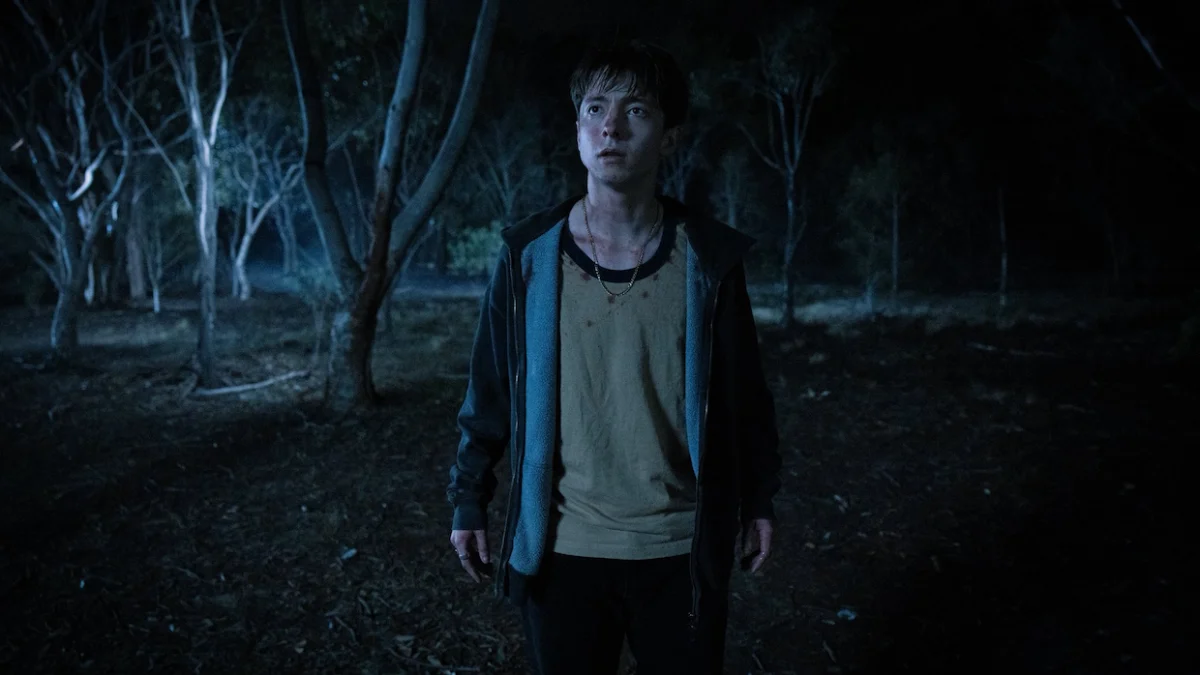
This malevolent entity is not a random supernatural phenomenon; it is revealed to be the byproduct of a dark hex cast upon local queer teenagers by their community church as an extreme form of conversion therapy. The narrative then shifts focus to Naim, portrayed by Joe Bird, a shy newcomer who finds himself drawn to Ryan, a charismatic and unapologetic classmate played by Stacey Clausen. As their relationship deepens, the supernatural threat closes in, capitalizing on isolation, fear, and internalized homophobia. The monster only strikes when its victims are alone, yet it possesses the terrifying capability to mimic trusted partners, transforming intimacy into a minefield of paranoia.
Background Context and Genre Lineage
The thematic foundation of Leviticus is deeply rooted in the historical relationship between the horror genre and queer representation. For decades, queer audiences have sought refuge in horror cinema, finding allegorical resonance in monsters, outcasts, and outsiders. Chiarella has frequently cited foundational classics such as Wes Craven’s A Nightmare on Elm Street Part 2: Freddy’s Revenge (1985) and John Carpenter’s The Thing (1982) as direct inspirations for his cinematic approach.
Freddy’s Revenge has long been analyzed by film scholars as an explicit allegory for closeted life, filled with homoerotic subtext and anxieties surrounding bodily autonomy and forbidden desires. Similarly, The Thing explores the terror of the "other" and the inability to trust one’s closest companions—a theme that Chiarella translates into the interpersonal dynamics of Leviticus. However, whereas past cinematic attempts often cloaked queer themes in subtext to bypass censorship or appeal to mainstream sensibilities, Leviticus thrusts these themes into the glaring spotlight. The film responds directly to a recent global rise in bigotry and a perceived societal regression regarding LGBTQ+ safety and security over the past decade, utilizing horror as a blunt instrument of empathy in an increasingly callous cultural climate.
Chronology of Production and Development
The development of Leviticus spans years of conceptualization, driven by Chiarella’s personal connection to both horror cinema and the queer experience.
- Early Conceptions (Early 2020s): Director Adrian Chiarella begins conceptualizing a narrative that merges personal adolescent anxieties with the cinematic language of supernatural horror, drawing from his own upbringing and consumption of forbidden genre films.
- Pre-Production and Casting (2024–2025): The production team secures financing and scouts locations in isolated Australian industrial and pastoral landscapes. Joe Bird and Stacey Clausen are cast as the central leads, Naim and Ryan, alongside supporting cast members Jeremy Blewitt and Mia Wasikowska.
- Principal Photography (2025): Filming takes place across remote Australian backdrops designed to capture an aesthetic of dreary, vacant hostility, emphasizing the claustrophobia of a cultlike religious community.
- Post-Production and Festival Circuit (Late 2025–Early 2026): Editing, sound design, and visual effects are finalized, culminating in the film’s festival run and distribution rollout in 2026.
Character Dynamics and Interpersonal Conflict
The tension in Leviticus escalates when Hunter, the preacher’s closeted son played by Jeremy Blewitt, intrudes upon the burgeoning romance between Naim and Ryan through a violent and chaotic tryst. Driven by jealousy and fear of divine retribution, Naim commits a catastrophic error by reporting the incident to religious authorities, anticipating a minor chastisement rather than full-scale spiritual warfare. The remainder of the narrative follows Naim as he attempts to atone for his transgression.
As Chiarella notes, traditional horror narratives typically hinge on a character committing a taboo transgression, with subsequent horrors functioning as direct consequences. In Leviticus, this dynamic is subverted to highlight the desperate need for queer solidarity. The infected characters find themselves abandoned by supposed allies. A momentary olive branch extended by Hunter’s sister proves to be a malicious trap, and a fleeting gesture of comfort from Naim’s mother, played by Mia Wasikowska, is immediately overshadowed by a moment of profound betrayal. When Naim’s mother chillingly remarks, "We need fear" to justify her oppressive brand of protection, the film successfully blurs the boundaries between safety and subjugation, ensuring that the characters—and the audience—can trust no one.
Visual Architecture and Cinematic Execution
Visually, Leviticus operates as a masterclass in atmospheric dread. The production design deliberately contrasts man-made industrial architecture with untamed pastoral landscapes, physicalizing the central philosophical conflict between human nature and rigid societal edicts.
Cinematographically, the film relies heavily on motifs of perception and concealment. Much of the narrative action is observed voyeuristically through windows, reflective surfaces, and surveillance mechanisms, or ignored entirely by indifferent bystanders. This visual strategy mirrors the willful ignorance often experienced by queer youth in real life, whose lived realities are frequently dismissed or invalidated by authority figures who view their identities as temporary phases or external influences. Furthermore, Naim’s perspective is consistently compromised; his eyes routinely deceive him as he mistakes Ryan’s demonic double for the real person. This thematic link between sight and belief reinforces the notion that survival depends entirely on clarity of perception and unwavering solidarity.
Broader Impact, Industry Implications, and Analysis
The release of Leviticus arrives at a complex juncture for queer cinema. While media representation has expanded significantly in recent years, much of contemporary storytelling has moved past narratives centered explicitly around crisis, trauma, and societal prejudice in favor of narratives celebrating joy and normalcy. Leviticus rejects this wholesale transition, opting instead for a visceral, back-to-basics confrontation with historical and resurgent disquietude.
From an analytical standpoint, the film’s refusal to offer a neat, comforting resolution underscores its modern sensibility. Eschewing both the tragic doom characteristic of older queer cinema and the utopian optimism of contemporary mainstream representation, Leviticus concludes on a note of ambiguous realism. Drawing inspiration from the classic horror trope of the monster crawling back in the final frame, the narrative posits that trauma of this magnitude does not simply vanish. By fusing the visceral tremors of the horror genre with profound emotional truth, Adrian Chiarella’s debut feature leaves an indelible mark on independent cinema, proving that genre filmmaking remains one of the most potent vehicles for exploring the deepest scars of human society.