


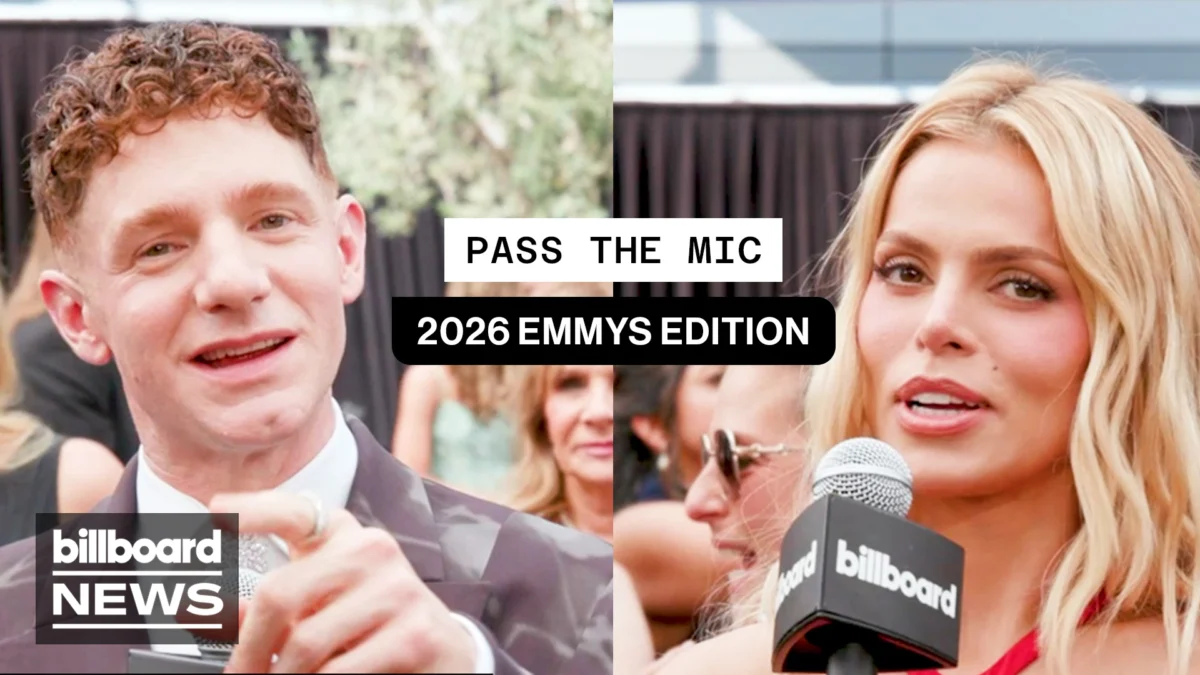
The 2026 awards season kicked off with its customary blend of high-fashion glamour, industry celebration, and spontaneous whimsy as Hollywood’s elite gathered for the annual Primetime Emmy Awards. Amid the standard slate of formal interviews, structured press lines, and promotional soundbites, a breath of fresh air swept across the arrivals circuit. In a viral-ready iteration of the classic "pass the mic" game, an eclectic ensemble of television’s brightest stars—including Chris Perfetti, Richard Gadd, Brooks Nader, Shabana Azeez, Gerran Howell, Haley Kalil, Krys Marshall, Joy Taylor, Peter Krause, and Jeff Hiller—abandoned traditional talking points. Instead, they engaged in a rapid-fire, off-the-cuff exchange that offered a rare glimpse into the humor, camaraderie, and genuine personalities driving contemporary television.
The unscripted segment, captured on the official red carpet and subsequently broadcast across digital and social platforms, quickly became one of the most talked-about moments of the evening. Moving far beyond the usual discourse regarding designer attributions and upcoming project trailers, the participating artists utilized the impromptu format to reflect on their craft, pay homage to industry legends, and indulge in lighthearted absurdity.
Main Facts and Event Context
The Primetime Emmy Awards, administered annually by the Academy of Television Arts & Sciences, serve as the definitive barometer of excellence in American prime-time programming. The 2026 ceremony arrived during a particularly dynamic period for the television industry, characterized by the continued evolution of streaming ecosystems, the integration of advanced production technologies, and a shifting landscape of audience engagement.
Against this backdrop of high-stakes corporate competition and intense artistic pressure, the red carpet offered a much-needed sanctuary for levity. The "pass the mic" format, which relies on a chain of questions and spontaneous handoffs from one celebrity to the next, strips away the mediated veneer of standard publicity junkets. Participants had no prior knowledge of the queries they would receive or pass along, resulting in a delightfully unpredictable chain reaction that highlighted both the wit and the underlying humanity of television performers.
The roster of participants represented a cross-section of the medium’s current golden era, blending critical darlings from groundbreaking limited series with breakout stars of network procedurals and streaming comedies.
Chronology of the Red Carpet Exchange
The rapid-fire sequence commenced with actor Shabana Azeez setting an immediately playful tone by breaking the fourth wall of traditional red-carpet interviewing. Spotting fellow industry members down the line, Azeez delivered a blunt yet celebratory opening salvo: "First of all, you are a snack."
The unexpected compliment rippled down the line, eliciting visible amusement from actress Krys Marshall and Abbott Elementary star Chris Perfetti. As the microphone shifted hands, the conversation swiftly pivoted from aesthetics to artistic aspirations.
Richard Gadd, the creator and star of the critically acclaimed cultural phenomenon Baby Reindeer, injected a dose of professional introspection into the proceedings. Posing a question that resonated deeply with his fellow actors, Gadd asked, "The role that somebody else has played this year that you would most like to play yourself?"
The query prompted a thoughtful pause from sports media personality Joy Taylor. Acknowledging the towering standard set by veteran actor Matthew Rhys, Taylor expressed profound admiration while conceding the daunting nature of stepping into such formidable shoes. "I mean, I really love Matthew Rhys, but I don’t know that I could be him. But I aspire," Taylor noted, before nimbly pivoting the conversation to address the tangible realities of the red-carpet environment. "How are you keeping cool today?"
That practical inquiry was met with characteristic candor by veteran television actor Peter Krause, who stood braving the unforgiving outdoor heat in heavy formal wear. "I’m not. I’m just sweating," Krause admitted to murmurs of sympathetic agreement from onlookers, underscoring the physical discomfort often hidden beneath immaculate designer tailoring.
Maintaining the conversational momentum, Krys Marshall grabbed the microphone to steer the dialogue toward television history. Looking backward rather than forward, Marshall posed a fantasy casting question: "If you could be on any television series from the past, what would it be?"
Without missing a beat, Marshall answered her own prompt with a nostalgic nod to classic television escapism, declaring a desire to inhabit the iconic CBS sitcom Gilligan’s Island. "Gilligan’s Island in a little top tie up with a little booty shorts, like Marianne," she laughed.
As the mic continued its journey down the carpet, the tone shifted from nostalgic pop culture to profound artistic reverence. Chris Perfetti seized the opportunity to honor a foundational figure in entertainment, addressing a hypothetical query regarding historical collaborations. Asked which deceased performer he would most like to work with, Perfetti delivered a heartfelt tribute to a beloved screen icon. "Our boy Tim Curry, who I loved so much, such an icon. R.I.P. my dude," Perfetti said, mistakenly acknowledging the legendary actor in a moment that later sparked affectionate social media commentary from fans clarifying Curry’s living status, while still celebrating Perfetti’s obvious admiration.
Refocusing on the immediate physical realities of the gala, Azeez reclaimed the microphone to lob a sharp question back at Perfetti regarding the eventual end of the evening’s festivities: "What’s the first thing you’re gonna do when you take off what you’re wearing today?"
Perfetti, playing along with the deadpan rhythm, deferred to Azeez, who offered a pragmatically anticlimactic resolution: "Put on my next outfit, which is a deeply uninteresting take."
Before the chain could break, Azeez looped back to the morning’s culinary theme, asking comedian and actor Jeff Hiller to classify himself within the hierarchy of comfort foods. "You are a snack, but if you could be an actual food snack, what snack would you be?"
Hiller’s response was a masterclass in deadpan delivery. "I’d probably be a Nutty Buddy. I don’t want to explain why," he deadpanned, refusing to unpack the psychological or aesthetic implications of choosing the chocolate-and-peanut-butter-layered wafer bar.
The final leg of the sequence introduced elements of fantasy and transatlantic curiosity. Actor Gerran Howell, inheriting the microphone from Hiller, pondered the age-old philosophical query regarding superhuman abilities. "I think it’s got to be flight," Howell stated, before offering a surprisingly cynical psychological assessment of alternative powers. "I’m always suspicious if people say ‘I want to be invisible.’ I’m always like, it’s kind of weird."
With those final words hanging in the air, the collective group pivoted seamlessly into a playful debate over regional confectionery preferences, culminating in a cheerful discussion regarding the superiority of favorite British snacks before the camera cut away.
Supporting Data and Industry Background
While the red-carpet antics provided substantial entertainment value for fans watching at home, the broader context of the 2026 Primetime Emmy Awards reflects an industry undergoing profound structural shifts. According to recent data compiled by the Hollywood Reporter and Nielsen, live viewership for major entertainment award ceremonies has stabilized following years of post-pandemic fragmentation. However, the true economic and cultural impact of these events is increasingly measured through digital engagement metrics.
Short-form video content generated during red-carpet arrivals—such as the "pass the mic" segment—consistently outperforms traditional broadcast segments in driving social media impressions. Industry analytics indicate that interactive, unscripted moments generate up to 300% more engagement on platforms like TikTok and Instagram compared to formal acceptance speeches or staged interviews. For networks and streaming platforms, these viral snippets serve as crucial marketing apparatuses, humanizing award-nominated talent and fostering direct, emotional connections with key demographic cohorts, particularly Gen Z and millennial viewers.
Furthermore, the diversity of the participating talent—spanning prestige drama creators like Richard Gadd, breakout comedy stars like Chris Perfetti, and multihyphenate performers like Shabana Azeez—reflects the ongoing democratization of television casting. Over the past five years, television academy voting bodies have increasingly rewarded cross-genre talent and international creators, dismantling traditional silos that once separated network television from streaming platforms and cable networks.
Broader Impact and Implications
The viral success of the red-carpet exchange points to a larger psychological shift in how audiences consume celebrity culture. In an era dominated by hyper-curated digital personas and meticulously managed public relations campaigns, moments of genuine, unscripted silliness resonate deeply with viewers.
Media analysts suggest that the appeal of such segments lies in their subversion of expected norms. Award shows have historically functioned as rigid, highly formal celebrations of corporate and artistic achievement. By injecting improvisational play into a structured broadcast environment, performers like Gadd, Perfetti, Marshall, and Hiller successfully bridge the gap between unattainable Hollywood glamour and relatable human vulnerability.
As the television industry continues to navigate the complexities of production economics, shifting distribution models, and evolving audience tastes, the ability of its primary ambassadors to laugh at themselves remains an invaluable asset. Whether pondering the existential weight of choosing a favorite snack, debating the moral implications of invisibility, or simply sweating through designer formalwear in the California sun, these artists demonstrated that the heart of television ultimately lies not in the statuettes handed out on stage, but in the community, humor, and shared passion of the people who bring stories to life.