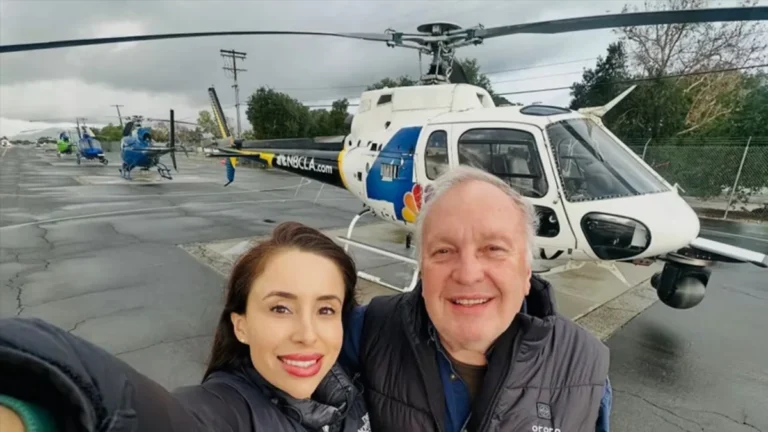



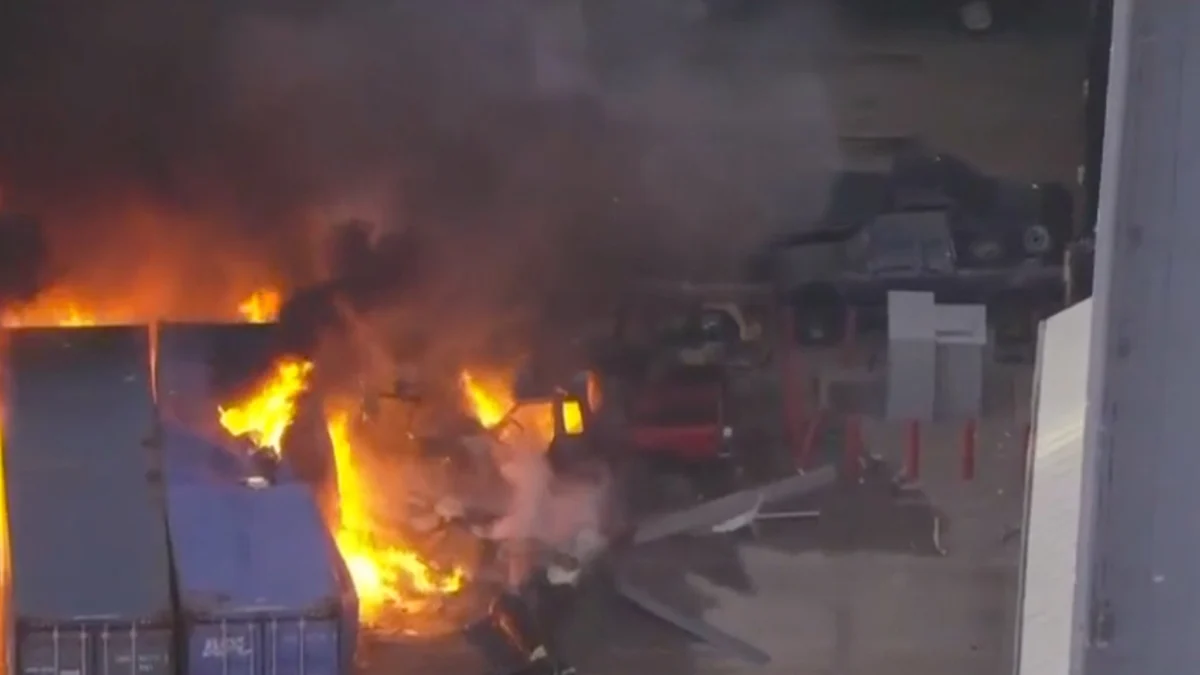
The skies above the Chatsworth neighborhood of Los Angeles bore witness to an unspeakable tragedy on Tuesday evening, September 15, 2026. A news helicopter belonging to local NBC affiliate KNBC went down in a catastrophic and fiery crash near the intersection of Prairie Street and Lurline Avenue, resulting in at least three fatalities. The incident, which occurred just before the evening news broadcast concluded, transformed a routine aerial reporting assignment into a double-tragedy for the community and the local media landscape.
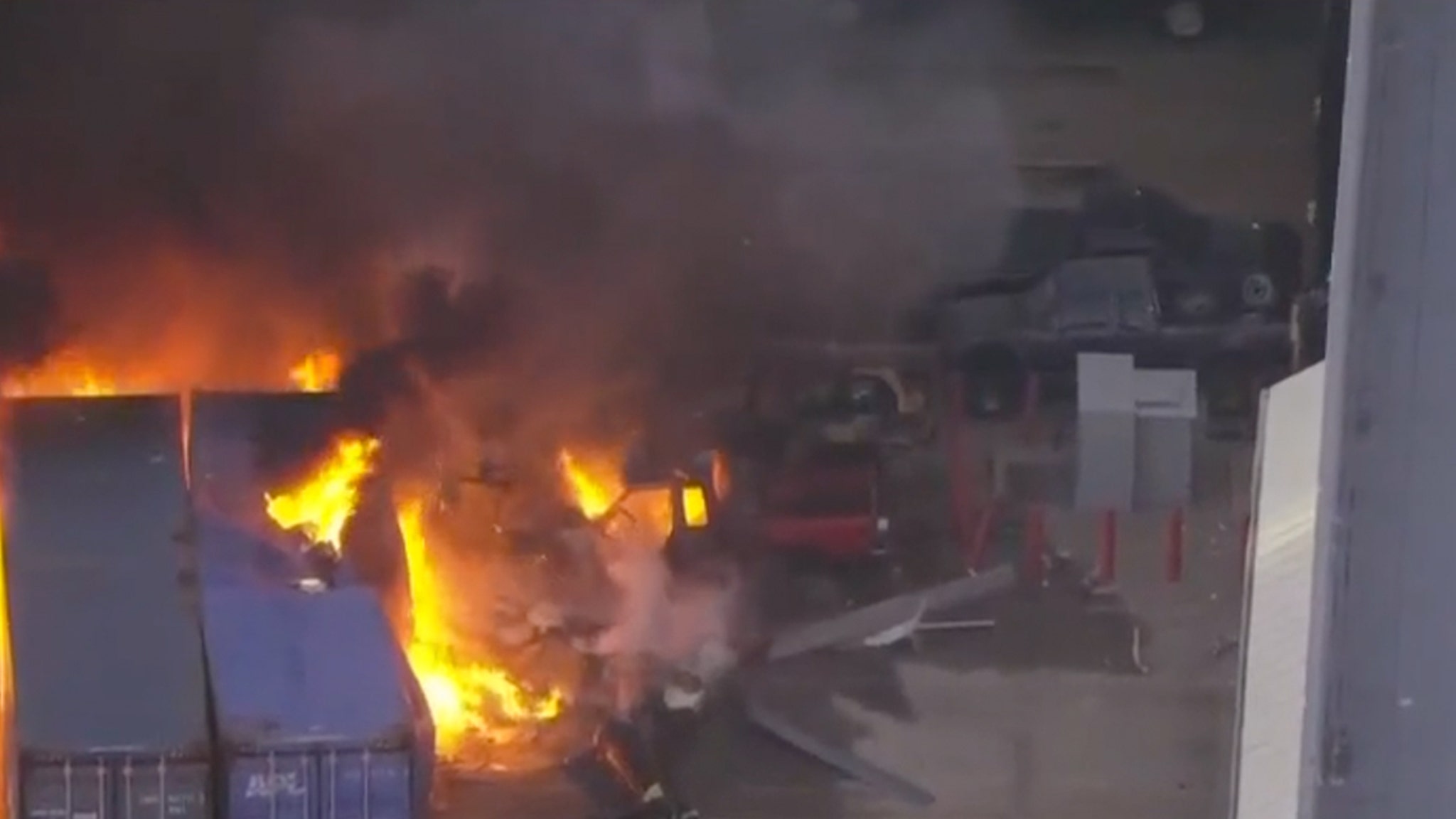
The aircraft was actively involved in covering an earlier, unrelated fatal bus crash in the region when it experienced sudden catastrophic failure, plunging from the sky and detonating upon impact. The fiery wreckage ignited multiple nearby vehicles and sent a towering, ominous plume of thick black smoke billowing across the San Fernando Valley. First responders rushed to the scene in an overwhelming display of emergency mobilization, battling intense flames and securing the perimeter as stunned residents looked on. As authorities work to piece together the sequence of events that led to the disaster, the incident has sent shockwaves through the Southern California broadcasting community and reignited urgent conversations surrounding the safety and operational protocols of aerial newsgathering.
Chronology of Events on Tuesday, September 15, 2026
The timeline of Tuesday’s tragedy began earlier in the evening when local emergency services responded to a severe motor vehicle collision involving a passenger bus in the Chatsworth area. The initial incident, which officials confirmed resulted in at least two fatalities, immediately drew the attention of local media outlets. In line with standard metropolitan news reporting procedures, several local news helicopters were dispatched to the airspace above the corridor to capture aerial footage of the aftermath and provide traffic updates to evening commuters.
KNBC’s helicopter arrived on the station’s designated frequency and joined the rotation of aircraft observing the scene from a safe and standard altitude. However, the routine assignment took a devastating turn shortly before 7:51 PM PDT. Air traffic monitors and newsroom producers suddenly lost both radar contact and video feed from the KNBC aircraft. On the ground, witnesses reported hearing a sputtering sound followed by a sharp descent, culminating in a violent impact near Prairie Street and Lurline Avenue.
The force of the crash triggered an immediate explosion and subsequent fire that engulfed the aircraft and spread to several vehicles parked or moving near the intersection. Local fire departments and police units arrived within minutes, establishing a multi-block safety zone while firefighters deployed hose lines to suppress the intense blaze. By 9:10 PM PDT, during an on-air broadcast, KNBC anchor Coleen Williams fought back tears to inform viewers that the station had lost contact with its crew. Shortly thereafter, network executives confirmed the heartbreaking reality: the downed aircraft belonged to their station, and three individuals on board had perished.
Background Context: The High-Risk Nature of Aerial Newsgathering
The deployment of electronic newsgathering (ENG) helicopters is a staple of major media markets, particularly in sprawling urban environments like Los Angeles, where highway congestion makes aerial reporting essential for rapid news delivery. For decades, local news stations have relied on rotary-wing aircraft to provide real-time visuals of high-speed pursuits, natural disasters, major fires, and severe traffic accidents.
However, this vital journalistic tool carries inherent operational risks. Operating at low altitudes, often in congested airspace alongside other media helicopters, police aviation units, and commercial drone traffic, ENG pilots must navigate complex wind patterns, urban obstacles such as power lines and cellular towers, and the psychological pressure of live broadcasting.
Statistically, aviation safety boards have monitored the commercial helicopter sector closely over the past several decades. While advancements in avionics, turbine engine reliability, and pilot training have significantly reduced accident rates across the industry, aerial journalism remains one of the more hazardous occupations within the media sector. The convergence of multiple aircraft over a single breaking news scene—a phenomenon colloquially known in the industry as "sceneries"—introduces significant coordination challenges, requiring strict adherence to Federal Aviation Administration (FAA) regulations and inter-agency communication protocols.
Official Responses and Institutional Mourning
The immediate aftermath of the crash elicited profound grief and solidarity across the broader Southern California broadcasting community and local government offices. Newsrooms across Los Angeles, traditionally fierce competitors in the ratings landscape, immediately set aside rivalry to offer technical and emotional support to KNBC.
During live evening broadcasts, anchors from competing networks expressed their condolences, acknowledging the deep personal connections shared among the tight-knit community of television reporters, photojournalists, and aviation pilots who work the Los Angeles skies day in and day out. KNBC management announced that the station would temporarily alter its programming schedule and scale back live aerial reporting to allow staff members adequate time to process the immense emotional toll of the tragedy.
In a joint statement, local emergency management officials praised the swift response of firefighters and paramedics who braved the hazardous conditions surrounding the burning wreckage to extinguish the flames and secure the accident zone. Leaders from the Los Angeles Police Department and the Los Angeles Fire Department offered their deepest sympathies to the families of the victims and pledged full cooperation with federal investigators.
Investigation and Forensic Analysis
Determining the exact cause of the Chatsworth helicopter crash will require a meticulous, multi-agency investigation led by federal safety authorities. The National Transportation Safety Board (NTSB) has assumed primary jurisdiction over the inquiry, with technical assistance expected from the Federal Aviation Administration (FAA) and representatives from the helicopter’s manufacturer and engine producers.
NTSB investigators arrived on the scene early Wednesday morning to begin the painstaking process of gathering perishable evidence. The investigation will encompass several core technical pillars:
-
Wreckage Analysis: Investigators will meticulously document, map, and recover components of the aircraft’s airframe, rotor system, transmission, and turbine engines. Metallurgical testing will be conducted to check for pre-existing mechanical failures, fatigue fractures, or component wear.
-
Flight Data and Avionics: Modern news helicopters are frequently equipped with advanced flight data monitoring systems, GPS tracking units, and onboard video recorders. Recovering and analyzing these digital artifacts will provide precise telemetry data regarding the aircraft’s altitude, airspeed, heading, and engine performance in the final moments of flight.
-
Environmental and Meteorological Conditions: Weather data from the time of the crash—including wind velocity, temperature, visibility, and localized turbulence patterns in the San Fernando Valley—will be evaluated to determine if environmental factors played a role in the incident.
-
Human Factors and Pilot Qualifications: The background, medical history, flight hours, and rest schedules of the pilot will be thoroughly examined. Investigators will also review communication logs between the aircraft and air traffic control, as well as coordination between other news helicopters operating in the vicinity of the initial bus crash.
Because complex aviation investigations require rigorous testing and peer-reviewed analysis, the NTSB has indicated that a preliminary factual report will likely take several weeks to compile, with a definitive determination of probable cause potentially requiring a year or more.
Broader Impact and Implications for Broadcast Journalism
The loss of the KNBC news helicopter and its crew marks a dark milestone for modern journalism and prompts critical introspection regarding the future of aerial newsgathering. As news organizations face economic pressures and technological advancements—such as the proliferation of high-definition drones and remote-controlled camera systems—the tragic events in Chatsworth will undoubtedly accelerate debates over risk management in media operations.
While drones offer a safer, lower-cost alternative for certain types of localized reporting, they cannot fully replicate the speed, range, payload capacity, and endurance of a manned helicopter, particularly when covering fast-moving emergencies across vast metropolitan expanses. Consequently, the industry faces the challenge of balancing the public’s demand for immediate, comprehensive visual journalism with the absolute imperative of crew safety.
For the viewers of Los Angeles and the colleagues left behind at KNBC, the immediate focus remains on honoring the memories of those who lost their lives in the line of duty. As the investigation unfolds and the community begins the long process of healing, the tragedy stands as a sobering reminder of the unseen risks journalists and aviation professionals take every day to keep the public informed.