

The animated comedy Lesbian Space Princess, a vibrant creation from Peccadillo Pictures and helmed by directors Leela Varghese and Emma Hough Hobbs, is set to grace cinemas across the United Kingdom and Ireland on June 19th. This strategic release aligns perfectly with the commencement of Pride Month, underscoring the film’s central themes and its celebration of LGBTQIA+ narratives. The filmmakers have already ignited anticipation by releasing a selection of compelling stills and an engaging trailer, offering audiences a tantalizing glimpse into the film’s unique universe.
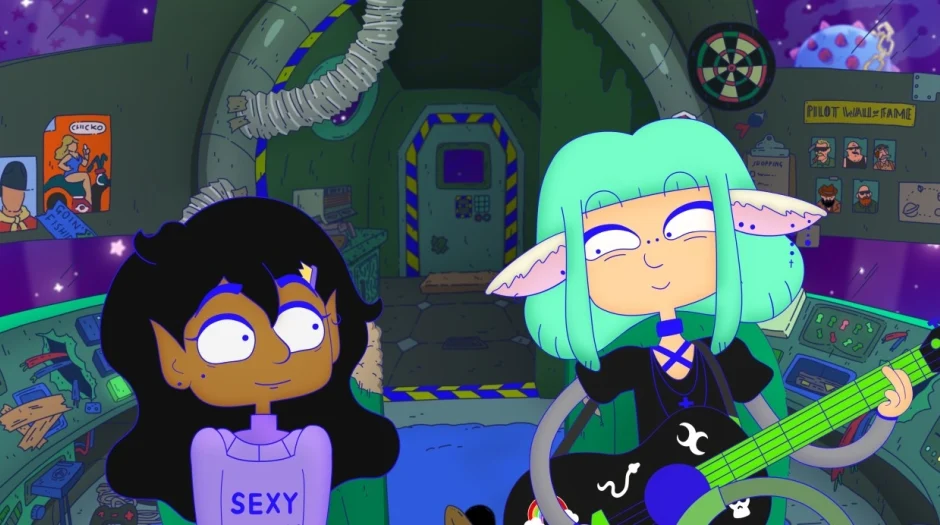
The narrative centers on Princess Saira, an introverted royal who finds her world upended when her relationship with her bounty-hunter girlfriend, Kiki, implodes due to Saira’s perceived neediness. The daughter of the flamboyant lesbian Queens of Planet Clitopolis, Saira’s quiet existence is shattered when Kiki is abducted by the "Straight White Maliens," a faction described as forgotten incels from the future. This drastic turn of events forces Saira to venture beyond the perceived safety of her all-gay society to embark on a perilous mission: to deliver a ransom that includes her royal labrys, a legendary weapon of immense power within lesbian lore. The primary obstacle, however, is Saira’s realization that she no longer possesses this crucial artifact.
With a mere 24-hour ultimatum to retrieve the labrys and rescue Kiki, Princess Saira is propelled into an inter-gay-lactic odyssey of self-discovery. This journey promises a series of encounters, including a potentially troublesome spaceship and the formation of a new friendship with a runaway gay-pop star named Willow. This premise immediately signals a departure from conventional animated storytelling, aiming to blend humor with a bold exploration of identity and relationships within a fantastical, queer-centric cosmos.

A Festival Darling with Critical Acclaim
Lesbian Space Princess has already garnered significant international recognition, having celebrated its world premiere at the prestigious Berlin International Film Festival. At Berlin, the film was honored with the esteemed Teddy Award, a prize dedicated to LGBTQIA+ cinema, signaling its immediate impact on the festival circuit. Further solidifying its critical success, the film went on to win the Audience Award for Best Australian Feature at the Sydney Film Festival, underscoring its appeal to diverse audiences and its strong connection to its Australian origins. These accolades precede its wider cinematic release, providing a robust foundation of critical endorsement.
The film is lauded as a "laugh-out-loud adventure through queer outer space and a riotous, candy-colored animated comedy that embraces LGBTQIA+ and culturally diverse voices on and off screen." This description highlights the filmmakers’ ambitious intent to create a visually dynamic and thematically rich experience that prioritizes representation. The emphasis on "culturally diverse voices" suggests a commitment to inclusivity that extends beyond the LGBTQIA+ spectrum, aiming for a broader representation of marginalized communities both in front of and behind the camera.
A Stellar Voice Ensemble

The animated feature boasts an impressive voice cast, bringing a wealth of talent and experience to its diverse characters. Shabana Azeez, known for her work in Birdeater and The Pitt, lends her voice to the production. Bernie Van Tiel, recognized for her roles in Class of 07 and Swift Street, also contributes to the cast. Gemma Chua Tran, who has appeared in Heartbreak High and Ladies in Black, joins the ensemble. The comedic prowess of Aunty Donna, celebrated for Aunty Donna’s Big Ol House of Fun and Aunty Donna’s Coffee Cafe, is brought to the film. Veteran actor Richard Roxburgh, with credits including Rake, Elvis, and Van Helsing, adds gravitas to the cast. Jordan Raskopoulos, known for The Strange Chores and I Am Woman, is also featured. Madeleine Sami, acclaimed for Deadloch and The Breaker Upperers, lends her talents, and drag superstar Kween Kong, a standout from RuPaul’s Drag Race, completes the notable lineup. This diverse assembly of performers promises a rich tapestry of vocal performances, contributing significantly to the film’s comedic and dramatic depth.
Filmmaker Vision: A Personal and Political Statement
Directors Leela Varghese and Emma Hough Hobbs shared their profound motivations behind the creation of Lesbian Space Princess. "Lesbian Space Princess is the product of one lesbian’s lifelong obsession with animation, another lesbian’s burning desire to make people laugh and their combined longing for stories that are fresh, female driven and gay AF," they stated. This personal connection underscores the film’s authenticity and its roots in a desire to see more representation that reflects their own experiences and aspirations.
They further elaborated on the film’s artistic and thematic intentions: "This film will be an ode to low-budget anime, a hilarious love letter to lesbians and most importantly – heaps of fun." This statement reveals a deliberate aesthetic choice, drawing inspiration from the distinctive visual styles and storytelling techniques of anime, particularly low-budget productions, which often exhibit a raw creativity and unique charm. The acknowledgment of it being a "love letter to lesbians" signifies a dedication to celebrating lesbian identity and experiences with warmth and humor.

The directors elaborated on the film’s unique blend of humor and social commentary: "Lesbian Space Princess is campy and comedic with a biting undercurrent of cheeky and incisive political commentary. Imagine your favorite sci-fi movie but with lesbians." This suggests a layered approach to storytelling, where overt comedic elements are interwoven with subtle yet potent critiques of societal norms and power structures. The comparison to beloved sci-fi franchises, reimagined through a queer lens, highlights the film’s ambition to engage with established genre tropes while subverting them to create something fresh and relevant.
"Strong comedic voice performances will be the beating heart of the film. We will put complex queer women of color characters to the front. Authentic casting for LGBTQIA+ characters and people of color will bring a genuineness to the world of Lesbian Space Princess," they emphasized. This commitment to authentic representation, particularly for queer women of color, is a crucial element of the film’s identity. It aims to counter the historical underrepresentation and misrepresentation of these communities in media, offering audiences characters that are nuanced, relatable, and multifaceted. The decision to prioritize "authentic casting" signifies a dedication to providing opportunities for LGBTQIA+ actors and actors of color, ensuring that the voices and experiences portrayed are genuine.
The filmmakers also revealed their artistic influences and production approach: "Our film will visually draw from cartoons such as Adventure Time while our editing and coverage will more strongly resemble anime hits like Revolutionary Girl Utena. As a filmmaking duo we bring our own special skill sets and perspectives to the table. On top of being filmmakers, our artistic backgrounds respectively as an animator/ production designer and a musical comedian give us a strong foundation for achieving our ambitions of compelling visuals and comedic performances." This dual inspiration, blending the vibrant, fluid animation of Adventure Time with the dramatic, often complex storytelling and visual flair of Revolutionary Girl Utena, suggests a distinctive visual style. The directors’ personal artistic backgrounds, one rooted in visual design and the other in performance and comedy, provide a strong foundation for executing their vision.
"With such a personal connection to the project we bring a whole lotta heart to it. We will create a film that brings an authentic new voice that women, the queer community and people of color deserve," they concluded. This personal investment and commitment to authenticity are presented as core strengths, aiming to deliver a film that resonates deeply with its intended audience and fills a perceived void in contemporary media. The inclusion of original acoustic songs and music is also noted as a means to imbue the sci-fi genre with a unique indie sensibility, further distinguishing the film’s artistic identity.

Production Context and Broader Implications
The production of Lesbian Space Princess emerges within a broader context of increasing demand for diverse and inclusive storytelling in the film industry. Over the past decade, there has been a discernible shift, driven by both audience expectations and industry initiatives, towards greater representation of LGBTQIA+ individuals, people of color, and women in leading roles and behind the camera. Festivals like Berlin and Sydney, with their dedicated programs and awards for LGBTQIA+ and independent cinema, have become crucial platforms for showcasing such films and fostering their development. The success of Lesbian Space Princess at these festivals is indicative of a growing appetite for narratives that challenge traditional conventions and offer fresh perspectives.
The film’s specific focus on a lesbian protagonist and a predominantly queer universe addresses a significant gap in mainstream animated cinema, where LGBTQIA+ characters have historically been marginalized or absent. By centering lesbian experiences, the film contributes to the ongoing effort to normalize and celebrate diverse sexual orientations and gender identities within popular culture. The narrative’s exploration of themes such as self-discovery, relationship challenges, and the quest for self-worth, framed within a comedic science fiction adventure, suggests an accessible yet meaningful engagement with these issues.
The decision to release the film during Pride Month further amplifies its cultural significance. Pride Month, observed annually in June, commemorates the Stonewall Uprising and serves as a global celebration of LGBTQIA+ rights and culture. A film like Lesbian Space Princess aligns perfectly with the spirit of Pride, offering a celebratory and empowering narrative that can resonate with LGBTQIA+ communities and their allies. This timing can also serve to attract a wider audience, raising awareness and fostering greater understanding of LGBTQIA+ issues through the accessible medium of animated comedy.

The film’s visual style, inspired by a blend of Western animation (Adventure Time) and anime (Revolutionary Girl Utena), points to an effort to create a distinct aesthetic that is both familiar and innovative. This cross-pollination of styles can appeal to a broad range of animation enthusiasts while also offering a fresh visual language for storytelling. The emphasis on original acoustic music also suggests a desire to create a unique sonic landscape that complements the film’s visual and thematic ambitions, potentially drawing from indie music sensibilities to enhance its distinctive character.
The filmmakers’ candid discussion of their low-budget production approach, combined with their artistic aspirations, highlights the resourcefulness and creativity often found in independent filmmaking. Their ability to secure festival recognition and a theatrical release suggests a strong creative vision and effective execution, demonstrating that compelling and culturally relevant stories can be brought to life even with limited resources. The success of Lesbian Space Princess could serve as an inspiration for other emerging filmmakers from underrepresented communities, proving that personal stories, when told with artistic integrity and a clear vision, can achieve widespread acclaim.
The film’s potential impact extends beyond entertainment. By presenting complex queer characters, particularly women of color, in leading roles, Lesbian Space Princess can contribute to challenging stereotypes and promoting positive representation. The inclusion of political commentary, described as "cheeky and incisive," suggests that the film aims to engage audiences on a deeper level, prompting reflection on social issues while maintaining its comedic tone. This nuanced approach to storytelling is vital in fostering empathy and understanding in a diverse society. As the film rolls out to cinemas, its reception will undoubtedly be a subject of interest, offering further insights into the evolving landscape of animated cinema and the growing demand for inclusive and authentic narratives.